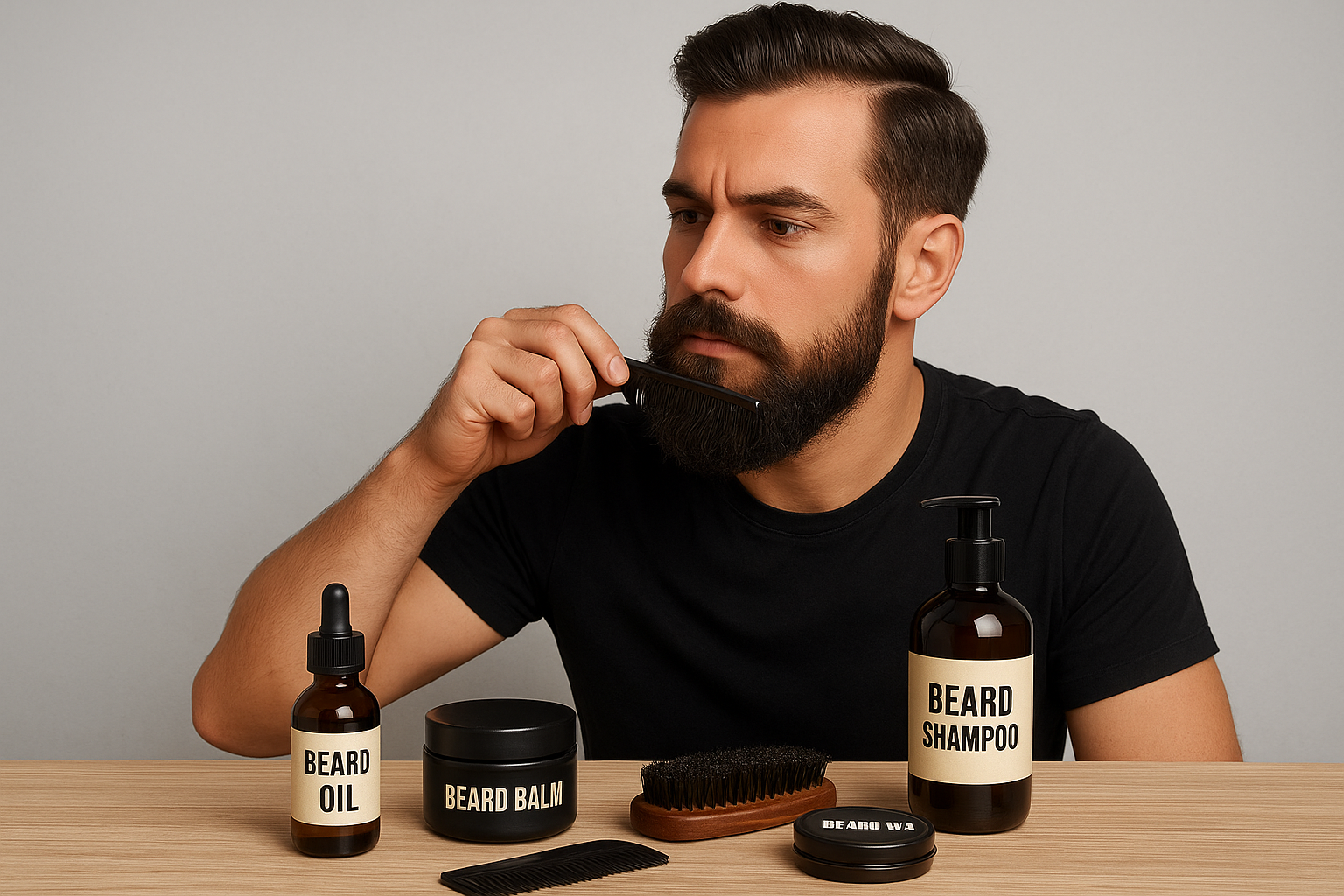
A hair clay can earn five stars because it gives “serious hold” and one star because it feels “stiff as a helmet.” Both reviewers may be telling the truth.
One has short, thick hair and wants a textured crop. The other has fine, longer hair and used twice as much product. Same jar. Different job.
That is the awkward thing about men’s hair styling reviews. They are full of useful product signals, but they are mixed with hair-type mismatch, unclear directions, climate, personal taste and plain old overapplication. A negative review is a clue, not a laboratory result.

For this guide, recurring themes were compared across editorial product tests, retailer reviews, specialist grooming discussions and public forums. Men’s Health, for example, says its editors assess styling products for hold, texture, finish, how the style lasts and how the product feels in the hair. Those are almost the same attributes that reappear when customers complain. See the Men’s Health testing framework.
The goal here is not to name and shame products. It is to understand what review friction tells brands about formula design, packaging, instructions and quality control.
First: A Bad Review May Be a Bad Match
Hair styling is unusually context-dependent. A product interacts with:
- Fine, medium, thick or coarse hair
- Straight, wavy, curly or coily texture
- Short, medium or long hair
- Dry hair, oily roots or a sensitive scalp
- Damp-hair or dry-hair application
- The haircut and desired style
- Product dose, layering and blow-drying
- Heat, humidity, wind and sweat
A dense wax can control a short quiff but flatten fine hair. A flexible cream can make loose waves look natural but fail to hold a tall pompadour. A powder may create excellent grip on light brown hair while leaving a visible cast on dark hair.
This does not excuse every failure. It shows why “works for all hair types” is a risky promise. Better positioning narrows the use case instead of asking one formula to be weightless, ultra-strong, shiny, matte, flexible and completely water-rinsable. That product is a unicorn. A very busy unicorn.
| Review complaint | Possible product issue | Possible use mismatch | What a brand should verify |
| “No hold” | Weak or humidity-sensitive structure | Dense hair, wet application or too little product | Time-based hold across relevant hair types |
| “Greasy” | Heavy oil/wax balance | Too much product or very fine hair | Dose-response and transfer testing |
| “Leaves white flakes” | Brittle film or poor dispersion | Overapplication, layering or scalp flakes | Dark-hair residue and rework tests |
| “Impossible to wash out” | Persistent wax/oil system | Water-only rinse expectation | Defined shampoo washout protocol |
For a full comparison of pomade, clay, wax, paste, powder and other formats, see the private label men’s hair styling products guide.
Complaint 1: “Strong Hold” That Gives Up by Lunch
“Strong hold” is one of the most common promises and one of the least informative.
Initial grip is not the same as all-day endurance. A product may feel powerful during styling, then soften under heat and humidity. Another may lock firmly but become brittle when the user runs a hand through it.
Hold can come from film-formers such as PVP or VP/VA copolymers, wax structures, resins and the complete balance of the formula. More fixative is not automatically better. Push too far and the product may become crunchy, tacky, flaky or hard to wash out.
Brands should define hold in context:
- Target hair type and length
- Style being created
- Application amount
- Damp or dry hair
- Initial set time
- Evaluation after four, eight or more hours
- Humidity and temperature conditions
- Whether restyling is allowed
A useful claim might be “firm hold for short, thick hair with a matte finish.” It is less dramatic than “extreme 24-hour control,” but far easier to test and much harder to disappoint.
Complaint 2: Greasy, Sticky or Too Heavy

Men do not only complain about appearance. They mention sticky hands, greasy pillows, product on headphones and hair that collapses into shiny clumps.
These complaints often surround heavy pomades, waxes and high-emollient systems. Petrolatum, mineral oil, plant oils and waxes can provide structure, shine and restylability. They are not automatically bad ingredients. The trouble comes when their weight does not match the promised finish or intended hair type.
Fine hair shows this quickly. A little excess oil or wax can remove volume. On dense or coarse hair, that same richness may improve control.
Public pomade discussions repeatedly pair “not greasy” with “easy washout,” showing that consumers often experience these as one combined problem rather than two lab attributes. See an example of that recurring user concern on Reddit.
Brands should test several doses, not only the ideal amount used by a formulator. If a normal customer can easily move from “natural shine” to “chip-shop hair” with one extra fingertip, the instruction and dispenser need work.
Complaint 3: White Flakes, Chalky Cast and Visible Residue
White material in the hair does not have one cause. It may be:
- A dry styling film breaking during combing
- Product that was not dispersed properly
- Powder collecting at the roots
- Incompatible layered products
- Dried product from overapplication
- Actual scalp flaking that the styling product makes more visible
Dark hair is the unforgiving test. A powder that looks invisible on blond tresses may resemble flour on black hair.
Styling powders commonly use absorbent or texturizing materials such as silica, rice starch, tapioca starch, corn starch, kaolin or related powders. These can create oil control, grip and volume. Particle characteristics, dose, dispersion and applicator design influence whether the finish looks clean or chalky.
Gels and pomades can flake for different reasons. A rigid film may fracture when the hair is restyled. Poor palm breakdown can leave small visible pieces. Layering over dried product can also change the result. Public pomade threads show users linking weak hold, difficult washout and white flakes in the same experience, which is a useful reminder that complaints rarely stay in neat technical boxes. See one flaking discussion.
Testing should include dark standardized hair tresses, combing, finger restyling, realistic overapplication and common layering combinations.
Complaint 4: It Tugs, Pulls and Refuses to Spread
Dry clays and firm waxes often promise grip. Sometimes that grip begins before the product reaches the hair.
Users complain about hard scooping, difficult palm emulsification and tugging during application. High wax or clay loads, low-slip systems and cool bathroom temperatures can all contribute. Hair length and dryness also matter.
Some tug is accepted by users of strong matte products. Too much creates an unpleasant routine and may raise worries about breakage or hair loss. A review cannot prove that a product caused hair loss, so brands should not diagnose from a comment. They should still investigate repeated reports.
Useful development checks include:
- Scoopability at cool and warm storage temperatures
- Rub-out time between the palms
- Application on short and medium-length hair
- Pull during dry versus damp application
- Hair breakage observed during controlled combing
- Jar, tube or pump access with repeated use
Instructions can help: warm a small amount thoroughly, apply from back to front and build in thin layers. Instructions cannot rescue a product that behaves like a scented hockey puck every winter.
Complaint 5: It Will Not Wash Out
“Water-based” and “washes out with water” are not the same promise.
Traditional oil-based pomades are expected to leave buildup. Some users like that because the second-day style needs less product. Gel-type water-based pomades usually rinse more easily. Unorthodox water-based pomades may behave more like waxy products and still need shampoo.
Reviewers get frustrated when the label says easy washout but one shampoo cycle leaves sticky hair, hands or towels. Brands should define the method:
- Water rinse only
- One wash with a stated amount of standard shampoo
- Repeated shampoo or clarifying wash
Run the test after one application and after repeated daily use. Buildup is a routine effect. A one-day test misses it.
The answer is not always “make it rinse instantly.” Easier washout can reduce the persistent control some users want. The real solution is honest positioning and a formula designed around a specific trade-off.
Complaint 6: The Scent Is Too Loud

Fragrance is subjective, but intensity is a product parameter.
Hair products sit close to the nose. They may also be used with aftershave, beard products or cologne. A scent that seems pleasant from the jar can become tiring after eight hours, especially when the consumer reapplies.
Review friction includes:
- Too sweet or artificial
- “Barbershop” scent that feels dated
- Fragrance that overpowers personal cologne
- Scent that changes after application
- Base-material odor in a supposedly unscented formula
A brief should define character, intensity at application and persistence after several hours. Low-scent and fragrance-free options can serve sensitive or fragrance-layering customers, but “fragrance-free” should be reviewed carefully. Removing added perfume does not make the raw-material base odorless.
Complaint 7: Dry, Itchy or Uncomfortable Scalp
Styling powders and clays can absorb oil and create a dry sensory feel. Fragrance or other formula components may concern sensitive users. Product buildup may also make an existing scalp issue more noticeable.
Still, an online review cannot diagnose dandruff, allergy or seborrheic dermatitis. Brands should separate ordinary sensory feedback—“feels dry”—from reports of rash, burning, infection, significant hair loss or other adverse effects.
Those reports need a documented escalation path. The FDA advises consumers and professionals to report reactions and product problems, including rash, redness, burns, hair loss, bad smell, color change or signs of contamination. Review FDA cosmetic complaint guidance.
Water-containing creams, gels and pomades also need an effective preservation strategy and suitable packaging. FDA notes that contaminated raw materials, ineffective preservation, poor manufacturing, unsuitable packaging and storage can contribute to microbial contamination. See FDA guidance on microbiological safety.
Complaint 8: Matte Is Too Dry, Shine Looks Greasy

Finish words sound precise until two people use them.
One buyer’s “natural finish” is another buyer’s “still shiny.” One buyer wants a dry, gritty texture; another calls the same product dusty. A flexible gel cast may be perfect for defined curls and unacceptable to someone seeking touchable straight hair.
Brands should separate attributes that often get bundled together:
- Matte, natural/low shine, medium shine and wet look
- Flexible, firm and rigid hold
- Touchable versus set
- Reworkable versus one-time style
- Smooth separation versus rough texture
Reference products and sensory scorecards help an OEM team understand the target. “Like this product’s finish, but with less drag and easier shampoo washout” is far more useful than “premium matte.”
Complaint 9: Packaging Ruins a Good Formula
Some one-star reviews are packaging reviews wearing a formula hat.
Common problems include:
- Powder shakers dumping too much product
- Pumps clogging or losing prime
- Spray nozzles spitting wet spots instead of a fine pattern
- Tubes too stiff to empty
- Jar product collecting under fingernails
- Caps cracking, leaking or failing to close
- Consumers believing a thick-walled or settled pack is underfilled
The package controls dose. Dose controls hold, residue, grease and value perception. A powder formula may be perfectly usable at 0.1 g and messy at 0.4 g, so the shaker is part of the performance system.
Test repeated actuation, dose variation, clogging, leakage, drop resistance, closure fit and evacuation. Then test after shipping simulation and temperature exposure, not only with a pristine component on a desk.
Complaint 10: “The Old Formula Was Better”
Formula-change reviews can be emotional, but they deserve investigation.
Real differences may come from reformulation, fragrance changes, raw-material lots, new packaging, scale-up or storage. Apparent differences may come from a new haircut, water quality, season or memory. A brand needs records to tell the difference.
Control the approved formula version, raw-material specifications, viscosity range, color, odor, fill, packaging and production method. Keep retention samples. Compare complaint batches against the golden sample. Use formal change control before substituting a wax, fragrance or pump.
Silent substitutions are especially risky. Customers may not know what changed, but they notice when the scoop, scent or hold suddenly feels wrong.
Complaint Patterns by Product Format
| Format | What users usually want | Recurring friction | Useful development test |
| Gel | Strong definition and predictable set | Crunch, flakes, stiffness | Film flexibility, combing and flake test |
| Pomade | Control, polish and restyling | Grease, transfer, buildup, washout | Dose, transfer and shampoo-removal test |
| Clay or wax | Matte texture and firm hold | Tugging, dryness, hard scoop, collapse | Temperature, spread and humidity hold |
| Paste or cream | Easy use and natural movement | Too little hold or unwanted shine | Hair-type panel and timed retention |
| Styling powder | Volume and invisible grip | White cast, dryness, messy dosing | Dark-hair residue and dispenser dose |
| Spray | Fast, even distribution | Clogging, wet spots, loud scent | Spray pattern, clog cycle and leakage |
These are tendencies, not rules. “Clay,” “paste” and “fiber” are marketing categories with overlapping formulas. Judge the actual specification and experience, not the word on the jar.
The Materials Behind the Review Language
An ingredient list cannot predict performance by itself, but it helps explain trade-offs:
- Film-formers and fixatives support hold but can become brittle, tacky or humidity-sensitive.
- Waxes and oils provide structure, shine and restyling but may add drag, transfer or buildup.
- Clays, silica and starches create grip, absorption and volume but may feel dry or leave visible residue.
- Humectants and conditioning agents can improve flexibility and feel, though balance matters in humid conditions.
- Surfactants and emulsifiers help dispersion, texture and washout.
- Preservatives support microbial safety in products that need them.
- Fragrance and color shape identity while adding sensory and compatibility considerations.
- Propellants, pumps and shakers control delivery for sprays and powders.
Do not blame one ingredient from a review. Formula architecture, concentration, processing, package and use determine the outcome.
How Brands Can Read Reviews Without Fooling Themselves
Sort complaints into five buckets:
- Formula performance
- Hair-type or style mismatch
- Application and instruction failure
- Packaging failure
- Batch, storage or shipping inconsistency
Then segment the evidence. Where possible, note hair type, length, climate, application amount, purchase date and batch. Compare old and new reviews after a formula or packaging change. Look for repeated descriptions, not only star ratings.
Most importantly, reproduce the complaint. If ten users say the powder is white on dark hair, test it on dark hair. If pumps fail halfway through the jar, an unopened component test is irrelevant.
Reviews create hypotheses. Controlled work decides whether those hypotheses are true.
Turn Customer Language Into Specifications
| Customer language | Development question | Possible requirement |
| “Falls flat by noon” | Does hold survive time and humidity? | Defined style retention after set hours and conditions |
| “Looks like dandruff” | Does the film or powder leave visible solids? | No visible residue after combing on dark test hair |
| “One wash does nothing” | What does easy washout mean? | Defined removal after one standard shampoo cycle |
| “Pump stopped working” | Does formula block the dispenser? | Successful actuation through a repeated-use cycle |
| “Smell takes over” | Is scent intensity suitable for daily use? | Sensory score at application and timed dry-down |
This translation belongs in the development brief, not in a customer-service folder after launch. A capable men’s grooming manufacturing partner should help connect the target experience to formula, packaging and test methods.
Standards and Tests Suggested by Review Complaints
Across the reviewed pages, words such as medium and strong hold did not refer to one shared laboratory scale. Brands therefore need internal, repeatable methods.
A practical test matrix may cover:
- Initial hold and time-based style retention
- Humidity and heat performance
- Flaking after combing and restyling
- Dark-hair residue and rub-off
- Scoopability, palm breakdown and application drag
- Shine, touchability and reworkability
- Transfer to fabric or accessories
- One-use and repeated-use washout
- Fragrance intensity over time
- Dispenser dose, spray pattern, clogging and leakage
- Stability and formula-package compatibility
Use controlled dose, hair tresses or relevant user panels, defined application and documented scoring. Not every attribute needs a sophisticated machine. It does need a repeatable method.
ISO 22716 provides GMP guidelines for cosmetic production, control, storage and shipment. It supports consistency but does not define what “strong hold” should mean for your customer. Review the ISO 22716 scope.
Claims also need discipline. FDA says cosmetic labeling must be truthful and not misleading, and disease-treatment or body-structure claims may change the product’s regulatory status. See FDA cosmetic-claim guidance. The FTC likewise expects a reasonable basis for objective advertising claims before they are published. Read the FTC substantiation policy.
Complaint records should feed trend review, batch investigation and adverse-event escalation. BunJoin’s MoCRA roles and documents guide explains the U.S. responsibility framework in more detail.
Build a Better OEM/ODM Brief From the Bad Reviews
A useful hair styling brief should include:
- Target hair type, length, haircut and climate
- Intended style and application routine
- Initial hold, endurance and restylability
- Matte/shine level, touch and texture
- Maximum acceptable residue, tug, transfer and scent
- A defined washout expectation
- Reference products with specific likes and dislikes
- Pack format, dose and repeated-use performance
- Test methods and approval criteria
- Golden sample, specifications and change control
Channel matters. Amazon buyers may punish leakage and confusing directions quickly. Barbers care about speed, hand feel and how the product behaves across clients. DTC brands may educate more deeply but still need a simple first use.
About BunJoin describes its supply-chain role, while the BunJoin homepage provides an overview of its men’s grooming development scope. Treat those capabilities as a starting point; the live brief still needs product-specific acceptance criteria.
Conclusion
Men complain when the claim, context and experience do not line up.
The product says matte, but looks greasy. It says strong hold, but collapses in humidity. It says easy washout, but needs three shampoos. Or the formula works and the pump makes every dose a small disaster.
Negative reviews are not all equally reliable, and they do not diagnose root causes. Yet repeated, detailed complaints are valuable product-development signals. Sort them by likely cause, reproduce them under controlled conditions and turn them into specifications.
The smartest solution is rarely “make it work for everybody.” A narrower product with honest claims, good instructions and repeatable tests often earns better reviews than a jar promising the moon.
When the target hair type, format and review problems are clear, send BunJoin a product brief for formulation and manufacturing discussion.
Frequently Asked Questions
1. Why does hair styling product make my hair look greasy?
The formula may contain a rich wax, oil or emollient system, but dose and hair type matter too. Fine or oily hair can look heavy with a small amount. Apply less, build gradually and choose a product positioned for lower shine and lighter weight.
2. Why does pomade or gel leave white flakes?
Possible causes include a brittle dried film, poor product breakdown, overapplication, incompatible layering or scalp flakes. Test the product on clean hair and use a smaller amount. Persistent scalp symptoms should be discussed with a healthcare professional.
3. Which hair styling products are easiest to wash out?
Gel-type water-based products often wash out more easily than traditional oil-based pomades or dense waxes. Still, “water-based” does not guarantee water-only removal. Check whether the brand means rinses with water or removes with one shampoo.
4. Why does strong-hold product stop working during the day?
Heat, humidity, sweat, dense hair, product dose and the style itself can reduce endurance. Some products give strong initial grip but weak long-term structure. Apply as directed and choose a product tested for your hair type and climate.
5. Can hair clay or wax cause hair loss?
A review cannot establish that a styling product caused hair loss. Tugging, rough application or scalp reactions deserve attention, though. Stop using a product if you experience a reaction or concerning hair loss and seek appropriate medical advice.
6. Why does matte hair product feel so dry?
Matte products often use clays, powders or high-grip systems that reduce shine and absorb oil. That can create the desired texture but also a dry feel. Try a smaller amount, damp-hair application or a softer matte paste designed for flexible movement.
7. How much styling product should men use?
There is no universal amount. Hair density, length and format change the dose. Start with a small fingertip or the manufacturer’s measured dose, distribute it thoroughly and add more in thin layers. Overapplication drives many grease, residue and washout complaints.
8. Why does styling powder leave a white cast on dark hair?
Absorbent powders may remain visible when too much is applied, particles clump or the dispenser dumps product in one area. Apply lightly at the roots, distribute thoroughly and look for products tested for invisible finish on dark hair.
9. Is water-based pomade always easy to wash out?
No. Gel-type water-based pomades may rinse readily, while unorthodox water-based products can contain waxes and oils that require shampoo. Brands should state the real removal method instead of relying on the phrase *water-based*.
10. How should brands test hair styling products before mass production?
Test the approved formula and production packaging for hold, endurance, humidity, finish, flaking, residue, application, washout, scent and dispenser performance. Use relevant hair types, controlled doses and written acceptance criteria, then retain a golden sample for batch comparison.