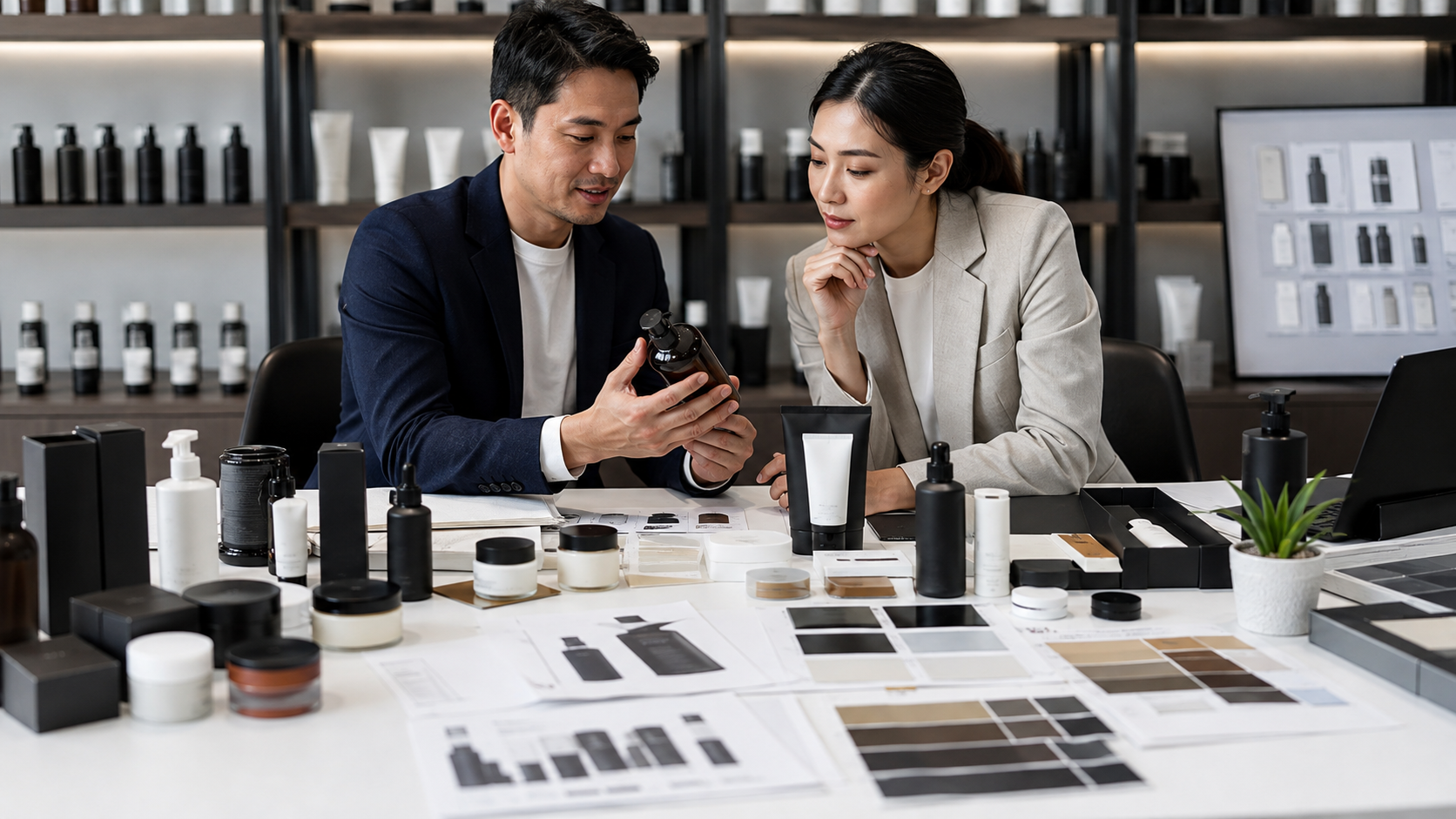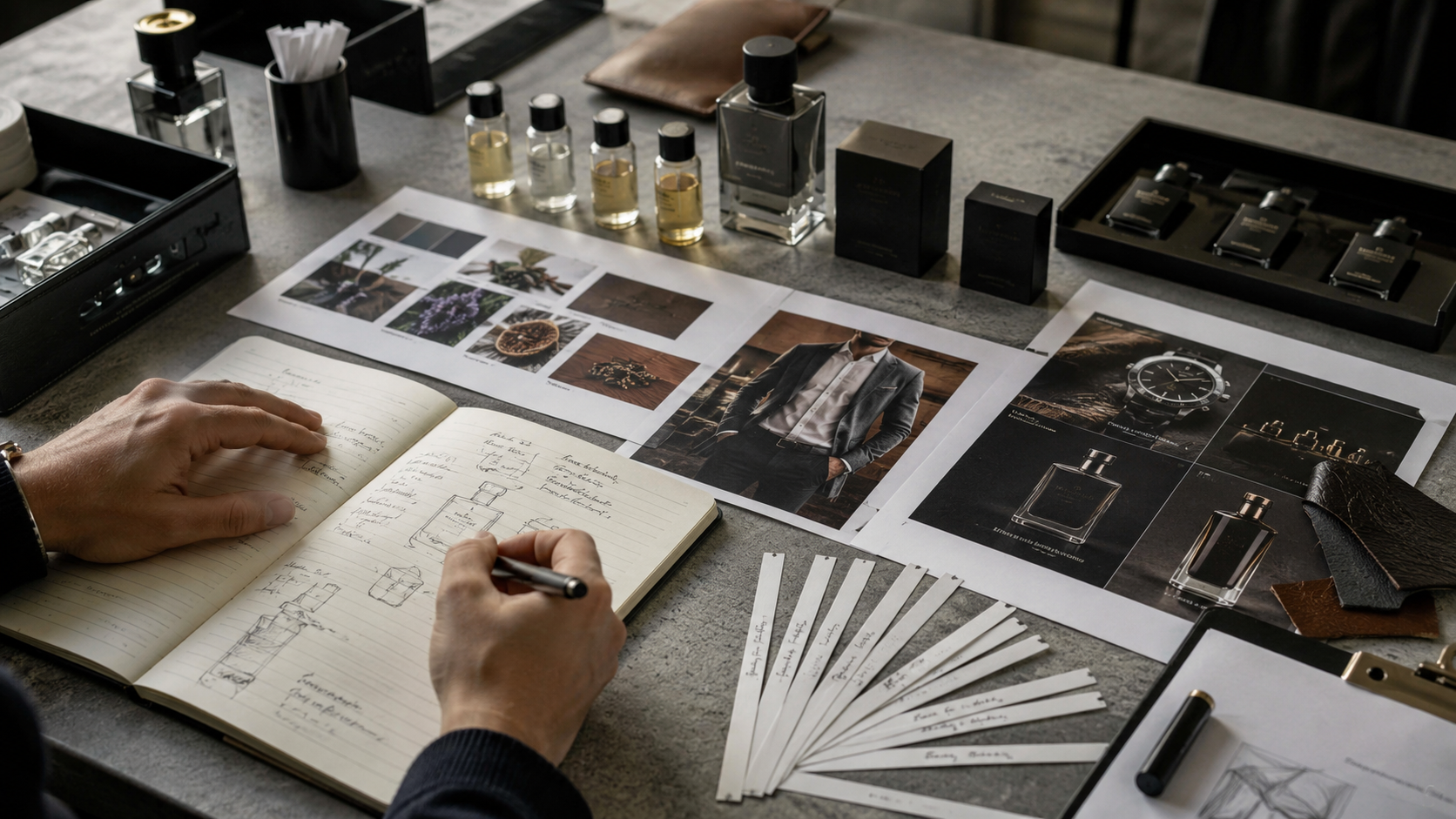
A new skincare brand does not need twelve products on day one. It needs a reason to exist.
That sounds obvious, but it is where many projects wobble. A buyer orders a cleanser, toner, serum, eye cream, moisturizer, scrub, and mask, then discovers there is no clear answer to a basic customer question: “Which product should I try first?”
Think of the range like a small restaurant menu. A few dishes done well are easier to understand, buy, and recommend than a 40-page menu with no specialty.
This guide explains how to plan a focused range, brief formulas, select packaging, manage testing and claims, and check whether a manufacturer can deliver. The goal is not to put “for men” on a dark bottle. It is to build products people will use again.
The commercial opportunity is real. NielsenIQ reported that the broader U.S. men’s grooming category reached $7.1 billion, up 6.9% year over year, while online sales grew 27.6% and represented almost half of category dollar sales. Those figures include more than facial skincare, so they should not be treated as a skincare-only market size. Still, they show that men are buying grooming products in a fast-changing, digital-first market. See NielsenIQ’s category analysis.
What Private Label Men’s Skincare Actually Means
The language around cosmetic manufacturing is messy. Two suppliers may use “OEM” to describe quite different services. Look at the actual scope, ownership, documents, and testing—not just the acronym.
| Development model | What normally changes | Best fit | Main watch-out |
| Stock private label | Brand name, label, carton, and selected stock packaging | Testing demand or launching with a smaller budget | Limited differentiation; formula exclusivity may not exist |
| Semi-custom | Fragrance, color, texture, selected ingredients, or packaging | A defined concept without a full custom-development budget | A “small” change may require new stability or compatibility work |
| Custom ODM | Formula and packaging are developed from the brand’s brief | A differentiated hero SKU or established range | More samples, testing, time, and ownership decisions |
| OEM / contract manufacturing | The brand supplies or owns a formula and technical specification | Experienced product teams | Technology transfer and responsibilities must be written clearly |
White label and private label often describe stock products. ODM usually includes more design and formulation input. OEM may mean manufacturing a buyer-owned product, though some factories use it for all private label work.
Ask four direct questions:
- Is the formula stock, modified, or fully custom?
- Who owns it, and is it sold to other customers?
- Which tests are already available for this exact formula and package?
- Which factory will mix and fill the production batch?
A broad private label men’s grooming manufacturer guide can help you compare the wider development models. For facial skincare, the next job is more specific: decide what belongs in the first product line.
Does Men’s Skincare Really Need a Male Formula?
Sometimes yes, but not for the reason printed in many sales decks.
Average differences in oil production, hair growth, shaving, and skin thickness may influence design. They do not mean every man needs a strong cleanser and heavily fragranced gel. Climate, age, skin concern, and shave routine matter.
Better development variables include:
- Skin concern and current routine
- Climate and season
- Shaving frequency and facial hair
- Desired finish: matte, natural, or richer
- Fragrance tolerance
- Number of steps the user will realistically follow
- Products applied before and after it
Men’s positioning can still be useful. Clear instructions, quick absorption, low tack, easy dosing, and packaging that works with wet hands remove friction. The formula must still solve a real use case.
A useful brief sounds like this:
A fast-absorbing gel-cream for combination skin, used after shaving, with a natural finish, low fragrance, no pilling under sunscreen, and one-pump facial dosing.
“Premium face cream for men” is not a useful brief. It is a mood.
Build the Product Line in Layers
The safest portfolio usually grows in three layers: foundation, hero, and extensions.
Layer 1: Build a Complete Foundation
A cleanser and moisturizer make a simple routine and create repeat purchase. The cleanser should remove soil, excess oil, and sunscreen without a tight after-feel. The moisturizer needs one clear job: perhaps light daytime hydration, richer barrier comfort, or post-shave use.
Layer 2: Add One Hero Product
The hero gives the brand a reason to buy: perhaps a lightweight niacinamide serum, barrier-support serum, post-shave concentrate, or moisturizer with a supported hydration claim. It is not simply the bottle with the highest active count.
Layer 3: Add Extensions After Learning
Eye gel, exfoliant, toner, mask, travel sizes, and body care can follow after the core line works. A beard brand can extend from an existing behavior, which is why building a complete beard care system is often easier than launching unrelated products together.
| Product | Job in the routine | Useful formats | Commercial role | Development risk |
| Facial cleanser | Clean without an overly dry after-feel | Gel, cream, foam, powder, stick | Entry and replenishment SKU | Harshness, weak foam, pump issues, microbiology |
| Moisturizer | Improve skin feel and appearance | Lotion, gel-cream, cream, balm | Routine anchor and bundle driver | Greasiness, pilling, instability, poor dispensing |
| Serum | Deliver a focused cosmetic benefit | Water gel, emulsion, oil serum | Hero and margin builder | Tack, ingredient compatibility, claim support |
| Post-shave product | Connect skincare to an existing habit | Balm, gel, lotion, mist | Bridge from shaving into skincare | Sting, fragrance load, drug-like claims |
| Exfoliant | Improve surface feel and appearance | Leave-on liquid, serum, rinse-off mask | Concern-led extension | Irritation, pH, usage instructions, acne claims |
| Eye product | Address the appearance of dryness or puffiness | Gel, serum, cream, cooling applicator | Premium extension | Overclaiming and expensive packaging |
Match the Range to a Need and a Sales Channel
“Men aged 18 to 55” is not a target user. It is almost everyone and therefore no one.
Start with a need state:
- Oily or combination skin: Effective cleansing, light finish, and visible shine control.
- Dry or barrier-stressed skin: Gentle cleansing, emollience, and less post-wash tightness.
- Sensitive-feeling or post-shave skin: Controlled fragrance and comfort-focused testing.
- Mature-looking skin: Hydration and smoother appearance with sensible ingredient positioning.
- Acne-prone users: Clear separation between cosmetic care and acne treatment.
Then adapt the brief to the channel.
Amazon reviews expose leakage and confusing instructions. DTC supports education and bundles. Retail needs shelf recognition and margin. Barbershops benefit from professional use and back-bar sizes. Hotels prioritize leak resistance, unit cost, and reliable supply.
This is also why a successful hair brand should not copy its styling strategy into skincare without thought. The channel knowledge may transfer, but the technical file does not. Our men’s hair styling OEM/ODM guide shows how strongly format and performance expectations can change the manufacturing brief.
Formula Systems Matter More Than Ingredient Bingo
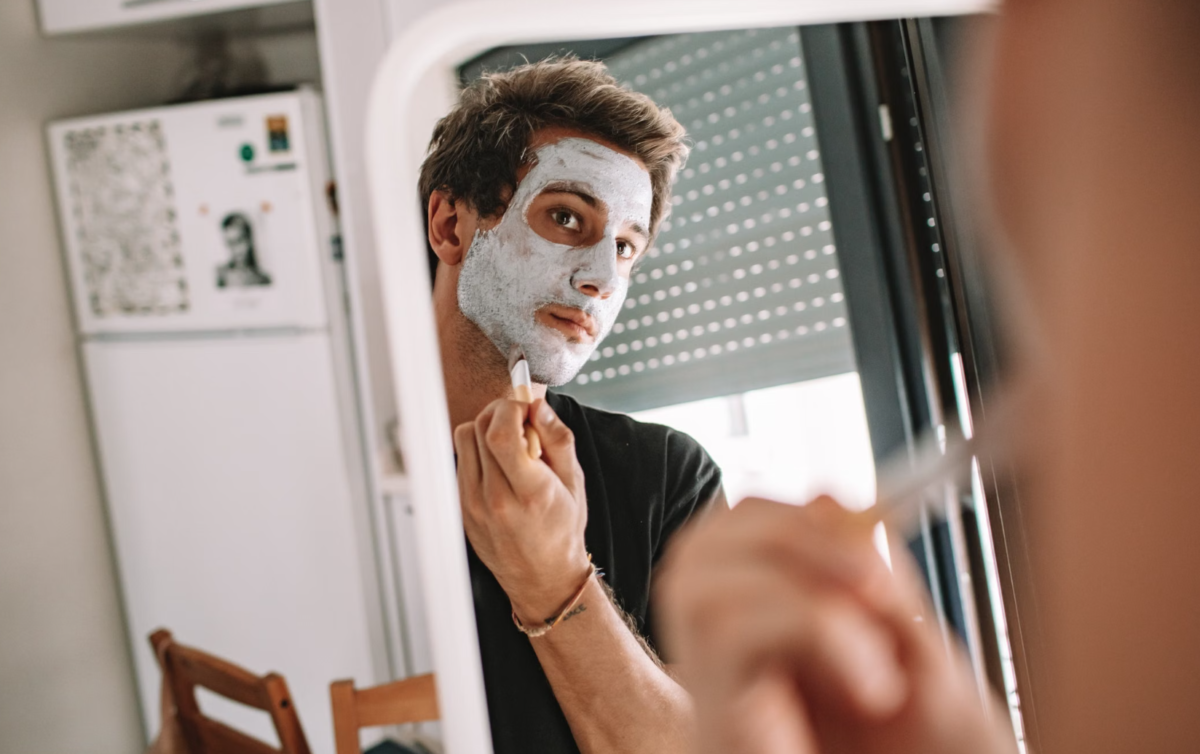
Consumers search for niacinamide, hyaluronic acid, ceramides, and peptides. Those materials can be useful, but a formula is a system, not a supermarket basket.
Cleansers: Foam Is Only One Part of Mildness
A face wash combines surfactants, viscosity control, preservation, fragrance direction, and packaging. The system affects foam, rinse, oil removal, pH, and after-feel. “Sulfate-free” does not automatically mean gentle. Test the complete product at the intended dose.
Moisturizers: Balance Water, Oil, and Finish
Lotions and creams combine water and oil phases, emulsifiers, humectants, emollients, texture modifiers, and preservation. Glycerin, hyaluronic acid, and betaine support hydration concepts. Squalane can improve slip; ceramide and panthenol concepts may suit barrier or comfort positioning. The finished formula still needs the right rub-in, shine, tack, and beard-area feel.
Serums: A Focused Story Needs Technical Discipline
Niacinamide concentration alone does not build a good serum. Consider pH, compatibility, tack, color, odor, packaging, and evidence. Ask the same questions about antioxidants, peptides, acids, and botanical extracts.
Preservation and Fragrance Are Not Side Notes
Water-based products need an appropriate preservation strategy. Packaging, hygiene, expected use, pH, and composition affect microbial risk; “natural” positioning does not remove it. Fragrance can affect stability, tolerance, documentation, and brand identity, so define fragrance-free or unscented claims early.
Sensory Design Is Product Performance
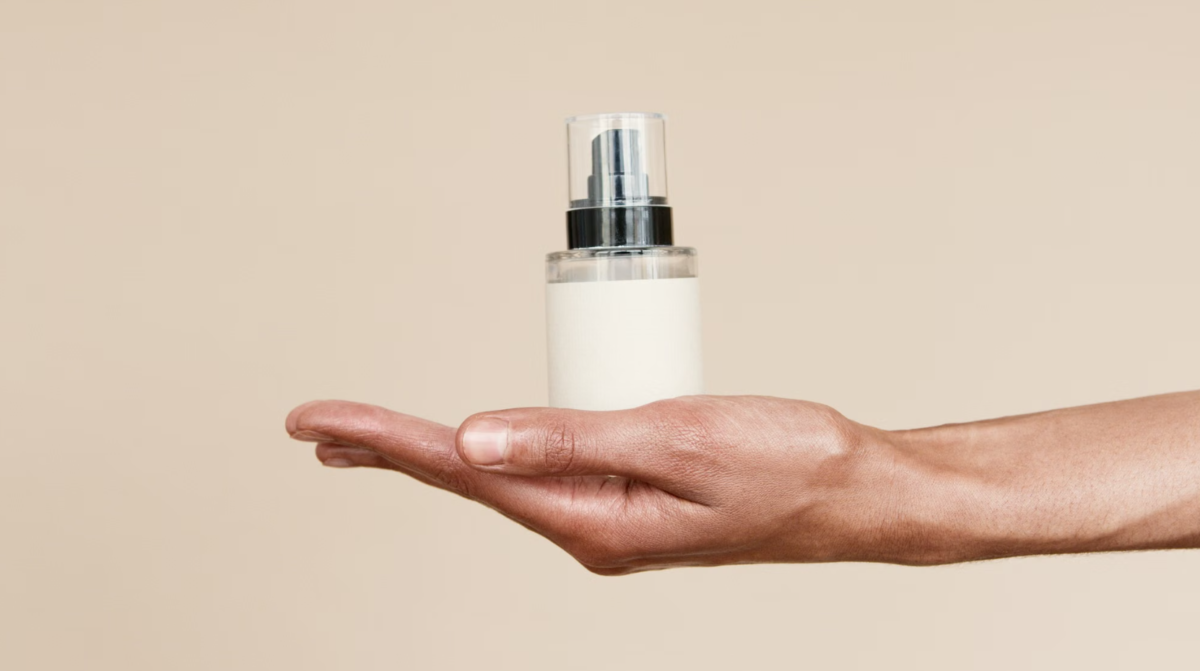
People experience spread, smell, tack, shine, dose, and what happens two minutes later—not an ingredient list.
Create a short sensory specification for each SKU:
- How quickly should it spread and absorb?
- How much shine is acceptable after five minutes?
- Should the finish feel dry, silky, cushioned, or rich?
- Can it move through short facial hair without clumping?
- Does it pill over a serum or under another daily product?
- How strong should the fragrance be during and after use?
- Is one pump enough for the face and neck?
Test the intended routine. A serum and moisturizer may work alone but form little eraser-like rolls when layered. Annoying, yes. Also preventable.
Packaging Is Part of the Formula
Packaging protects the formula, delivers the dose, survives freight, and often sets the real MOQ.
| Package | Good fit | Main advantage | Watch-out |
| Airless pump | Lotion, gel-cream, serum | Controlled dosing and lower air exposure | Priming, compatibility, residual product, component MOQ |
| Tube | Cleanser, cream, mask | Practical, familiar, travel-friendly | Seal quality, paneling, decoration, viscosity window |
| Dropper | Fluid serum or oil | Premium ritual and visible dosing | Dose variation, leakage, contamination, oxidation |
| Jar | Rich cream, balm, mask | Easy access and strong shelf presence | User contact, air exposure, lid and wiper fit |
| Stick | Cleanser, balm, targeted format | Portable and distinctive | Pay-off, sweating, cracking, heat stability |
Run compatibility in the final package. Check discoloration, cracking, label adhesion, leakage, pump output, cap fit, decoration, and product left behind. For e-commerce, add realistic drop, vibration, and temperature exposure. An oily carton is a refund with good typography.
What Testing Should Happen Before Launch?
Testing should answer three different questions: will the formula remain acceptable, will the package work with it, and is the product safe and properly supported for its intended use?
| Test or record | Question it answers | When it is used |
| Stability program | Does appearance, odor, pH, viscosity, and overall quality remain acceptable? | Development validation and shelf-life support |
| Microbiological limits | Does the batch meet defined microbial specifications? | Development and production release |
| Preservative-effectiveness test | Can the preservation system control an introduced microbial challenge under the method used? | Suitable water-based formula validation |
| Formula-package compatibility | Does the product interact with the pump, tube, bottle, decoration, or closure? | Before final packaging approval |
| Safety substantiation | Is there adequate support for safe use under labeled conditions? | Before placing the product on the market |
| Consumer or instrumental study | Does the finished product support the stated benefit? | Before publishing the relevant claim |
| Batch specification and COA | Did this production batch meet its approved release limits? | Every applicable production batch |
The FDA does not prescribe one test package for every cosmetic; the company remains responsible for safety. Its overview of cosmetic product testing is a useful start. Contamination may come from raw materials, water, manufacturing, preservation, packaging, transport, or use, as its guidance on microbiological safety and cosmetics explains.
Match each study to the exact claim. “Clinically proven” and percentage claims need a defined finished product, protocol, population, endpoint, and time point.
Standards, Documents, and Claims Can Change the Whole Project
Regulatory planning belongs near the start, not two days before artwork approval.
MoCRA and U.S. Cosmetic Responsibilities
The brand and manufacturer should agree who handles MoCRA responsible-person activities, safety substantiation, adverse events, facility registration, product listing, and updates where applicable. Use the FDA’s MoCRA overview as the official starting point.
Labels need identity, net contents, ingredients, business information, and applicable warnings. The FDA’s cosmetics labeling summary explains the federal framework; product- and market-specific review is still needed.
Cosmetic Claims Versus Drug Claims
A cosmetic can cleanse, moisturize, condition, perfume, improve appearance, or make fine lines look less noticeable. Claims that a product treats disease or affects the structure or function of the body can move it into drug territory. The FDA explains that boundary in Is It a Cosmetic, a Drug, or Both?.
Be especially careful with:
- “Treats acne” or “prevents breakouts”
- “Heals eczema”
- “Repairs damaged skin cells”
- “Rebuilds collagen”
- “Reduces inflammation”
- SPF or sun-protection claims
Improving the appearance of fine lines can be cosmetic. Structure-changing claims require closer review, as the FDA notes for wrinkle and anti-aging products. U.S. sunscreens are drugs, so consult FDA sunscreen guidance before treating SPF as a simple extension.
GMP Evidence Is Important, but It Is Not Product Approval
ISO 22716 provides cosmetic GMP guidance for production, control, storage, and shipment. It is useful evidence when evaluating a quality system. It does not prove that every formula is stable, every claim is supported, or every product complies in every country.
Ask for the actual product and batch documents: approved formula, INCI list, specifications, raw-material controls, batch record, COA, stability, microbiology, compatibility, safety support, traceability, and change-control process.
How to Audit a Men’s Skincare Manufacturer
A professional website is not an audit. Neither is a row of logos.
Confirm the real manufacturing and filling site. A transparent factory network can work, but ask which steps are subcontracted and who owns quality decisions.
Capability Questions
- Does the facility routinely make this format at the required batch size?
- Can its process scale without changing texture, color, odor, or dispensing?
- Who performs stability, microbiology, compatibility, and claims studies?
Quality-System Questions
- How are materials traced and formulas, specifications, and artwork controlled?
- What happens when a batch deviates from specification?
- How are complaints, corrective actions, retention samples, and records handled?
- Will the buyer be notified before a material, package, formula, or site changes?
Commercial Questions
- What drives the MOQ, and who owns the formula, artwork, molds, and reports?
- How many sample rounds are included, and how is the benchmark approved?
- What are the rules for overruns, defects, rework, and component delays?
BunJoin’s approach to supporting global brands can provide context for how sourcing, development, production, and delivery fit together. Whatever partner you choose, the important thing is evidence. A good supplier should explain tradeoffs rather than promise that every request is “no problem.”
MOQ, Cost, and Timeline: What Moves the Quote?
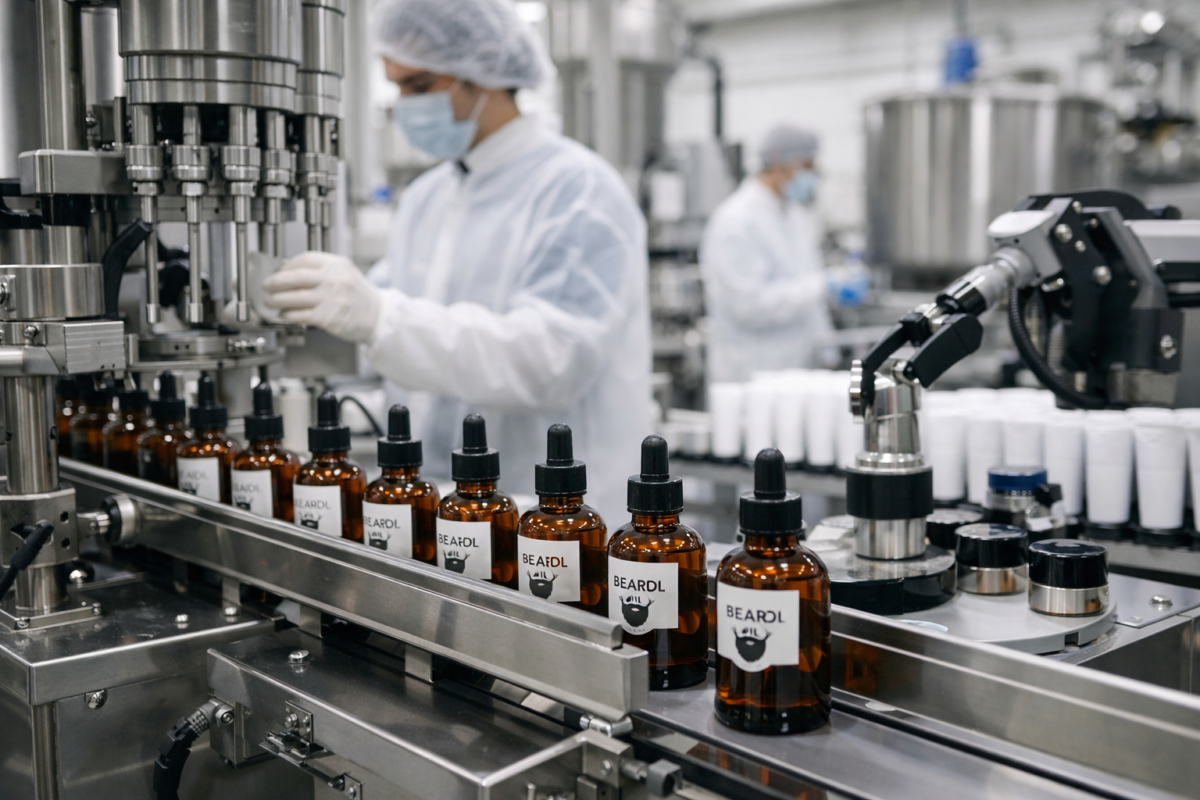
There is no honest universal MOQ for private label skincare.
A factory may mix a modest batch while the selected pump requires a much larger order. State MOQ separately for bulk, each packaging component, and finished units.
Stock formulas and packaging are usually faster. Semi-custom and custom work adds samples, validation, claims support, and market documents.
Cost drivers include:
- Formula complexity and raw-material cost
- Batch size and manufacturing process
- Packaging, printing, decoration, and tooling
- Stability, microbiology, safety, and claim support
- Regulatory and destination-market documents
- Assembly, inspection, freight, and dangerous-goods restrictions where relevant
- Rush schedules and split shipments
Compare landed project cost, not just unit price. A leaking pump or excess components can swallow the savings quickly.
Three Practical Product-Line Architectures
1. Lean Two-SKU Starter
Daily cleanser + lightweight moisturizer
This simple routine suits a startup testing demand or an adjacent grooming brand. Make one product the hero through texture, finish, packaging, or a supported benefit.
2. Concern-Led Three-SKU Line
Cleanser + focused serum + compatible moisturizer
This works when the brand owns one concern, such as shine, hydration, or barrier comfort. The serum carries the story; test all three products together.
3. Shave-Adjacent Three-SKU Line
Cleanser + post-shave serum or balm + moisturizer
This natural extension for razor, beard, and barbershop brands connects skincare to an existing behavior.
Whichever model you choose, keep the packaging family coherent and the product jobs distinct. If two moisturizers sound almost identical, customers will be confused and inventory will compete with itself.
A Practical RFQ Checklist
Before asking for price, give the manufacturer enough information to quote the same project you are imagining:
- Target user, market, channel, price tier, and annual forecast
- Product role, use occasion, format, benchmark, and routine
- Texture, spread, absorption, shine, tack, fragrance, and dose targets
- Intended claims and claims that must not appear
- Preferred packaging, size, decoration, shipping conditions, and sustainability goals
- Stock, semi-custom, or custom-development requirement
- Formula ownership and exclusivity expectations
- Required testing, quality records, market documents, and artwork support
- Target cost, desired MOQ, launch date, and sample-approval process
If you already have a target user and a rough product architecture, you can discuss your men’s skincare brief with the team instead of sending the classic one-line request: “Please quote premium skincare.”
Conclusion
A strong private label men’s skincare line is not a pile of popular ingredients in masculine packaging. It is a coordinated product, formula, sensory, package, claims, and supply system.
Start with one defined user, one realistic routine, and one hero reason to buy. Validate the formula in the final package. Support the claims you make. Then choose a men’s grooming product-development partner that can document decisions and protect batch-to-batch consistency.
Two or three clear products can build a brand. Twelve unclear products mostly build a warehouse problem.
Frequently Asked Questions
1. What are the best first products for a private label men’s skincare line?
A facial cleanser and moisturizer create the simplest complete routine. Add one focused serum or post-shave product if the brand needs a stronger hero story. The best choice still depends on the audience, channel, budget, and existing brand authority.
2. Does men’s skincare need different formulas from women’s skincare?
Not automatically. Average skin and shaving differences may influence the brief, but concern, climate, age, facial hair, fragrance tolerance, and desired finish are more useful than gender alone. Many successful concepts could be technically unisex while being marketed to men through routine, language, and sensory design.
3. What is the difference between private label, OEM, and ODM skincare?
Private label often uses an existing formula with the buyer’s branding. ODM usually includes formula or package development. OEM often means manufacturing to a buyer’s design or specification, although suppliers use these terms differently. Confirm the actual work, ownership, tests, and documents in writing.
4. What is a typical MOQ for private label men’s skincare?
There is no single standard. Stock formulas and stock packages may support smaller runs. Custom formulas, printed tubes, colored pumps, cartons, molds, and premium decoration usually raise the minimum. Ask for separate MOQs for bulk, components, and finished units.
5. How much does it cost to launch a men’s skincare line?
Cost depends on formula model, number of SKUs, packaging, testing, artwork, tooling, claims, freight, and inventory. A two-SKU stock-formula launch can be far lighter than a custom five-SKU range. Build a full project budget, not just a per-unit comparison.
6. How long does custom skincare development take?
Stock private label is generally the fastest. Semi-custom and custom ODM projects take longer because of briefing, lab samples, revisions, packaging sourcing, stability and compatibility work, artwork, production scheduling, and freight. Ask the supplier for a milestone schedule with dependencies rather than one optimistic delivery date.
7. Which ingredients are popular in men’s skincare?
Common choices include glycerin, hyaluronic acid, niacinamide, panthenol, ceramides, squalane, antioxidants, peptides, and selected botanical extracts. Popularity is not the same as suitability. The right level, formula system, sensory result, stability, safety, and evidence matter more than a long label.
8. What tests and documents should a skincare manufacturer provide?
The package depends on the formula and market, but commonly includes specifications, INCI information, batch records, COA, stability, microbiological results, preservative-effectiveness data where appropriate, packaging compatibility, safety support, and claim evidence. GMP and traceability records should support the manufacturing system.
9. Can private label skincare claim to treat acne, eczema, wrinkles, or provide SPF?
Be careful. Cleansing, moisturizing, and improving appearance are ordinary cosmetic purposes. Treating acne or eczema, changing skin structure, or providing sun protection can create drug requirements in the United States. Review the exact formula, intended use, wording, and market before approving artwork.
10. How can I verify that a private label skincare manufacturer is reliable?
Verify the real production site, relevant format experience, quality system, documentation, test reports, formula control, traceability, change notification, complaint handling, and commercial terms. Request evidence for the exact product—not a generic certificate pack. Start with samples, then approve a written specification and benchmark before production.