OEM, ODM and OBM sound like three tidy boxes. In real sourcing conversations, they are more like labels on moving boxes after a house move. The label says “kitchen,” but you still need to open the box to see what is actually inside.
That matters when you are launching beard oil, pomade, face wash, body care or fragrance. Pick the wrong working model and you may pay for development you did not need. Worse, you may discover late that you do not own the formula, cannot move it to another factory or have not assigned a critical compliance task.
This guide gives founders, Amazon sellers, distributors, barbershop brands and established grooming companies a practical way to choose. It looks past the acronyms and focuses on five things: control, capability, speed, risk and long-term brand value.
If you are still mapping the full category, BunJoin’s men’s grooming manufacturing guide provides a wider view of products, formulas, packaging and supplier evaluation. Here, we are going deeper into the business model itself.
OEM, ODM and OBM Are Not Three Versions of the Same Service
In this guide, the terms are used in their most useful manufacturing sense:
- OEM, or original equipment manufacturing: your brand supplies or controls the product specification, formula or technical design. The supplier manufactures to that specification.
- ODM, or original design manufacturing: the supplier contributes product design and development. This may start with a mature base formula or with a new brief developed for your brand.
- OBM, or original brand manufacturing: a company owns the brand and sells products under that brand. It controls the commercial identity, route to market and customer relationship.
The key point is easy to miss: OBM describes brand ownership and go-to-market control. OEM and ODM mainly describe how a product is developed and made.
A men’s grooming company can therefore operate as an OBM while outsourcing one serum through an OEM and another product through an ODM. These models can overlap. They are not always three doors where you may open only one.
Formal definitions used in supply-chain disclosures follow this same broad division: OEM manufactures from customer designs, ODM adds design responsibility, and OBM owns and markets the brand. One accessible example appears in this Hong Kong Stock Exchange filing.
| Model | Who usually leads product design? | Whose brand is on the product? | Typical reason to choose it |
| OEM | Buyer or buyer-appointed developer | Buyer | Maximum control over a defined product |
| ODM | Manufacturer, often working from the buyer’s brief | Buyer | Faster access to formulation and development capability |
| OBM | Brand owner | Brand owner’s own brand | Build and control a market-facing brand asset |
There is a wrinkle. Cosmetics suppliers do not use these words consistently. One factory may call a modified stock formula “OEM.” Another calls it “ODM.” A third may use “OEM/ODM” for nearly everything.
So, yes, learn the acronyms. Then put them aside and ask for a written responsibility and ownership matrix. That document is far more useful than the label on a quotation.
Private Label, White Label and Contract Manufacturing: Where Do They Fit?
These terms describe nearby ideas, but they are not perfect synonyms.
Private label
A product is made by one company and sold under another company’s brand. The formula may be standard, semi-custom or fully custom. Private label can therefore sit inside an ODM or OEM relationship.
White label
Several buyers may purchase substantially the same ready-made product and apply different branding. Customization is usually limited to the label, decoration, fragrance, color or packaging. It is often the quickest route to a market test.
Contract manufacturing
A third party produces goods under an agreed specification. In beauty and personal care, this often looks like OEM: the buyer has a formula, master specification or detailed technical package and hires the factory to scale, fill and pack it.
Turnkey manufacturing
One partner coordinates multiple stages, such as formula development, packaging sourcing, testing, production and delivery. Turnkey describes service scope. It does not automatically tell you who owns the formula or carries each legal duty.
This is why a sentence such as “we provide turnkey ODM” is not enough. Ask: What is custom? What is exclusive? Who owns the formula? Who holds the test reports? Can we transfer production? What happens if a raw material is discontinued?
Compare the Models by Control, Work and Risk
The cleanest comparison is not “cheap versus expensive.” It is who must know what, decide what and be responsible for what.
| Decision area | OEM relationship | ODM relationship | OBM responsibility |
| Product concept | Buyer defines it | Buyer briefs; supplier helps shape it | Brand decides portfolio and positioning |
| Formula or specification | Buyer supplies or controls it | Supplier develops or adapts it | Brand decides how much ownership it needs |
| Development work | Mainly buyer-side | Mainly supplier-side or shared | Brand manages consumer and commercial fit |
| Raw-material selection | Buyer specifies; supplier qualifies | Supplier proposes and qualifies | Brand approves claims, cost and positioning |
| Packaging | Buyer may provide full BOM | Supplier may source and engineer | Brand owns visual identity and user experience |
| Testing | Defined by buyer and market needs | Proposed or managed by supplier | Brand confirms evidence is adequate for sale |
| Manufacturing and QC | Supplier | Supplier | Brand monitors supplier performance |
| Formula IP | Often buyer-controlled | Depends heavily on contract | Brand protects the assets it actually owns |
| Label and claims | Buyer approves | Supplier may support | Brand or named responsible party remains exposed |
| Sales and marketing | Buyer | Buyer | Core OBM activity |
| Post-market feedback | Buyer collects and shares | Buyer collects; supplier investigates defects | Brand manages complaints, recalls and reputation |
Notice how the OBM column does not replace the other two. It sits above them. A brand owner can outsource production, but it cannot outsource the fact that customers see its name on the bottle.
When OEM Fits a Men’s Grooming Launch
OEM is a strong fit when you already know exactly what should be made.
Perhaps you have an internally developed matte clay with a defined hold curve, washout profile and approved fragrance. Maybe a cosmetic chemist created your scalp serum and you own the formulation package. Or a retailer has given you a detailed specification that must be followed.
In those cases, you are not buying product invention. You are buying reliable scale-up, manufacturing, filling, packaging and quality execution.
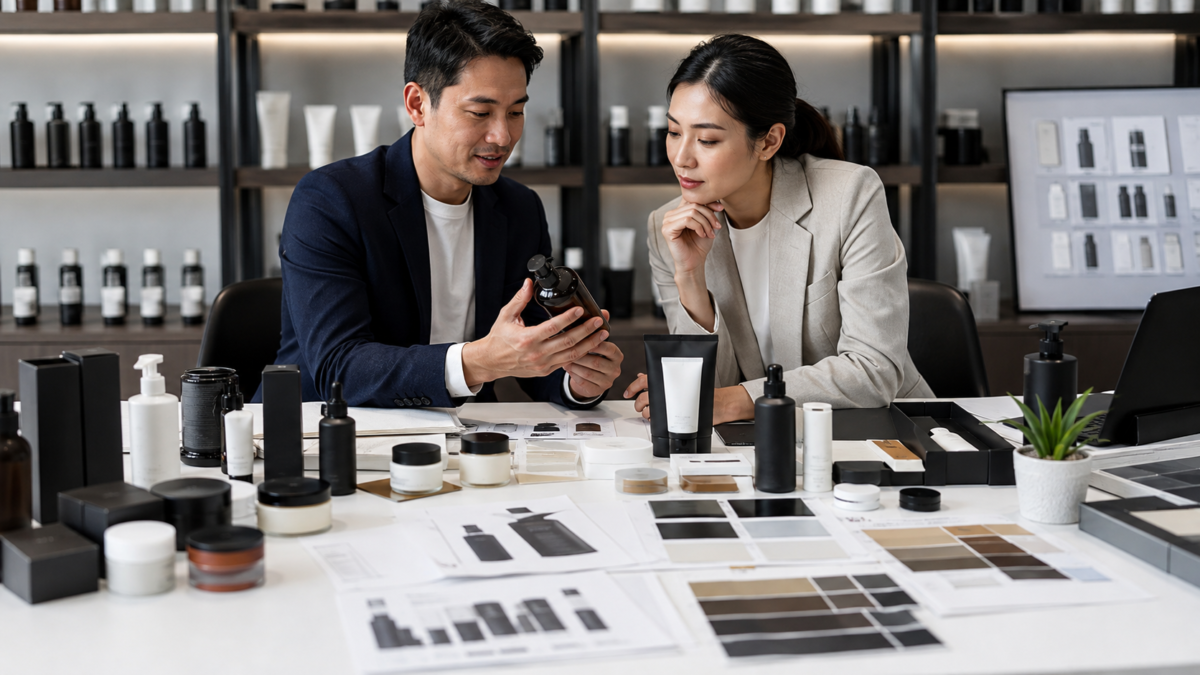
OEM works well when you have:
- A complete formula or technical specification
- Clear target specifications and test methods
- Access to a formulator or technical project manager
- A reason to protect a genuinely differentiated product
- Enough volume to justify validation, transfer and setup work
- The ability to review deviations and approve changes
What buyers often underestimate
A laboratory formula is not automatically factory-ready. A 500-gram bench batch may behave differently in a 1,000-kilogram vessel. Heating, mixing speed, cooling time and the order of addition can change viscosity, texture and fragrance.
The buyer also needs a usable technical transfer package. That may include:
- Formula with INCI names, trade names and percentages
- Raw-material specifications and approved alternatives
- Manufacturing instructions and critical process parameters
- Finished-product specifications
- Packaging bill of materials
- Stability, compatibility and microbiological requirements
- Approved master sample or “golden sample”
- Change-control and deviation rules
OEM gives you control, but control comes with homework. It is like bringing your own recipe to a commercial bakery. The bakery can scale it, but “mix until it looks right” is not a production instruction.
When ODM Is the Better Starting Point
ODM suits brands that know the customer and desired product experience but do not have a complete technical solution.
You might know that your customer wants a water-based pomade with medium-high hold, natural shine and easy shampoo washout. You may have a target retail price, fragrance direction and packaging format. The ODM partner turns that commercial brief into a workable formula and manufacturing plan.
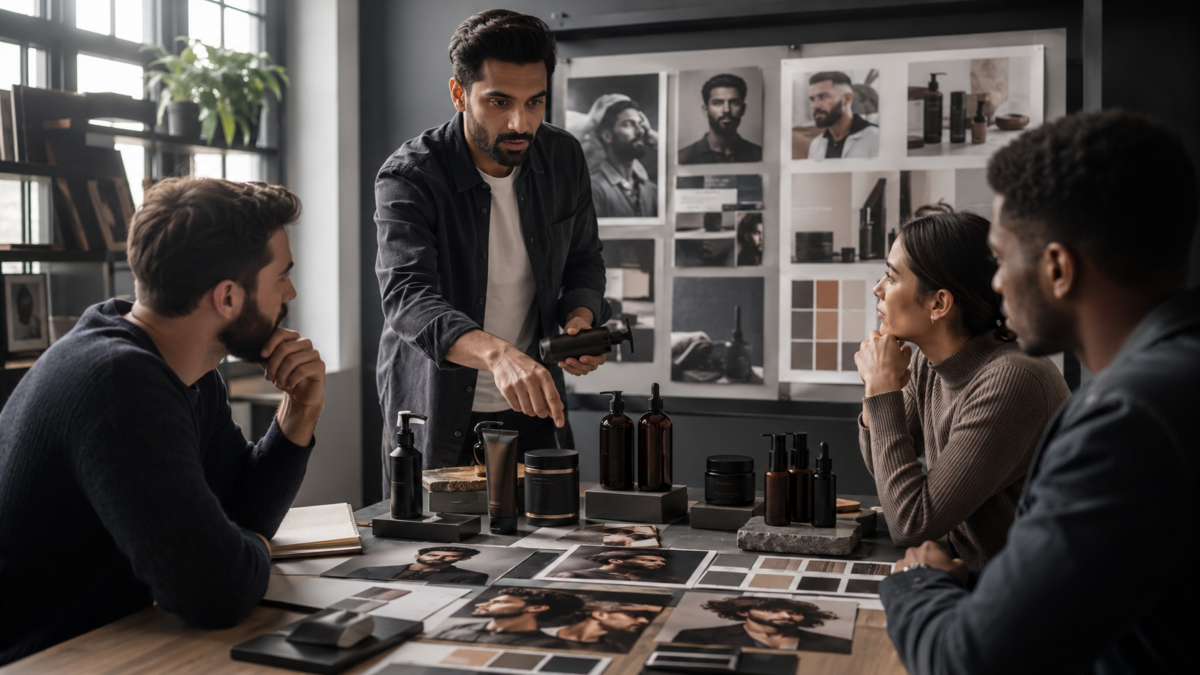
There are several levels of ODM:
Ready formula with branded packaging
This is close to private or white label. It is fast, relatively simple and useful for demand validation. Differentiation comes mainly from the brand, offer, packaging and channel.
Semi-custom development
The manufacturer modifies a proven platform. It may change fragrance, color, active ingredients, sensory feel or hold. This often provides a sensible middle ground between speed and distinction.
Full custom ODM
The supplier develops from a detailed brief, runs iterations and creates a new commercial formula. This can deliver more differentiation, although it normally requires more time, testing and commitment.
ODM is often practical for a first beard-care system, men’s skincare routine, body-care range or coordinated grooming kit. One development partner can help keep fragrance, texture, claims and packaging coherent across the line.
The risk is assuming “custom” means “owned by us.” It may not. A supplier can develop a formula for your project while retaining the underlying formulation know-how. Exclusivity may apply only to a fragrance, market, channel or defined period.
Get the answer in writing before paying a deposit.
OBM Is a Brand Strategy, Not a Magic Factory Package
OBM is often presented online as the most advanced form of contract manufacturing. That framing is shaky.
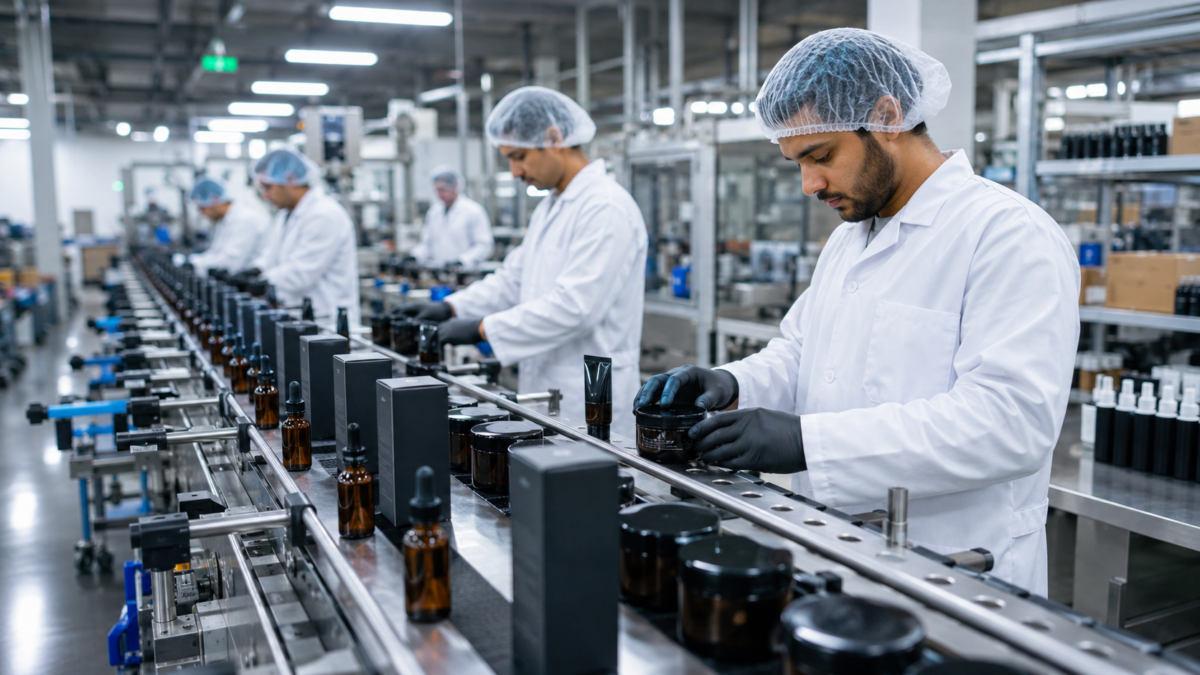
An original brand manufacturer sells under its own brand and takes responsibility for creating demand. In practice, the company manages positioning, trademarks, channel strategy, price architecture, launch plans, customer acquisition, feedback and portfolio decisions.
It may own a factory. It may also outsource everything physical.
For a men’s grooming founder, moving toward OBM means building assets beyond a product formula:
- A distinctive name and visual system
- Trademark rights in target markets
- Customer and channel relationships
- Product reviews and first-party feedback
- A repeatable launch and retention engine
- Claim language and brand guidelines
- A controlled portfolio rather than a random catalog
- Supplier knowledge, quality history and contingency plans
The USPTO trademark basics explain how trademarks identify the source of goods and help protect a brand. That source-identifying role is central to OBM. A logo printed on a jar is the beginning, not the whole job.
BunJoin itself can support formula, packaging and production work as a men’s grooming product development partner. Your company, however, remains the market-facing brand if the product is sold under your name.
Choose by Launch Conditions, Not by Ego
“Fully custom” sounds impressive. It is not always the smartest first move. A product model should fit the evidence you have today.
1. How clear is your product specification?
Choose OEM when the product is already defined technically. Choose ODM when the desired outcome is clear but the formula and process still need development.
If your entire brief is “premium natural beard oil for men,” you are not ready for OEM. You are barely ready for a useful ODM conversation. Define the user, climate, texture, fragrance, pack, claims, price and channel first.
2. Where does your differentiation live?
Not every brand needs a patented-feeling formula.
A barbershop may win through professional trust and local distribution. An Amazon seller may win through a better kit, clear instructions and dependable stock. A DTC skincare brand may need proprietary sensory performance and a stronger ingredient story.
Use custom development where customers can notice and value the difference. Do not spend six months reinventing a basic beard comb.
3. How much technical capacity do you have?
OEM requires the buyer to make more technical decisions. If nobody on your team can review a batch record, stability plan or substitution request, ODM support may reduce expensive mistakes.
That does not mean handing over every decision. A good ODM buyer still writes a sharp brief, compares samples, approves specifications and understands the target market.
4. What are the real budget and MOQ constraints?
Costs do not move in a perfectly straight line, but the pattern usually looks like this:
| Route | Upfront development burden | Typical speed | Typical MOQ pressure | Differentiation potential |
| White-label ODM | Low | Fastest | Often lowest | Low |
| Semi-custom ODM | Low to medium | Fast to moderate | Low to medium | Medium |
| Full-custom ODM | Medium to high | Moderate to slow | Medium | High |
| OEM transfer | Medium to high | Moderate after transfer | Medium to high | High if the formula is distinctive |
| OBM operation | High commercial investment | Ongoing | Depends on supply model | Highest brand-control potential |
These are directional patterns, not quotations. Packaging tooling, test scope, formula complexity and order size can flip the result.
5. How fast do you need reliable evidence?
For a new audience or channel, speed to learning can be more valuable than maximum customization. A mature ODM base can test price, scent and message. Once repeat demand appears, you can invest in a custom hero product.
That is not “thinking small.” It is buying information before buying complexity.
Product-by-Product Fit in Men’s Grooming
Different formats create different technical and commercial burdens.
| Product type | Practical starting route | Why |
| Beard oil | Ready or semi-custom ODM | Simple format; scent and skin feel can validate demand quickly |
| Beard balm or butter | Semi-custom ODM | Wax balance, graininess and hot-weather stability need experience |
| Pomade, clay or paste | Custom ODM or OEM | Hold, finish, pickup and washability create meaningful differentiation |
| Hair styling powder | Experienced ODM | Powder flow, application, inhalation considerations and pack function matter |
| Face cleanser | ODM | Surfactant system, preservation and mildness testing need formulation support |
| Serum or treatment | Custom ODM or OEM | Claims, active levels, stability and IP may justify tighter control |
| Body wash | Semi-custom ODM | Proven bases can be tailored through scent, feel and positioning |
| Fragrance | Specialist ODM or OEM | Scent brief, fragrance ownership, IFRA documents and packaging are central |
| Grooming kit | Hybrid | Products may use different routes, then share one brand and assembly plan |
A single launch can mix models. Your flagship clay might be custom OEM, while the shampoo uses semi-custom ODM and the comb is sourced as a standard accessory. The customer sees one routine. Your supply chain sees three workstreams.
Materials and Packaging Can Change the Model
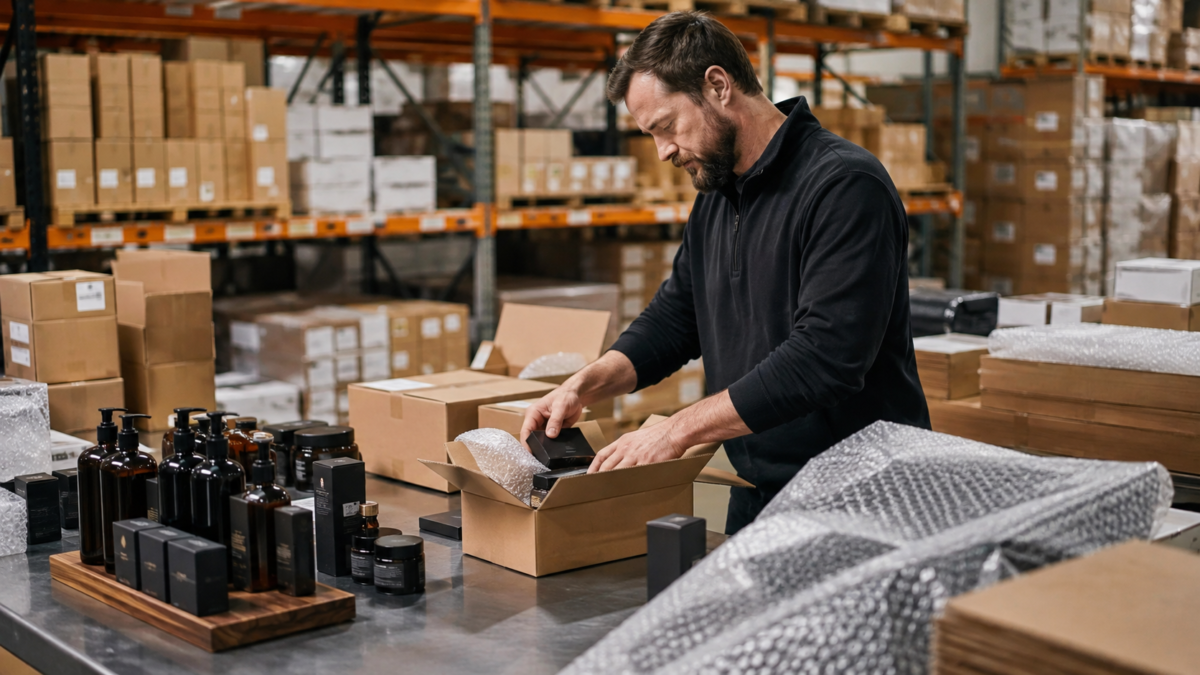
The formula is only part of the product. Raw materials, components and documentation often decide whether a project is truly transferable.
Formula and raw-material records
For each ingredient, identify the trade name, INCI name, supplier, grade, use level and specification. Relevant documents may include a certificate of analysis, safety data sheet, allergen statement, origin information and technical data.
If the ODM owns the base formula, you may receive only the finished INCI list rather than the formula percentages. That can be normal, but it limits your ability to transfer the product.
Fragrance and claim support
Ask who owns or can reuse the fragrance. Confirm which documents are available for your target market. If you want to say “24-hour odor control,” “clinically tested” or “reduces breakage,” decide who will create the evidence.
Advertising claims need a reasonable basis before publication. The FTC’s advertising substantiation policy is a useful US reference. A supplier’s marketing sentence is not automatically acceptable claim evidence.
Packaging BOM and tooling
Record the bottle, pump, cap, liner, label, carton, insert, case pack and decoration method. State who owns molds, artwork files and printing plates. Confirm compatibility between the formula and pack.
A premium pump that turns a $3 formula into a leaky return is not premium. It is just an expensive problem.
Change control
Your contract should define what happens when a pigment, preservative, fragrance component or pump becomes unavailable. No substitution should quietly enter production because it is “almost the same.” Require notice, documentation, evaluation and approval.
Standards and Compliance: Outsourcing Work Does Not Erase Legal Duties
Manufacturing responsibility and legal responsibility are related, but they are not identical.
ISO 22716 provides cosmetic GMP guidelines for production, control, storage and shipment. It is a strong supplier-screening reference, but a certificate alone does not prove that your exact product, batch or document set is compliant.
United States
Under MoCRA, facilities have registration obligations and the “responsible person” named on the label has product-listing and other duties. FDA states that facility registration is renewed every two years, while marketed cosmetic product listings are updated annually. Review the current FDA MoCRA requirements for the applicable product and business.
An OEM or ODM can prepare documents and submit information where authorized. Your agreement should still say who handles:
- Facility registration information
- Product listing data
- Safety substantiation records
- Adverse-event intake and escalation
- Label review
- Complaint investigation
- Recall communication
European Union
Cosmetics placed on the EU market need an EU Responsible Person, safety assessment, Product Information File and CPNP notification, among other requirements. The European Commission’s cosmetics legislation overview is the right starting point.
The practical lesson is simple: put every task in writing, but do not assume a contract can transfer away a statutory obligation imposed on your company.
Also separate cosmetics from drugs or therapeutic products. Claims such as “styles thinning hair” and “treats hair loss” can place the same-looking product into very different regulatory territory.
Common Failure Modes—and the Fix for Each One
“We thought the formula belonged to us”
Cause: The quotation says “custom,” but the contract says nothing about ownership.
Fix: Define background IP, newly created IP, formula access, exclusivity, territories, channels, transfer rights and post-termination use.
“The approved sample and production batch feel different”
Cause: No measurable specification or signed golden sample.
Fix: Approve sensory references plus objective ranges for appearance, odor, pH, viscosity, fill weight and relevant performance.
“The MOQ doubled after packaging was chosen”
Cause: Formula MOQ, bottle MOQ, decoration MOQ and carton MOQ were treated as one number.
Fix: Build a component-level MOQ table before finalizing design.
“We cannot move the product to another supplier”
Cause: The manufacturer owns the formula, tooling or essential records.
Fix: Decide whether portability is essential. If yes, negotiate it early and expect to pay for the control you want.
“Compliance was included—apparently”
Cause: The word “compliance” appeared in a sales deck without a deliverables list.
Fix: Create a market-by-market document matrix with owner, due date, version and approval status.
A Smarter Hybrid Roadmap
Many good brands do not choose one model forever. They move in stages.
Stage 1: Validate
Launch one to three products using a ready or semi-custom ODM platform. Spend your energy on customer fit, offer, content, packaging clarity and reliable delivery.
Stage 2: Differentiate
Use review data and repeat-purchase behavior to identify the feature that matters. Develop one custom hero SKU around that evidence.
Stage 3: Control
For mature products, secure tighter specifications, exclusivity or formula ownership. Add a second source where practical. Formalize change control and quality scorecards.
Stage 4: Build the OBM asset
Strengthen trademarks, channel relationships, customer data, brand language and product architecture. The company becomes valuable because it can repeatedly understand demand and deliver products—not merely because it owns a recipe.
You can read more about BunJoin’s company and supply-chain approach on the About BunJoin page.
Questions to Put in Your RFQ
Do not ask only for price and MOQ. Send every shortlisted supplier the same questions:
- Which parts of this project are standard, modified or newly developed?
- Who owns the base formula and each project modification?
- What formula information will we receive?
- Can the formula be made elsewhere, now or after termination?
- Which raw-material and finished-product documents are included?
- What stability, compatibility, microbiological and performance tests are proposed?
- What are the separate MOQs for bulk, primary pack, decoration, carton and assembly?
- Who owns molds, artwork, plates and other tooling?
- How are substitutions, deviations and specification changes approved?
- Who reviews labels and supplies compliance data for each destination market?
- What is the sample-to-production process and realistic timeline?
- How are complaints, adverse events, defects and recalls handled?
Good answers should be specific. “No problem, friend” is pleasant, but it is not a quality system.
A Five-Profile Decision Guide
The first-time Amazon seller
Start with a proven ODM product or a small coordinated kit. Prioritize leakage control, review-sensitive performance, landed margin and replenishment. Custom development can follow once demand is visible.
The barber with a loyal audience
Semi-custom ODM often works well. Use direct customer knowledge to define hold, finish, scent and pack size. A custom hero pomade may justify more development than the supporting shampoo.
The funded DTC skincare brand
Consider custom ODM or OEM for the hero product and mature ODM platforms for routine fillers. Invest in consumer testing, claims evidence and a distinctive sensory experience.
The retailer or distributor
Use ODM for speed but demand clear specifications, supply continuity and documentation. Product architecture, price tiers and reliable delivery may matter more than owning every formula.
The established brand with R&D
OEM is usually the natural fit for proprietary formulas. Evaluate the factory’s scale-up skill, process controls, equipment fit, confidentiality and change management.
Conclusion: Choose the Work You Are Ready to Own
OEM offers control when you already own the technical answer. ODM supplies development capability when you know the market outcome but need help building the product. OBM means owning the brand, demand and commercial system, whether the factory is yours or someone else’s.
The best launch model is not the one with the fanciest acronym. It is the one that matches your current evidence, team and risk tolerance while leaving a sensible path for growth.
Before signing, replace every broad promise with a named deliverable. Define formula rights. Define specifications. Define testing. Define regulatory tasks. Define change control. A little awkward detail now prevents a lot of very awkward detail later.
When you have a target customer, product idea, market and volume range, contact BunJoin to discuss the right development route.
Frequently Asked Questions
1. What is the main difference between OEM and ODM in cosmetics?
In an OEM project, the buyer normally supplies or controls the formula and product specification. In an ODM project, the manufacturer contributes design or formulation work based on the buyer’s brief. Because suppliers use the labels differently, confirm the actual scope and ownership in writing.
2. Is private label the same as ODM?
Not exactly. Private label means the product is sold under the buyer’s brand. The product may use a supplier-developed ODM formula, a lightly customized stock formula or a buyer-owned OEM formula.
3. Is OBM a type of contract manufacturing service?
Usually, no. OBM describes a company that owns and markets its own brand. An OBM company may manufacture internally or hire OEM and ODM partners. Some suppliers use “OBM service” to describe brand-building support, so ask what they actually deliver.
4. Which model is cheapest for a startup men’s grooming brand?
A ready or lightly customized ODM/private-label product usually has the lowest development burden. The lowest factory quote is not always the lowest total cost, though. Include packaging, testing, freight, duties, content, sales fees and unsold inventory.
5. Which model gives a brand ownership of the formula?
OEM commonly starts with a buyer-controlled formula. ODM ownership depends on the agreement. Paying a development fee does not automatically transfer the formula or underlying know-how. State ownership, access, exclusivity and transfer rights explicitly.
6. Can I switch an ODM formula to another manufacturer later?
Only if you have the necessary rights and technical information. If the supplier owns the formula, you may need to redevelop the product. Packaging tooling and proprietary fragrance can also limit portability.
7. Does OEM always require a higher MOQ than ODM?
Not always. Custom setup, validation and special materials often push OEM MOQs upward, while an ODM can combine demand around established materials. Yet custom packaging may become the real constraint in either model.
8. Can one grooming range use both OEM and ODM?
Yes. A brand might manufacture a proprietary serum through OEM, adapt a proven body-wash base through ODM and source standard accessories for a kit. What matters is consistent positioning, quality and documentation across the range.
9. Who is responsible for cosmetic compliance—the brand or manufacturer?
Both may have obligations, depending on the market and their legal roles. The manufacturer handles agreed production and documentation duties. The brand or named responsible person may carry listing, safety, labeling and post-market obligations. Map each duty for every target market.
10. What should I ask before choosing an OEM or ODM partner?
Ask about formula ownership, customization level, test scope, specifications, component MOQs, tooling, documentation, change control, complaint handling, lead time and transfer rights. Request evidence rather than relying on broad claims.