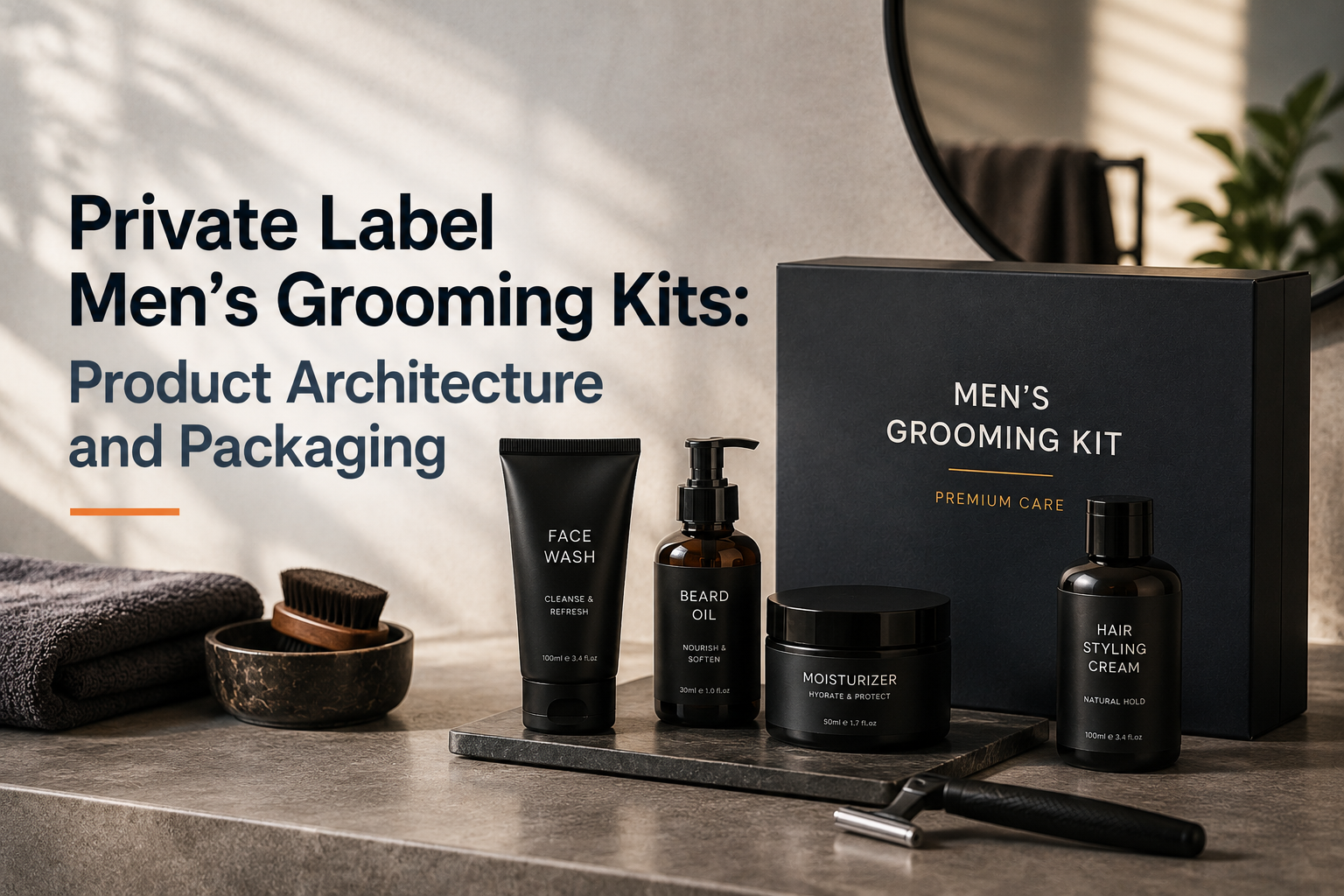

A beard-care range can look impressive in a product mockup. Five amber bottles. Three neat tins. A wooden comb sitting in a black gift box. Lovely.
Then the customer asks a very fair question: “What does each one actually do?”
That is where some product systems wobble.
Beard oil, balm, butter, wax, wash, and conditioner should not be the same promise wearing different clothes. Each SKU needs a clear job. Otherwise, customers get confused and the brand carries extra packaging, extra inventory, and extra headaches.
This guide is for founders, barber brands, salons, ecommerce sellers, retailers, distributors, and established grooming companies considering a private label men’s grooming partner. It explains how to begin with one useful beard oil, when to expand, which products belong in the system, and how formulation, scent, packaging, MOQ, testing, and compliance fit together.
The goal is not to build the largest line. It is to build the smallest line that feels complete.
Why Beard Oil Is Often the First SKU—but Not the Whole Strategy

Beard oil is a logical entry product. Consumers understand it. Barbers can demonstrate it in seconds. It fits into a small bottle, travels reasonably well when the closure behaves, and offers plenty of room for fragrance and sensory positioning.
It can also serve two closely connected areas: facial hair and the skin underneath. A well-designed product can improve slip, softness, shine, and the general feel of a dry or rough beard without turning the routine into a chemistry lesson.
Commercial research also supports its role as an entry category. Mordor Intelligence’s beard-care market report estimates that beard oil represented 35.70% of category sales in 2025. Its model also puts online retail at 35.67% of sales that year.
Those are proprietary estimates, not a law of nature. Market reports use different definitions and can produce very different totals. Still, the direction makes sense: oil is familiar, easy to explain, and suitable for online education.
What a Beard Oil Can Do Well
A beard oil can:
- Improve spread and combing
- Reduce a dry or rough feel
- Add controlled shine
- Carry a recognizable fragrance
- Support the feel of the skin beneath facial hair
- Fit daily, travel, barber, gifting, and subscription routines
Where One Oil Reaches Its Limit
Beard oil does not cleanse away sweat, dirt, wax, or styling buildup. It provides little styling hold. It may not be enough for long, coarse, very dry-feeling, or unruly beards. It also gives the brand only one repurchase rhythm and one product story.
That does not mean you should immediately add six products.
Expansion should come from evidence. Read reviews. Listen to barbers. Look at returns. Ask what users apply before or after the oil. If the common problem is buildup, a wash may be next. If it is flyaways, balm may be more useful. If customers love the oil but want a giftable routine, a comb and a box may create more value than another formula.
White Label, Private Label, OEM, and ODM Beard Care
These terms are often used loosely. A buyer should focus less on the acronym and more on what can change, who owns the result, and what has been included in the quote.
White Label
A white label product is usually an existing formula offered to multiple brands. You select available packaging, add branding, and launch. It is normally the fastest route, with differentiation coming mainly from scent, packaging, education, price, or audience.
Private Label or Semi-Custom
Private label often means an existing base with selected changes to fragrance, color, oil blend, viscosity, foam, hold, or packaging. Those changes still need testing: more wax may improve hold but make balm difficult to scoop in winter.
ODM
In an ODM project, the manufacturer helps design formulas, formats, packaging, tests, and the development sequence. It suits a brand that understands its customer but does not own a finished technical formula.
OEM
OEM normally means manufacturing to a buyer-controlled formula or specification. The site must still confirm that it can scale, fill, test, and produce it.
| Development route | Formula control | Relative speed | Differentiation | Typical fit |
| White label | Low | Fastest | Low | Testing demand or adding a basic retail SKU |
| Semi-custom private label | Medium | Fast to moderate | Medium | Growing brands wanting a distinct scent or feel |
| ODM | Medium to high | Moderate | High | Brands with a clear consumer and commercial brief |
| OEM | High | Moderate to long | High | Brands controlling a formula or detailed specification |
| Fully custom development | Highest | Longest | Highest | Proven brands with a strong business case |
“Custom” Does Not Always Mean Exclusive
Before development begins, ask:
- Who owns the formula?
- Can the same base be sold to another brand?
- Who owns the fragrance brief?
- Will you receive stability and compatibility data?
- Can the formula be transferred?
- Who owns artwork, molds, and tooling?
- How are future ingredient or packaging changes approved?
Put the answers in writing. “Don’t worry, it is your product” sounds nice, but it leaves plenty of room for future disagreement.
Design the Beard-Care System Around Jobs, Not Product Names
A useful system has a clear sequence:
clean → condition → control.
Not every customer needs every step every day. The sequence simply gives each product a role.
The Core Three-SKU Beard-Care System
Beard Wash: Clean Without Breaking the Routine
Beard wash removes sweat, excess oil, environmental dirt, and styling buildup from facial hair and the skin beneath it.
Its job sounds simple, but the experience is easy to get wrong. A wash can foam beautifully and still leave the beard feeling rough. Another can feel mild but fail to remove wax buildup.
The product brief should define:
- Intended washing frequency
- Foam level
- Rinse speed
- Post-wash feel
- Fragrance intensity
- Skin and beard type
- Type of buildup it should remove
- Pack and dose
Avoid promising that every user should wash at the same frequency. Lifestyle, climate, sweat, skin, beard length, and styling-product use all matter.
Beard Oil: Condition and Carry the Scent Story
Oil is often the emotional center of the range. The customer notices the first spread, the absorption, the shine, and the fragrance.
Define the finish clearly:
- Dry and fast-absorbing
- Rich and glossy
- Light daily conditioner
- Premium botanical oil
- Fragrance-free sensitive-positioned option
- Barber-style woody scent
“Non-greasy” is not a measurable formula instruction by itself. Decide how the product should feel after one minute, ten minutes, and a normal application amount.
Beard Balm: Add Shape and Control
Beard balm normally combines oils or emollients with butters and waxes. It conditions while adding light or medium control.
Its job is not to replace oil with a thicker oil. It should help shape the beard, reduce flyaways, and give longer facial hair more cohesion.
A balm brief should cover:
- Hold level
- Shine
- Scoop and spread
- Warm-weather stability
- Winter hardness
- Residue
- Washout
- Performance over oil
Oil and balm should be tested together. Two individually pleasant products can become too heavy when layered.
Extension Products Need a Reason to Exist
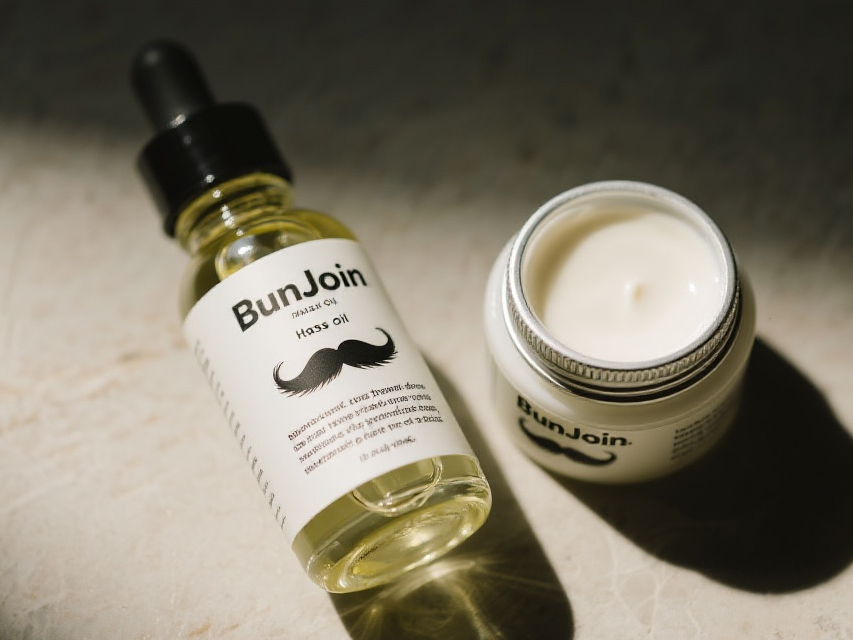
Beard Butter
Beard butter is generally softer and lower in wax than balm. It focuses on richer, low-hold conditioning. If the balm already has almost no hold, the butter may become the same product in a different jar.
Beard Conditioner or Mask
A rinse-off conditioner or mask can suit long, coarse, or dry-feeling beards. A leave-in is another option, but it needs a clear place beside oil and butter. If all three only promise softness, the range gets foggy.
Beard Wax and Moustache Wax
Wax provides stronger, more targeted shape for long beards or moustaches. Higher wax levels bring application and temperature challenges: the product may soften in transit or become too hard in winter.
For more ingredient context, BunJoin explains what beard wax is made from in a separate guide.
Beard Serum, Tonic, or Leave-In
These names can support lightweight or hybrid beard-and-skin products, but they need sharp positioning. A serum might emphasize a fast-dry finish; a tonic might focus on refreshment. Disease-treatment or growth claims require special care.
Tools, Minis, and Gift Kits
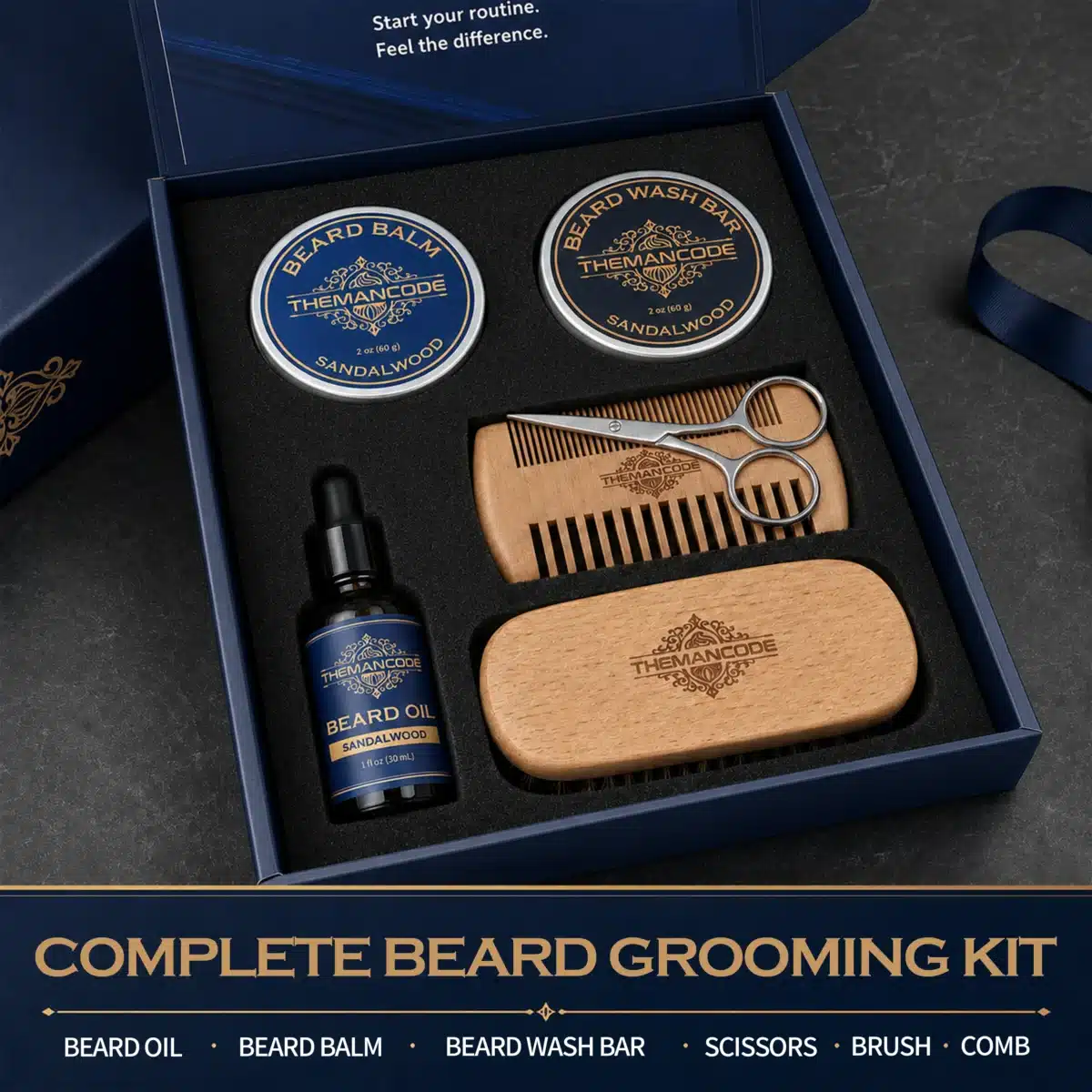
A comb, brush, scissors, pouch, or travel bottle can increase gift value and improve use without adding another cosmetic formula.
| Product | Main consumer job | Best fit | Routine position | Overlap risk |
| Beard wash | Remove sweat, dirt, oil, and buildup | Most beard lengths | First, rinse off | Low |
| Beard oil | Improve softness, slip, and skin/beard feel | Stubble to long beard | After cleansing or dampening | Medium with serum |
| Beard balm | Condition with light-to-medium control | Medium to long beard | After oil when control is needed | High with butter |
| Beard butter | Richer, low-hold conditioning | Coarse or dry-feeling beard | Leave-on, often evening | High with soft balm |
| Beard conditioner | Post-wash softness and combability | Longer or coarse beard | After wash, rinse off | Medium with mask |
| Beard wax | Stronger shape and targeted hold | Long beard or moustache | Final styling step | Medium with strong balm |
| Beard serum/tonic | Lightweight or hybrid benefit | Audience-specific | Depends on design | High without clear positioning |
| Comb or brush | Distribution and grooming | All lengths where useful | After leave-on products | Low |
Build for the Customer, Channel, and Climate
The same system will not suit every beard or every business.
Beard Length and Hair Texture
Stubble and short beards may need a light oil and gentle cleanser; heavy balm can feel unnecessary. Medium beards may benefit from oil plus optional balm. Long or coarse beards may support wash, conditioner, oil, butter, and wax, provided every step earns its place.
Skin Feel and Fragrance Sensitivity
The product touches facial skin, sometimes near the mouth and nose. Fragrance is experienced at close range for hours.
A fragrance-free option can be valuable. It should be treated as a designed SKU, not just a scented product with fragrance removed at the last moment. Removing fragrance can expose the odor of the base oils and change the product’s sensory identity.
Climate
Hot weather can soften balm and wax. Cold weather can make them hard to scoop. Humidity changes the grooming experience. Dry climates can increase demand for richer conditioning.
Test the intended formula and packaging under conditions relevant to the sales market and distribution route.
Sales Channel
Barbershops benefit from immediate, demonstrable results. DTC brands can teach a three-step routine but need leak-resistant packs and sensible parcel weight. Amazon sellers need fulfillment-ready packaging and clear differentiation. Retailers and distributors also care about margins, case packs, barcodes, documents, and reliable replenishment.
BunJoin’s overview of current men’s grooming and retail trends provides additional channel context.
Three Practical Portfolio Examples
- Barber starter range: oil, medium-hold balm, and pocket comb
- DTC daily system: gentle wash, fast-absorbing oil, and light-control balm
- Premium long-beard system: wash, conditioner, oil, butter, and stronger wax
Each step upward adds education, inventory, testing, and cross-product sensory work. Bigger is not automatically better.
Materials That Give Each Beard Product Its Job

Ingredient selection should follow performance, stability, safety, sourcing, and market needs—not the longest botanical list.
Beard Oil: Carrier Oils, Esters, and Antioxidants
Common beard-oil materials include jojoba oil, argan oil, grapeseed oil, sunflower oil, coconut-derived emollients, squalane, and lightweight esters.
Each contributes a different balance of spread, absorption, shine, slip, odor, oxidation stability, cost, and supply reliability.
Jojoba has a familiar premium story. Grapeseed can feel lighter but needs oxidation awareness. Squalane offers elegant slip, while esters can create a drier after-feel.
Tocopherol is often included as an antioxidant. It can help slow oxidation in suitable systems. It is not the same thing as a broad-spectrum preservative.
Balm, Butter, and Wax: Structure Versus Spread
Beeswax and plant waxes create structure and hold. Shea, cocoa, and mango butters can add richness and influence melting behavior. Oils and emollients adjust spread, shine, and softness.
The balance determines scoop, melt, drag, residue, hold, heat stability, and graininess. More wax can improve hold but hurt application; more butter can soften the jar in heat.
Wash and Conditioner: Cleansing Without Harshness
Beard wash relies on a surfactant system, but foam is only one part of performance. Mildness, rinse, viscosity, pH, conditioning, preservation, and packaging also matter. Test conditioner after the actual wash, not only in isolation.
Essential Oils and Fragrance
Essential oils are not automatically gentler than fragrance blends. Both require suitable safety review and use levels.
The IFRA Standards documentation describes the industry framework used to manage safe fragrance use. The product category, exposure, formula, and destination market matter.
Beard products sit close to the nose. A scent that seems moderate in a wash may feel overpowering in an oil left on the face all day.
One Scent Direction Does Not Mean One Dose
A coordinated system can share one scent direction, but the level may differ across wash, oil, balm, and wax. Evaluate finished products together because the customer may layer them in one routine.
Packaging a Beard-Care System
Matching labels create a family look. Matching closures do not automatically create good packaging.
Beard Oil Packaging
Common options include pipette droppers, reducer inserts, treatment pumps, standard pumps, and small pour bottles.
A dropper gives a premium ritual and visible dose. It can leak if the bottle, wiper, bulb, and closure are poorly matched.
A reducer insert is simple and can travel well, but dose control depends on the orifice and oil viscosity.
A treatment pump offers clean, repeatable dispensing. It may suit ecommerce and daily use but changes the visual story.
Balm, Butter, and Wax Packaging
Jars and tins are common. Check closure torque, liners, oil migration, decoration resistance, scoop access, heat behavior, denting, cracking, and label adhesion.
Glass feels premium but adds weight and breakage risk. Metal tins are light but can dent and may interact with the system if the lining is unsuitable.
Wash and Conditioner Packaging
Pumps, disc-top bottles, flip-top bottles, foaming pumps, and tubes can work depending on viscosity and intended dose.
A thick conditioner may not move through the same pump as a thinner wash. A foamer needs a compatible low-viscosity formula. Family design should not override function.
| Format | Suitable pack options | Main risk | Useful check |
| Beard oil | Dropper, reducer, treatment pump | Leakage, oxidation, overdosing | Dose, closure, compatibility, transit |
| Beard balm/butter | Jar or lined tin | Melting, graininess, oil migration | Heat stability, use test, decoration |
| Beard wax | Small jar or tin | Hard scoop, heat softening | Temperature and application testing |
| Beard wash | Pump, disc top, foamer, tube | Leakage, pump mismatch, viscosity shift | Pump cycling, stability, transit |
| Conditioner | Pump, tube, flip top | Poor evacuation, separation | Compatibility and consumer-use test |
Kits Need a Clear Routine Order
Put the use sequence on the box or insert. If the customer cannot tell whether oil or balm comes first, the system is not finished.
Also check product retention, glass separation, tool movement, parcel size, total shipping weight, leakage into paperboard, barcode placement, and fulfillment handling.
From Product Brief to Production
A dependable OEM/ODM project usually follows several connected stages.
1. Define the Hero User and System Logic
Describe the customer, beard length, skin-feel preference, climate, channel, benchmark, target price, destination market, and launch date.
For every proposed SKU, complete this sentence:
“The customer uses this product when…”
If oil, balm, and butter all produce the same answer, the range needs work.
2. Select the Development Route
Choose stock, modified, ODM, OEM, or fully custom development based on budget, timing, differentiation, and forecast.
BunJoin’s outline of end-to-end private label services for men’s grooming brands shows how formula, packaging, compliance support, production, and delivery can connect in one project.
3. Sample Products Alone and Together
Test wash followed by oil, oil under balm or wax, fragrance layering, combined shine and residue, brush distribution, and performance on different beard lengths.
Give specific feedback. “Too cheap-feeling” is vague. “It sits on the skin after ten minutes and the scent becomes too strong under balm” is useful.
4. Validate Formula and Packaging
The plan may include stability, packaging compatibility, oxidation monitoring, microbiological quality, preservation testing where relevant, temperature work, pack-function checks, transit checks, and consumer-use evaluation.
Anhydrous oil, balm, and wax avoid some water-related risks. They do not avoid oxidation, contamination during use, fragrance change, packaging interaction, or heat instability.
5. Finalize Claims, Artwork, and Documents
Confirm ingredient declarations, warnings, directions, net contents, responsible business information, batch coding, market language, barcodes, and supported claims before printing.
6. Approve a Production Reference
Keep an approved sample and specification for each product. Define appearance, odor, texture, fill, packaging, artwork, and relevant acceptance limits.
7. Manufacture, Inspect, Release, and Ship
Quality checks should connect raw materials, production, filling, finished goods, and batch release. Export planning should cover cartons, pallets, freight terms, temperature exposure, customs documents, and insurance.
When evaluating a partner, BunJoin’s product-development and sourcing background provides context on its operating model.
MOQ and Cost: One Oil Is Simple; a System Multiplies Decisions
MOQ is not one number.
A manufacturer may support a relatively small oil batch while the custom bottle requires more units. Printed cartons may have another minimum. A custom-colored pump may have another. A gift box can create its own quantity and setup cost.
Ask for separate minimums for formula, primary pack, closure, custom color, decoration, carton, kit box, fragrance, and each SKU.
One Shared Scent Still Means Separate Batches
The same fragrance direction does not combine wash, oil, and balm into one production run. They use separate bases, filling equipment, pack components, tests, and schedules.
That is why a five-SKU launch costs more than five times the formula price. The extra complexity sits between the products.
A Three-Stage Expansion Model
| Stage | Portfolio | Commercial purpose | Evidence needed before expanding |
| 1 | One hero beard oil | Prove audience, scent, price, and channel | Conversion, reviews, repeat purchase, complaint pattern |
| 2 | Oil + wash + balm | Create a simple clean–condition–control routine | Cross-sell, bundle adoption, clear use order |
| 3 | Conditioner, butter, wax, tools | Serve distinct advanced needs | Segment demand, margin, profitable replenishment |
Imagine two founders with the same budget. One launches five formulas in two scents and spreads cash across ten SKUs. The other launches one oil and uses review data to make balm the second product. The second shelf looks smaller, but the business may be healthier.
Quality, Standards, and Claims
Market requirements depend on where the product is sold and how it is presented. Responsibilities should be agreed in writing.
ISO 22716 and Cosmetic GMP
ISO 22716 provides cosmetic good manufacturing practice guidance covering production, control, storage, and shipment.
When reviewing a certificate, check the site address, scope, issuing body, and validity. A certificate is useful evidence about the quality system. It does not prove that every formula, pack, label, or claim is suitable for every market.
United States: MoCRA and FDA Wording
Under MoCRA, required cosmetic facilities generally register with FDA and renew their registration every two years. A Responsible Person generally lists each marketed cosmetic product and updates that listing annually, subject to applicable exemptions.
FDA states that cosmetic facility registration and product listing are neither a product approval program nor a promotional tool. Its official MoCRA registration and listing page explains the current framework.
So, “made in an FDA-registered facility” may describe a filing status. “FDA-approved beard oil” is generally not appropriate cosmetic marketing language.
European Union: Regulation (EC) No 1223/2009
The EU Cosmetics Regulation is the main framework for cosmetic products placed on the EU market.
Typical preparations include an EU Responsible Person, safety report, Product Information File, notification, compliant labeling, GMP, and supported claims.
Prepare the actual product for its actual market. A U.S. label and factory document pack cannot simply be renamed “EU compliant.”
Claims Need Boundaries
Claims about softness, shine, appearance, cleansing, conditioning, and styling are different from claims to treat a disease or change body function.
The FDA explains how intended use can make a product a cosmetic, a drug, or both.
Be especially careful with growth, anti-dandruff, antifungal, eczema, follicle-stimulation, and hair-loss claims.
Marketing excitement is not a substitute for classification and evidence.
Common Problems Across a Beard-Care System
| Problem | Possible cause | Practical response |
| Oil feels greasy | Heavy blend or excessive dose | Rebalance sensory profile; improve dose guidance; test by beard length |
| Oil develops stale odor | Oxidation, raw-material quality, heat, or light | Review oils, antioxidants, packaging, storage, and stability |
| Dropper leaks | Bottle, wiper, bulb, thread, or torque mismatch | Test the filled final pack through transit conditions |
| Balm melts or becomes grainy | Wax/butter balance or temperature history | Refine formula and cooling process; run heat cycling |
| Balm and butter feel identical | Weak product architecture | Give butter a conditioning job and balm a measurable hold target |
| Wax pulls facial hair | Excess hardness or poor glide | Rebalance structure and emollience; test cold application |
| Wash feels stripping | Surfactant system or use frequency mismatch | Adjust formula and instructions; test after-feel |
| Conditioner weighs down short beard | Product too rich for target user | Segment by beard length or use a lighter system |
| Scent is harsh when layered | Leave-on level too high | Evaluate the complete routine and adjust each format |
| Oil plus balm looks too shiny | Combined emollient load | Test layered use; change finish or recommended dose |
| Kit has unclear order | Packaging focuses on appearance only | Add numbered use steps and simple routine education |
| Batches feel different | Raw-material or process variation | Tighten specifications, controls, and approved references |
How to Choose a Private Label Beard-Care Manufacturer
A good supplier should understand the system, not just quote each bottle separately.
Ask:
- Which beard-care formats are made regularly at the proposed site?
- Which processes or fills are outsourced?
- Are the samples from the same formula and site being quoted?
- What can actually be customized?
- Who owns formula, fragrance, artwork, tooling, and data?
- What are the separate formula, packaging, print, and kit MOQs?
- How will products be tested alone and together?
- How are oxidation, heat, microbial quality, and packaging compatibility handled?
- Which documents can be supplied for the target market?
- How are batch deviations, substitutions, and changes approved?
Red Flags
Pause when a supplier:
- Calls ordinary beard cosmetics “FDA approved”
- Uses the same benefit language for oil, balm, and butter
- Has no compatibility or stability plan
- Presents formula MOQ as the only MOQ
- Cannot identify the manufacturing site
- Will not document the approved standard
- Makes aggressive growth or therapeutic claims without proper review
- Changes materials without written approval
The supplier does not need to answer every technical question during the first call. It should know who is responsible for finding the correct answer.
A Practical Launch Roadmap
Phase 1: Launch the Hero
Start with one beard oil and one strong use case.
Define the user, beard length, sensory finish, scent, dose, price, channel, pack, and destination market.
A fragrance-free version can be useful, but it creates another SKU and component commitment. Launch it when the audience and numbers support it.
Phase 2: Add the Missing Function
Add wash if customers mention buildup, sweat, or poor cleansing.
Add balm if flyaways, shape, and control appear repeatedly.
Add conditioner or butter when a clear long-beard or dry-feeling segment asks for richer care.
Phase 3: Build Bundles and Advanced Extensions
Create an oil-and-comb starter kit, a wash-and-oil duo, a three-step routine, travel minis, a seasonal gift set, or an advanced long-beard kit.
Do not force every item into the same size. Oil, wash, and balm are consumed at different rates.
Phase 4: Remove Weak or Duplicate SKUs
A complete system does not need to grow forever.
Retire products that confuse customers, move slowly, create disproportionate complaints, or fail to replenish profitably. A smaller, clearer range is often easier to trust.
Conclusion
Beard oil can open the door to private label beard care. It is familiar, demonstrable, and flexible enough for barbershops, DTC, Amazon, retail, gifting, and subscriptions.
The next product should not be chosen because every competitor has one. It should solve the next clear problem.
Wash cleans. Oil conditions and supports the scent story. Balm adds control. Butter provides richer, lower-hold conditioning. Wax shapes. Conditioner serves a more involved post-wash routine. Tools help users apply and groom.
That is a system.
Build in this order:
consumer → product job → formula → packaging → testing → market requirements → MOQ → launch sequence.
Keep the first version simple. Watch what customers actually do. Ask a few awkward questions before paying deposits. And remember, matching labels cannot rescue overlapping products.
When the structure is clear, you can discuss your beard-care system brief with BunJoin.
Frequently Asked Questions
1. Is beard oil the best first product for a private label beard-care brand?
Often, yes: it is familiar, demonstrable, compact, and suitable for several channels. Still, a hold-focused barber brand may begin with balm, while a hygiene-led brand may begin with wash.
2. What is the difference between beard oil, balm, butter, and wax?
Oil supports conditioning and slip. Balm adds light-to-medium control, butter is usually softer and lower-hold, and wax provides stronger shaping. Define performance because brand terminology varies.
3. Which three products make the most useful starter system?
Wash, oil, and balm form a clear clean–condition–control system. A simpler launch can use oil, balm, and a comb.
4. Can one fragrance be used across oil, wash, balm, and butter?
Yes, but the level or adaptation may differ. Rinse-off and leave-on formulas, base materials, and layered use change fragrance perception.
5. Which carrier oils are commonly used in private label beard oil?
Common choices include jojoba, argan, grapeseed, sunflower, coconut-derived emollients, and squalane. Select the blend for feel, stability, sourcing, cost, and positioning.
6. Does an anhydrous beard oil or balm need a preservative?
Not necessarily, but the answer depends on the complete formula and use. Anhydrous products still need contamination, oxidation, stability, manufacturing, and packaging controls. Tocopherol is an antioxidant, not a broad-spectrum preservative.
7. What MOQ should a brand expect for a beard-care system?
There is no universal number. Formula, packaging, decoration, fragrance, cartons, and kit boxes can have separate minimums. Request an MOQ breakdown.
8. Which tests should beard oil, balm, and wash pass?
The plan may include stability, compatibility, oxidation, microbial quality, preservation-related work, heat cycling, pack function, transit, and consumer-use evaluation.
9. What packaging works best for beard oil and balm?
Oil commonly uses droppers, reducers, or treatment pumps; balm uses jars or lined tins. Choose around dose, leakage, formula behavior, shipping, and brand experience.
10. How long does it take to move from one beard oil to a complete OEM/ODM range?
A stock-formula extension moves faster than a custom system. A complete range adds sampling, cross-product testing, packaging, artwork, market work, and multiple production schedules.