Putting three good products in one box does not automatically create a good grooming kit.
The products may be stable. The box may look expensive. Yet the customer opens it and wonders: Which one comes first? Why are there two nearly identical balms? Why is the wash empty after four uses while the oil lasts two months?
A kit is like a small band. Every member needs a role. Five lead guitarists make noise, not a better song.
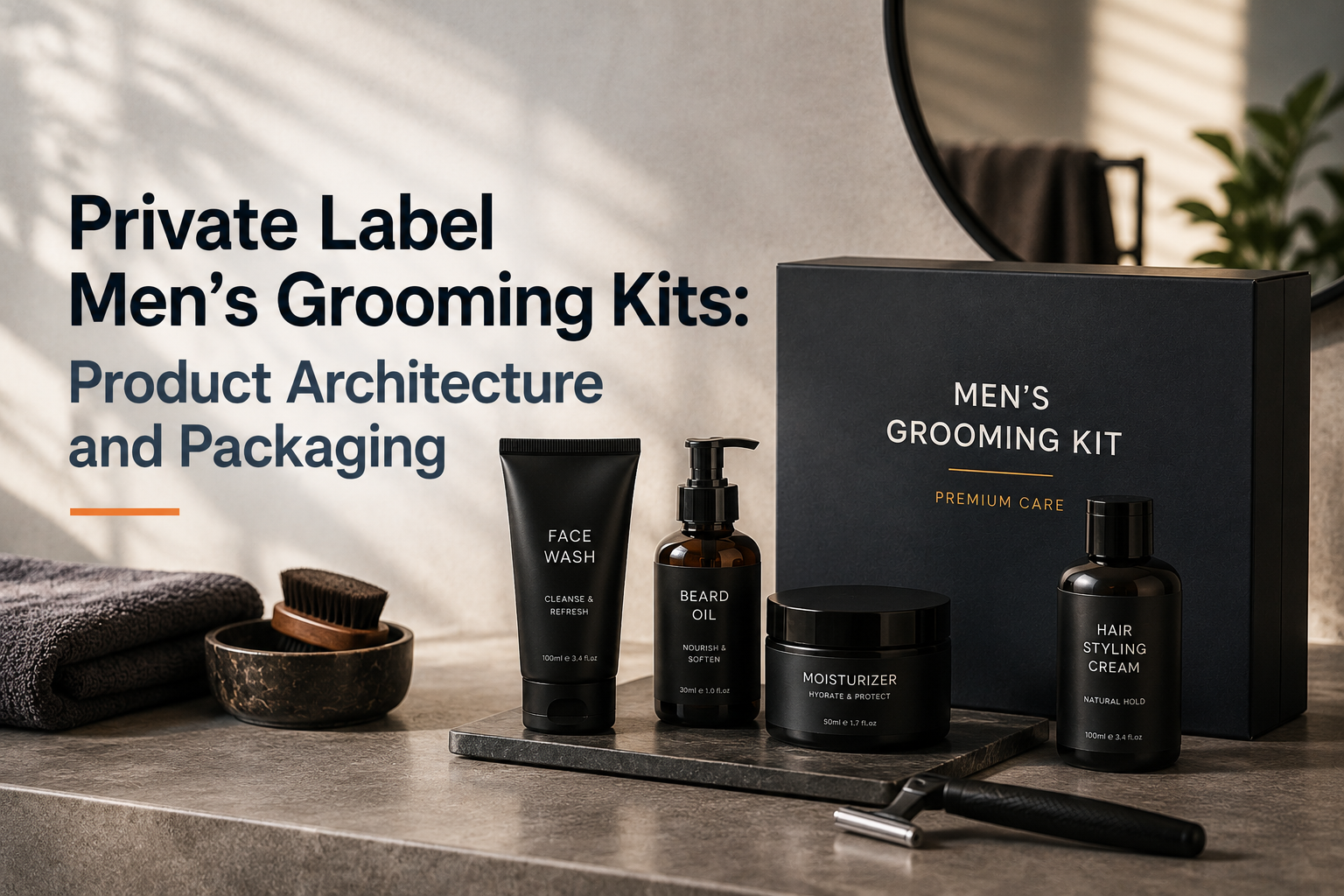
This guide explains how to build a private label men’s grooming kit around a clear use case, then carry that logic through product sizes, fragrance, structural packaging, testing, assembly, and freight. It also explains how to evaluate the manufacturer and packaging network behind the finished box.
There is a healthy market behind the idea. NielsenIQ reports that U.S. men’s grooming reached $7.1 billion, up 6.9% year over year, while online sales grew 27.6%. These figures cover the broader grooming category, not kits alone. Still, the rise of digital sales matters because kits can improve discovery, gifting, and average order value—if shipping does not eat the margin. See NielsenIQ’s men’s grooming analysis.
What Is a Private Label Men’s Grooming Kit?
A grooming kit combines products or tools around one routine, problem, occasion, or audience. It is more intentional than a temporary multipack.
Common development models include:
| Kit model | What is customized | Best fit | Main watch-out |
| Ready stock kit | Branding, sleeve, label, or selected stock products | Fast market test | Weak differentiation and limited size choice |
| Curated semi-custom kit | Product mix, scent, pack sizes, box artwork | Growing brand with a defined audience | Different component minimums and test needs |
| Full custom ODM kit | Formulas, tools, sizes, box, insert, and instructions | Differentiated launch | Longer critical path and more ownership decisions |
| Buyer-owned OEM kit | Manufacturer produces to supplied specifications | Experienced brand team | Multi-supplier coordination and change control |
It also helps to classify the physical contents:
- Cosmetic-only kit: Beard oil, wash, balm, shave cream, moisturizer, or hair products.
- Tool-only kit: Comb, brush, scissors, razor, or non-cosmetic accessories.
- Mixed kit: Cosmetics plus tools. Common, attractive, and more complicated.
- Device-led kit: Electric trimmer or similar device, sometimes with cosmetics. This adds electrical, battery, charger, warranty, and transport questions.
These boundaries influence testing, documentation, assembly, and shipping. The sourcing foundation is covered in our private label men’s grooming manufacturer guide.
Start With the Job the Kit Must Do
Do not begin with “What products can we add?” Begin with “Why does this kit deserve to exist?”
Useful kit jobs include:
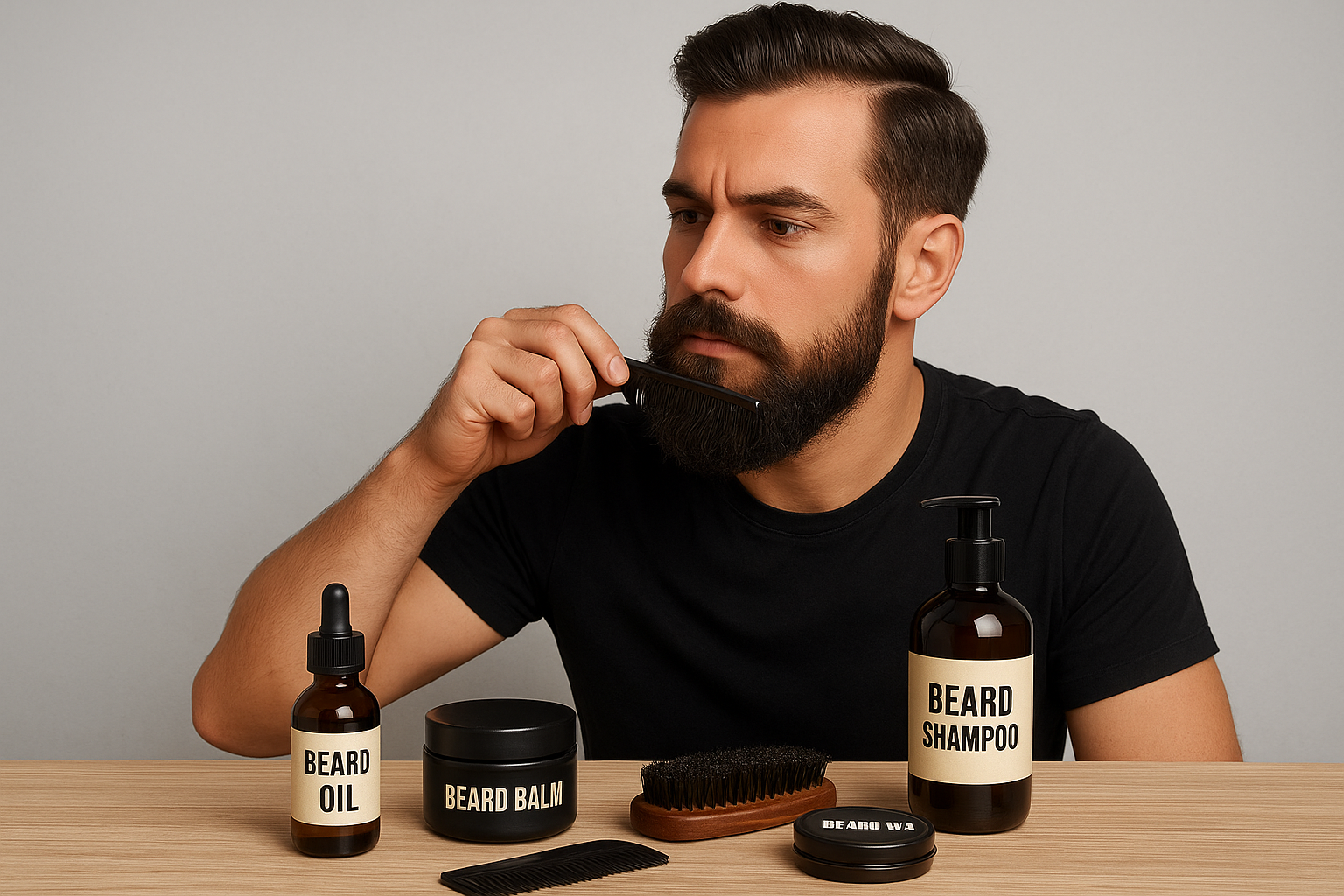
- A first beard routine for a new beard grower
- Shave preparation and post-shave comfort
- Hair styling discovery by hold and finish
- A simple facial skincare introduction
- Gym or post-workout convenience
- A compact travel routine
- Barber take-home care
- Holiday or corporate gifting
- Subscription-based discovery and replenishment
Then define the channel. An Amazon kit must survive parcel delivery and explain itself quickly on a product page. A DTC kit can use education, personalization, and subscriptions. A retail gift set needs shelf presence, barcodes, case packs, and a clear price story. A barber kit should work during service and make sense as take-home retail.
Write one sentence before selecting products:
A three-step beard routine for first-time beard growers who want less guesswork.
That sentence is useful. “Premium grooming collection” is just a mood.
Give Every Product a Clear Role
A practical kit has four possible roles:
- Hero: The main reason to buy. Usually full-size and visually dominant.
- Enabler: Makes the hero easier or more effective to use.
- Finisher: Completes the routine or adds a distinct sensory benefit.
- Tool: Supports application, shaping, travel, or gifting.
| Kit type | Hero | Supporting products | Useful tool | Common mistake |
| Beard starter | Beard oil or balm | Wash plus one complementary product | Comb or brush | Several oils and balms saying the same thing |
| Shaving | Shave cream or gel | Pre-shave or post-shave product | Razor or brush where appropriate | Unsupported razor-bump or healing claims |
| Hair discovery | Best-selling styler | Contrasting hold and finish options | Comb | Products differ mainly by label color |
| Skincare starter | Moisturizer or serum | Cleanser plus compatible support product | Simple applicator if useful | Too many steps for a beginner |
| Gym/body care | Wash or deodorant | Quick-dry lotion or wipes | Wash bag | Leaky full sizes and vague antibacterial claims |
| Travel | One compact daily routine | Essential minis only | Reusable pouch | Treating “travel size” as proof of airline acceptance |
Role overlap is not always bad. Beard oil and balm can coexist if oil conditions and balm provides control. They become confusing when both are described with the same five benefits.
The same applies to hair styling. A discovery set works when products offer visibly different hold, shine, texture, or format. Our men’s hair styling OEM/ODM guide explains why wax, clay, pomade, powder, and cream are not interchangeable.
Build a Size Architecture That Matches Real Use
Full-size kits feel valuable but add weight, box depth, inventory exposure, and freight. Mini kits improve discovery and gifting but often have surprisingly high packaging and filling costs.
A mixed-size structure is frequently the sensible middle: one full-size hero plus supporting minis. The key is to align usage duration. A two-month beard oil beside a three-use wash sample feels unfinished.
| Size architecture | Best use | Commercial benefit | Watch-out |
| All full size | Premium routine or value bundle | Strong perceived value | Weight, cost, inventory, dimensional shipping |
| All mini | Trial, sampling, travel, subscription | Lower entry price and discovery | High unit pack cost and limited label space |
| Full-size hero plus minis | DTC launch or gift | Clear hero and controlled cost | Uneven use duration and insert complexity |
| Tool-led plus one cosmetic | Barber, beard, or shave kit | Durable anchor and refill opportunity | Tool quality may dominate customer reviews |
Coordinate fill volume, dose, bottle height, closure, and label hierarchy. Small formats are not simply shrunken artwork. They may require a new compatibility check, filling setup, label solution, and specification.
Test the Routine, Not Only the Individual Products
Three formulas may perform well alone and poorly together.
Check the labeled sequence and dose. Beard wash, oil, and balm can leave a greasy result when each is used at its full standalone amount. A post-shave balm and face moisturizer may pill. A pre-styler can reduce the hold of the finishing product. A strong fragrance in every leave-on product can become exhausting.
Create one routine card covering:
- Product order
- Dose
- Frequency
- Hair, beard, or skin condition
- Tool use and cleaning
- Relevant cautions
Coordinate the fragrance family without making every SKU equally strong. Rinse-off and leave-on formats have different exposure and sensory roles. Request suitable fragrance documentation for each application rather than one generic certificate.
For beard-focused sets, building a complete beard care system provides a deeper product-role framework. Shaving kits should also be based on format and blade-use performance, as covered in our private label shaving products guide.
Choose the Outer Package for the Channel
The prettiest box is not always the right box.
| Outer package | Best channel or use | Strength | Main risk |
| Folding carton | Retail, trial, compact gift | Lightweight and print-efficient | Crush strength and limited reuse |
| Corrugated mailer | DTC and subscription | Transit protection plus presentation | Oversizing and a less luxury feel |
| Rigid setup box | Premium or holiday gift | High perceived value | Cost, weight, storage, assembly |
| Pouch or dopp kit | Travel and gym | Reusable, flexible, portable | Shape control, zipper quality, staining |
| Tin or reusable case | Durable gift or tool kit | Distinctive and reusable | Denting, scuffing, corrosion, freight |
A folding carton works well when components are light and retail efficiency matters. Corrugated mailers can combine presentation and parcel protection. Rigid boxes create a stronger gift moment, but they occupy more warehouse and shipping volume.
A pouch has a natural travel story. Still, fabric odor, zipper strength, stitching, lining, color transfer, cleanability, and product fit require inspection. A tin feels durable but can dent before it reaches the customer.
Start with the distribution route, target price, component weight, and intended reuse. Then design the structure. Doing it in the opposite order often creates a lovely mockup and a painful freight quote.
The Insert Is the Quiet Engineering Inside the Box
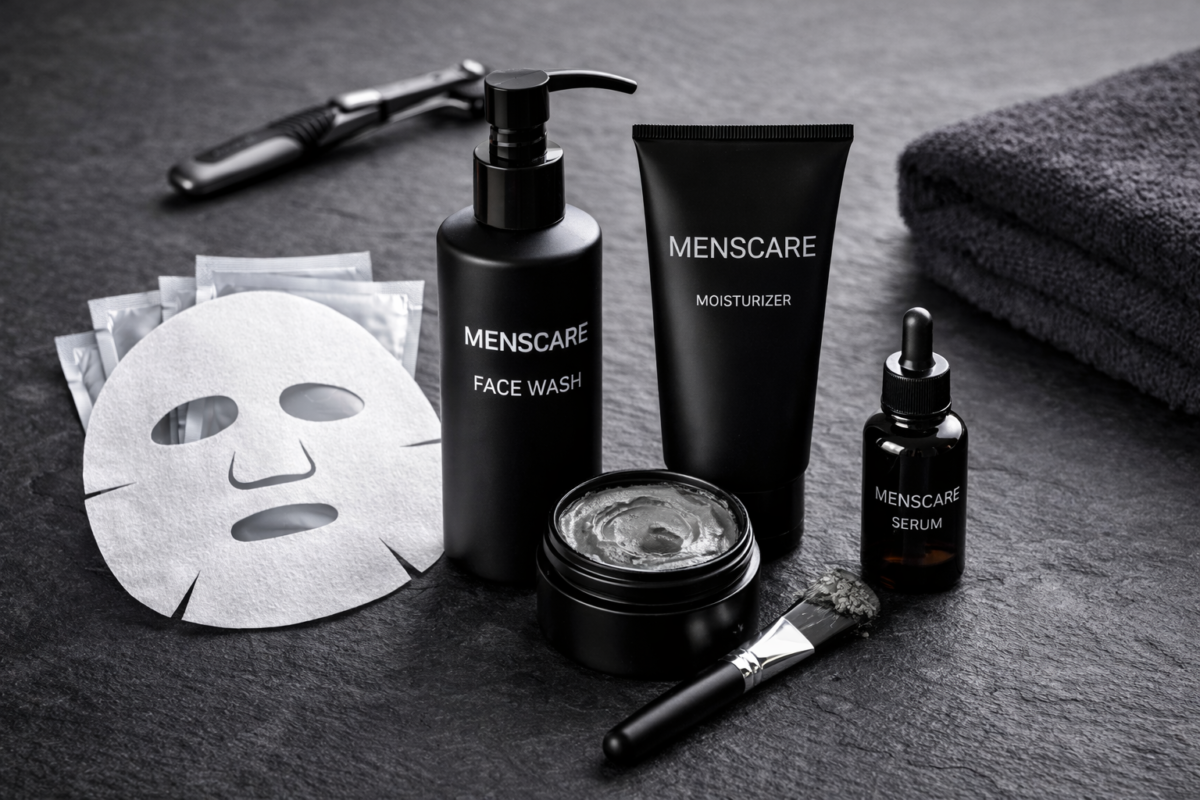
The insert holds products in position, protects closures, organizes the unboxing sequence, and affects whether the customer can remove each item without wrestling the box.
Common options include:
- Paperboard or corrugated insert: Lightweight, printable, and potentially compatible with paper recycling streams. Tabs, caliper, and crush resistance matter.
- Molded pulp: Strong molded-fit and material-reduction story. Tooling, dust, moisture, color variation, finish, and minimums need review.
- Thermoformed PET or rPET tray: Precise fit and visibility. Tooling, scuffing, plastic use, and local recyclability matter.
- EVA or foam: Premium fit and protection, especially around glass or tools. Odor, cutting tolerance, color transfer, and end-of-life claims need care.
- No insert: Lower material use and cost, but components still need controlled protection and presentation.
Packaging engineers consider cavity tolerance, finger access, center of gravity, cap protection, headspace, and the direction of expected impact. The bottle should not become a small projectile when the parcel is dropped.
Use Specific Packaging and Sustainability Claims
Material choices may include paperboard, corrugated board, molded pulp, PET/rPET, foam, fabric, metal, glass, and plastic primary packs. Decoration may involve digital or offset print, foil, embossing, debossing, spot coating, sleeves, labels, screen printing, or engraving.
Decoration can set MOQ even when the box structure is stock. A custom foil, fabric color, engraved comb, or printed mini bottle may become the slowest component.
Be precise with environmental language. FSC claims depend on certified sourcing and chain-of-custody controls; brown paper is not automatically FSC certified. FSC explains chain-of-custody certification. Broad claims such as “eco-friendly” or “100% recyclable” may mislead when they lack qualifications. The FTC Green Guides provide U.S. environmental-marketing guidance.
The most honest starting point is often simple: remove unnecessary volume and material before adding a green badge.
Test the Finished Kit as a System
Testing individual bottles is not enough. The assembled kit and shipping case need their own validation.
| Check | Question answered | Typical failure |
| Compatibility and leakage | Will each formula stay contained and compatible? | Oily label, loose cap, cracked component |
| Insert fit | Will components stay secure and remain removable? | Bottle movement, crushed carton, poor finger access |
| Drop and vibration | Can the kit survive parcel movement? | Products escape cavities or strike each other |
| Compression | Can gift boxes and master cases stack? | Bowing, panel collapse, damaged presentation |
| Packout audit | Is every correct SKU, tool, and leaflet present? | Missing item, wrong scent, reversed component |
| Barcode and label review | Can the kit be sold in its intended channel? | Hidden or duplicate barcode, missing required text |
Product-level work may include formula stability, microbial quality, preservative effectiveness where appropriate, and formula-package compatibility. Check pump or spray function, cap torque, dropper security, label adhesion, and decoration rub.
The assembled kit may need drop, vibration, compression, and climatic conditioning based on its distribution route. Parcel delivery, retail cases, and pallet distribution are not the same journey. ISTA procedures provide standardized distribution-test options; ISTA’s procedure library includes parcel-oriented protocols such as 3A. Select the program based on the actual product, weight, package, and route rather than treating one test as universal.
After testing, inspect glass, sharp tools, closures, cosmetic leakage, insert movement, and presentation. A box that keeps products unbroken but arrives looking used has still failed as a gift.
Labeling and Compliance Do Not Disappear Inside a Gift Box
Each cosmetic still needs appropriate labeling. An outer box does not automatically replace identity, net quantity, ingredient, business information, warning, and other requirements on the relevant containers.
Plan the kit’s outer identity, contents statement, barcodes, directions, warnings, and language with qualified market review. The FDA cosmetics labeling summary is a useful U.S. starting point.
MoCRA responsibilities also remain relevant. The responsible person, listed products, actual manufacturing sites, safety substantiation, adverse-event contact, and records need to be coordinated where applicable. See the official FDA MoCRA overview and BunJoin’s practical guide to MoCRA roles and documents.
Mixed kits create extra questions:
- Aerosols and alcohol-heavy fragrances may affect dangerous-goods classification and transport.
- Razors and scissors need protective presentation and market-specific product-safety review.
- Electric trimmers add battery, electrical, charger, plug, warranty, and transport requirements.
- OTC products such as antiperspirants, acne treatments, dandruff products, or sunscreens follow different rules from ordinary cosmetics.
The IATA dangerous-goods program provides air-cargo context for regulated items. Classification and shipping decisions should be confirmed with qualified logistics and compliance specialists.
ISO 22716 provides cosmetic GMP guidance for production, control, storage, and shipment. It does not cover the full safety and compliance system for scissors, devices, batteries, or every mixed-kit component.
Final Kit Assembly Is a Manufacturing Step
Kitting is not “just put everything in the box.” It needs an approved bill of materials and controlled packout.
The bill of materials should identify every formula, filled unit, tool, insert, leaflet, label, seal, gift box, and shipping case by revision. The assembly site should define:
- Incoming inspection
- Line clearance between kit variants
- SKU, scent, and lot verification
- Barcode and count checks
- Closure and seal inspection
- Golden-sample comparison
- Finished-kit sampling and release
- Rework and spare-component rules
Lot traceability must survive after individual cosmetics enter a finished kit. If one lotion lot has a problem, the brand should know which kits contain it.
Also plan arrival timing. The kit moves only as fast as the last guest arriving at the airport. One late brush can hold finished cosmetics, boxes, and assembly labor hostage.
How to Evaluate the Manufacturing and Packaging Network
Few companies make every formula, tool, bottle, box, and insert in one building. That is fine if responsibilities are clear.
Ask:
- Who manufactures each cosmetic?
- Who sources and inspects the tools?
- Who engineers the dieline and insert?
- Who performs transit testing?
- Where is final assembly completed?
- Who owns final quality release?
Request evidence appropriate to the components: formula specifications, batch records, COAs, stability, microbiology, compatibility, tool inspections, packaging drawings, approved artwork, test reports, traceability, deviation handling, and change control.
Commercially, ask for MOQ by formula, primary pack, decoration, tool, box, insert, leaflet, master case, and finished kit. Confirm ownership of formulas, artwork, dielines, molds, tooling, and reports. Approve a physical golden sample at production dimensions and weight.
Be cautious when a supplier offers a beautiful render before confirming component dimensions. Another red flag is a transit report based on an empty mockup. You can review how BunJoin coordinates global product development for more context on sourcing, production, and delivery.
MOQ, Cost, and Timeline: The Slowest Component Wins
There is no universal grooming-kit MOQ.
The cosmetic batch may support 500 units while the printed gift box requires 1,000, the engraved comb 2,000, and the custom-color mini bottle 5,000. The practical kit quantity depends on the entire bill of materials and how excess components will be used.
Build the cost stack:
- Formulas and filling
- Bottles, jars, pumps, labels, and decoration
- Tools and accessories
- Box, insert, leaflet, and master case
- Assembly labor and inspection
- Samples, tooling, and transit tests
- Wastage and spare components
- Freight, duty, warehousing, and fulfilment
Large rigid boxes can create a painful dimensional-weight charge even when the products are light. Calculate landed contribution margin, not only factory unit cost.
Plan seasonal launches backward. Include time for dimensions, dielines, prototypes, formula and packaging approval, tooling, production, component arrival, assembly, testing, freight, and a buffer. “Holiday launch” is not a date. Put one on the calendar.
Four Practical Grooming-Kit Architectures
1. Lean Beard Starter
Full-size hero oil + mini wash + comb
The routine is simple, the hero has a refill path, and the tool adds durable value. Balm can be added later if it serves a different control need.
2. Shave-and-Recover Kit
Shave cream or gel + post-shave balm + suitable accessory
This kit focuses on one grooming event. Avoid adding products only to fill space, and keep treatment claims under control.
3. Hair Styling Discovery Kit
Three mini stylers with genuinely different hold and finish
Organize the products so buyers can compare matte versus shine and flexible versus firm hold. Each mini should point toward a full-size reorder.
4. Travel Grooming System
Compact wash/body product + one essential face or hair product + reusable pouch
Build it around leakage, portability, and realistic daily needs. “Mini everything” usually creates clutter, not convenience.
A Practical Grooming-Kit RFQ Checklist
Provide enough information for every supplier to quote the same project:
- Target user, market, channel, price, forecast, and launch date
- One-sentence kit promise and routine order
- Hero product, supporting SKUs, tools, sizes, and refill strategy
- Formula model, fragrance, dose, claims, and prohibited claims
- Primary-pack dimensions and approved components
- Box type, insert material, decoration, and environmental claims
- Shipping route, transit-test requirement, and dangerous-goods concerns
- MOQ and target cost by component and finished kit
- Bill of materials, golden sample, traceability, spare parts, and ownership
Once these decisions are clear, you can discuss your grooming-kit brief without sending a vague request for “a luxury men’s set.”
Conclusion
A private label men’s grooming kit is a coordinated product, package, assembly, and logistics system. The box is only the visible part.
Start with one use case, one hero, and the fewest components needed to complete the promise. Align usage duration. Test the routine. Engineer the insert around real production components. Then choose a men’s grooming product-development partner that can control the complete bill of materials and explain tradeoffs early.
A clear three-piece kit can create discovery and repeat purchase. A seven-piece box with no product logic mostly creates more ways to be late.
Frequently Asked Questions
1. What products should be included in a men’s grooming kit?
Start with one use case. A beard starter may include oil, wash, and a comb. A shaving kit may pair shave cream with post-shave balm and a suitable tool. Every component should have a distinct role and logical place in the routine.
2. What is the difference between a grooming kit and a product bundle?
A bundle may simply combine products for price promotion. A kit is designed as one experience, with coordinated roles, sizing, instructions, packaging, and often a specific use occasion. The difference is intention, not the number of items.
3. Should a private label grooming kit use full-size or travel-size products?
Full sizes increase value but add weight and inventory. Minis support trial and travel but have higher unit packaging costs. A full-size hero with supporting minis often balances conversion, price, and freight.
4. What is a typical MOQ for a custom men’s grooming kit?
There is no single number. The minimum may be driven by formula batches, mini bottles, tools, gift boxes, inserts, or decoration. Ask for every component MOQ separately and plan how excess components will be used.
5. How much does custom grooming-kit packaging cost?
Cost depends on structure, size, board or material, insert, tooling, printing, decoration, assembly, test requirements, and order quantity. A compact folding carton is generally lighter than a rigid gift box, but the final comparison should include freight and warehousing.
6. Which box and insert materials are best for grooming kits?
There is no universal best material. Folding cartons and paperboard inserts suit compact retail sets. Corrugated works well for DTC. Rigid boxes support premium gifting. Molded pulp, PET/rPET trays, and foam each offer different fit, protection, appearance, and end-of-life tradeoffs.
7. How should a grooming kit be tested for shipping?
Start with formula-package compatibility and leakage, then test the assembled kit and shipping case for relevant drop, vibration, compression, and climate conditions. The exact protocol should reflect package weight, fragility, distribution route, and sales channel.
8. Can one kit contain cosmetics, razors, scissors, sprays, or an electric trimmer?
Yes, but mixed kits require coordinated safety, labeling, packaging, transport, and supplier controls. Sharp tools need protection. Aerosols, alcohol fragrances, and batteries may change shipping requirements. Devices add electrical, charger, warranty, and regional-market considerations.
9. Does each cosmetic in a grooming kit need its own label?
Do not assume the outer box replaces individual labeling. Requirements depend on product, container, market, and presentation. Plan identity, quantity, ingredients, business information, warnings, and other required information with qualified regulatory review.
10. How do I choose a private label grooming-kit manufacturer?
Verify who makes each formula, sources each tool, engineers the packaging, performs testing, and completes final packout. Review specifications, quality records, traceability, component MOQs, ownership, change control, transit evidence, and an approved production-weight golden sample.