Understanding Humectant Synergy: How Glycerin, Propylene Glycol, and Butylene Glycol Work Together
A Skincare Chemistry Guide for Men’s Grooming Products
In modern men’s skincare, hydration is no longer just about adding water to the skin.
High-performance moisturizers, lotions, and serums rely on humectant systems—carefully balanced combinations of ingredients that attract, hold, and distribute moisture effectively.
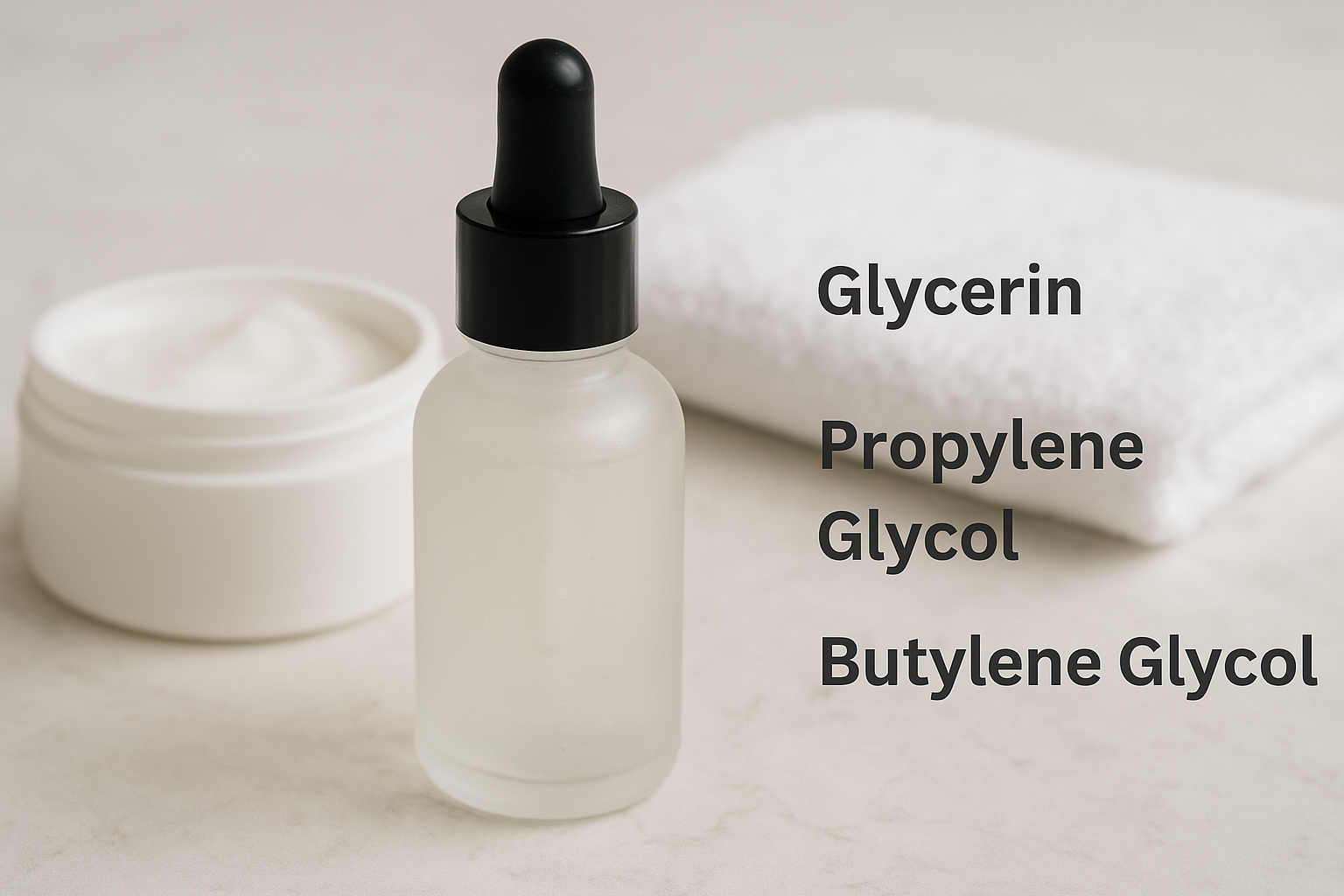
Among these, glycerin, propylene glycol, and butylene glycol are some of the most widely used and scientifically proven humectants in skincare chemistry. When used together correctly, they create a synergistic moisturizing model that delivers long-lasting hydration without heaviness—an essential requirement for men’s grooming products.
In this article, we explain:
-
How humectants work at a molecular level
-
Why combining humectants is more effective than using one alone
-
How glycerin, propylene glycol, and butylene glycol complement each other
-
Common pairing strategies in men’s lotions and serums
-
Key formulation considerations from a cosmetic OEM perspective
What Are Humectants in Skincare?
Humectants are water-binding ingredients that attract moisture from the environment or deeper skin layers into the stratum corneum (outer skin layer).
In men’s skincare products, humectants help:
-
Prevent dehydration caused by shaving and cleansing
-
Improve skin smoothness and elasticity
-
Support barrier function without greasy residue
-
Enhance penetration and performance of active ingredients
Because male skin typically produces more sebum but still suffers from trans-epidermal water loss (TEWL), humectants must be effective yet lightweight.
Why Humectant Combinations Matter
Using a single humectant can provide hydration, but combining multiple humectants creates a layered hydration effect:
-
Different molecular sizes penetrate at different skin depths
-
Fast-acting and slow-release hydration can coexist
-
Texture, absorption speed, and skin feel can be optimized
This is why professional moisturizing formula design almost always relies on humectant synergy, not isolated ingredients.
Glycerin: The Gold Standard Humectant
Role in Skincare Chemistry
Glycerin (glycerol) is one of the most researched humectants in skincare. Its small molecular size allows it to bind water efficiently and improve skin barrier recovery.
Key Benefits
-
Strong water-attracting ability
-
Improves barrier function over time
-
Suitable for all skin types, including sensitive skin
In Men’s Products
Glycerin is ideal for:
-
Daily moisturizing lotions
-
Post-shave balms
-
Hydrating cleansers and serums
Formulation Note
High glycerin levels can feel sticky, especially in hot climates. This is where synergy with other glycols becomes essential.
Propylene Glycol: Fast Hydration & Penetration Support
Role in Skincare Chemistry
Propylene glycol is a multifunctional ingredient that acts as both a humectant and a penetration enhancer.
Key Benefits
-
Rapid moisture attraction
-
Improves solubility of active ingredients
-
Enhances skin absorption efficiency
In Men’s Products
Commonly used in:
-
Lightweight serums
-
Oil-control moisturizers
-
Acne or treatment-focused products
Formulation Note
At controlled concentrations, propylene glycol helps reduce the heavy feel of glycerin while improving overall performance.
Butylene Glycol: Texture & Comfort Optimizer
Role in Skincare Chemistry
Butylene glycol provides humectancy while significantly improving skin feel and formula aesthetics.
Key Benefits
-
Smooth, non-sticky texture
-
Supports even distribution of actives
-
Enhances sensory performance
In Men’s Products
Frequently used in:
-
Gel moisturizers
-
All-in-one men’s serums
-
Lightweight emulsions
Formulation Note
Butylene glycol helps create a fast-absorbing, fresh finish, which is highly preferred in men’s skincare.
The Humectant Synergy Model Explained
When glycerin, propylene glycol, and butylene glycol are combined, they form a multi-layer hydration system:
-
Glycerin provides deep, long-lasting moisture retention
-
Propylene glycol delivers quick hydration and boosts active penetration
-
Butylene glycol improves spreadability and skin comfort
This synergy allows formulators to:
-
Reduce stickiness
-
Improve absorption speed
-
Maintain hydration throughout the day
The result is a moisturizer or serum that feels light but effective, meeting male consumer expectations.
Common Humectant Pairing Logic in Men’s Skincare
In Moisturizing Lotions
-
Glycerin for long-term hydration
-
Butylene glycol for smooth texture
-
Optional occlusives to lock in moisture
Best for daily men’s face creams and body lotions.
In Hydrating Serums
-
Propylene glycol for fast delivery
-
Butylene glycol for lightweight feel
-
Lower glycerin levels to avoid tackiness
Ideal for oil-prone or combination skin.
In All-in-One Men’s Products
-
Balanced ratios of all three humectants
-
Designed for simplicity and multifunction use
Perfect for men who prefer minimal routines.
OEM Formulation Considerations
From a cosmetic OEM standpoint, humectant systems must be optimized based on:
-
Target climate and market (humid vs dry regions)
-
Product format (lotion, gel, essence)
-
Regulatory requirements (EU, US, Asia)
-
Consumer skin type and usage habits
Professional OEM factories typically adjust humectant ratios during sampling to achieve the best balance between hydration efficacy and skin feel.
Why Humectant Chemistry Is Critical in Men’s Skincare
As men’s grooming continues to evolve, hydration is no longer optional—it is foundational.
Understanding humectant synergy allows brands to:
-
Develop more effective moisturizing products
-
Improve user experience and compliance
-
Reduce complaints about greasiness or stickiness
-
Build trust through visible performance
In competitive markets, smart skincare chemistry becomes a powerful brand advantage.