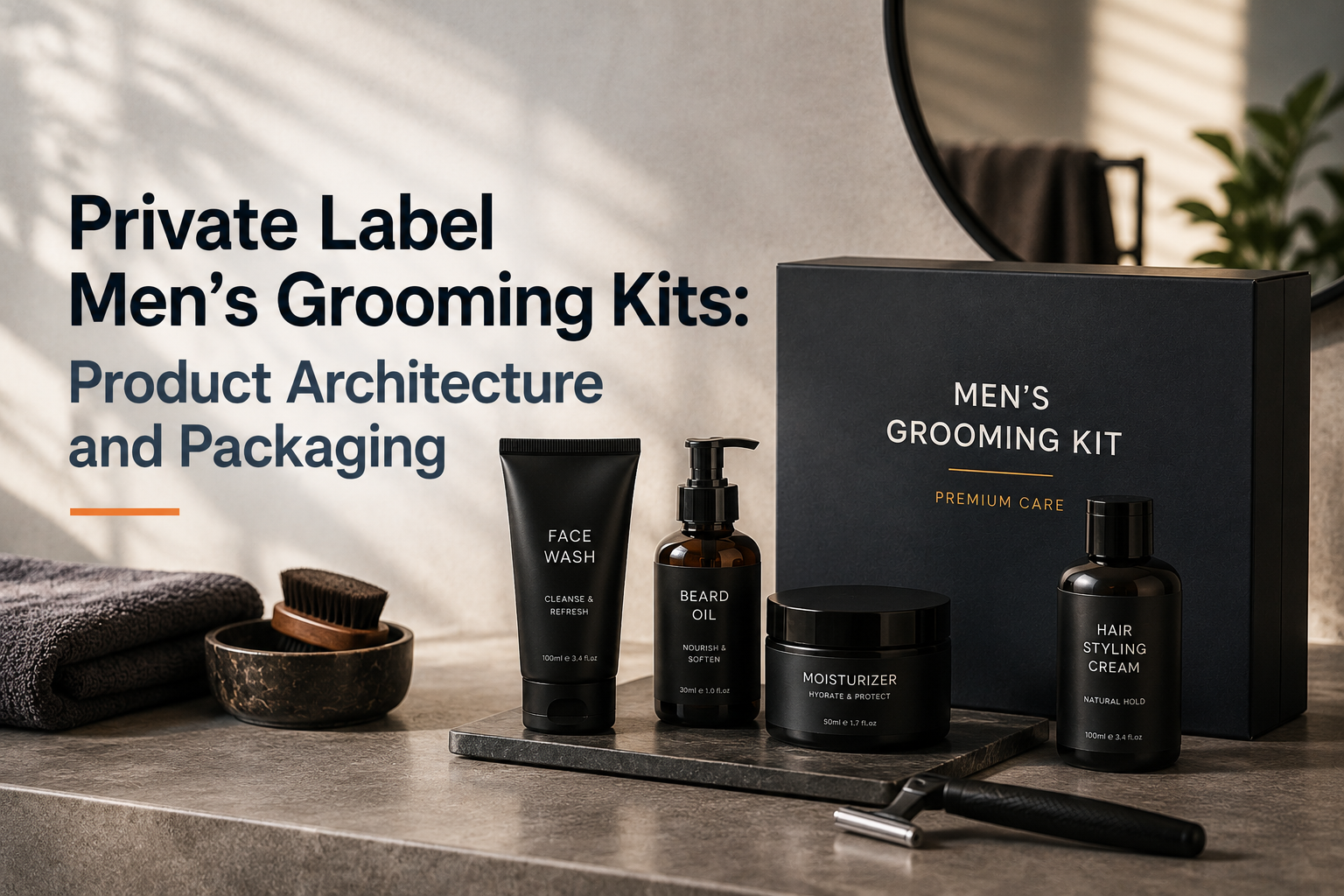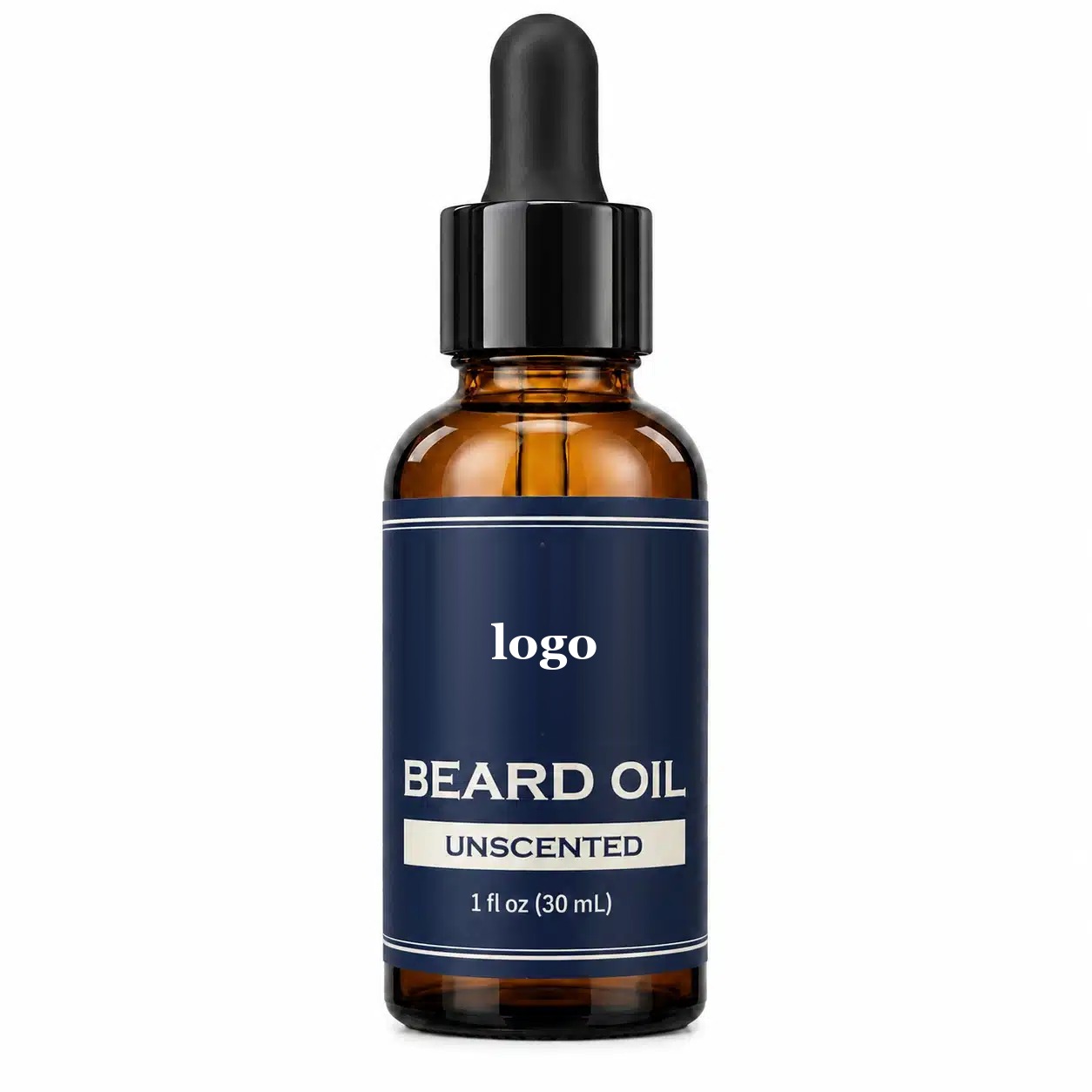
Private label beard oil is the most practical first product for a men’s grooming brand. It is simple to formulate well, cheap to sample, forgiving in transit, and it creates the four-to-eight-week repurchase habit that turns a single SKU into predictable revenue. Beard grooming was the largest topical format in the category at roughly 17.5% of revenue, which means demand is proven before you spend a dollar on development.
Short answer: Private label beard oil means choosing a proven base formula — carrier oils, optional actives and a fragrance direction — and filling it under your own brand, rather than developing a formula from scratch. Most brands launch on 1,000–3,000 units of one hero SKU, sample two to three rounds before committing, and only move to custom ODM once sales validate the concept.
- TL;DR
- 1. Why Beard Oil Is the Right Entry Product
- 2. Private Label, White Label or Custom ODM?
- 3. Formulation Basics
- 4. MOQ, Cost and the Math of Your First Order
- 5. Packaging Decisions That Affect Sales and Shipping
- 6. Sampling and the Development Timeline
- 7. Compliance and Documentation
- 8. Launching: Amazon, DTC and the First 90 Days
- Building a Beard Oil Line with BUNJOIN
- FAQ
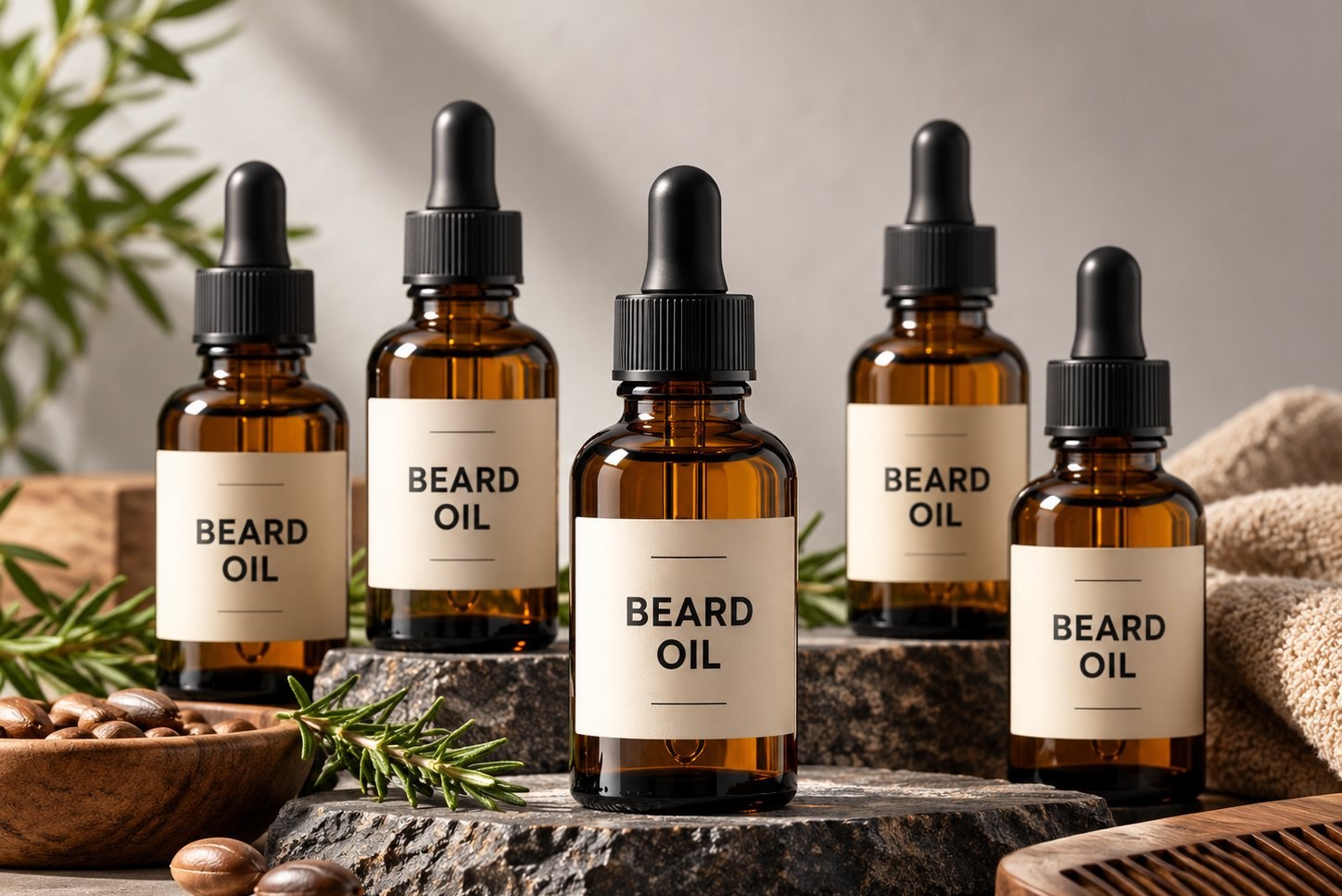
BunJoin supplies private label beard oil and the complementary products needed to build a beard-care range: beard balm, beard wash, conditioner, mustache wax and grooming kits. We handle formula design, packaging, production and delivery, so you can develop a single beard oil or a coordinated collection under your own brand.
Choose Your BunJoin Beard Oil Project
Start with the job your oil needs to do. A daily conditioning oil, a richer grooming oil and an oil sold inside a gift set create different decisions about skin feel, dispensing and packaging. Use the choices below to turn a catalog request into a product brief.
| Your launch | Products to consider | What to decide for the sample |
|---|---|---|
| One daily-use product | Beard oil | Light or rich feel, fragrance direction, preferred bottle and daily dose. |
| A conditioning and styling pair | Beard oil + beard balm | How the oil softens and conditions; how the balm adds shape and control. Keep the fragrance family coordinated. |
| A complete beard-care routine | Beard wash + conditioner + oil | How each product fits the wash-and-groom routine and whether the scent is shared across the range. |
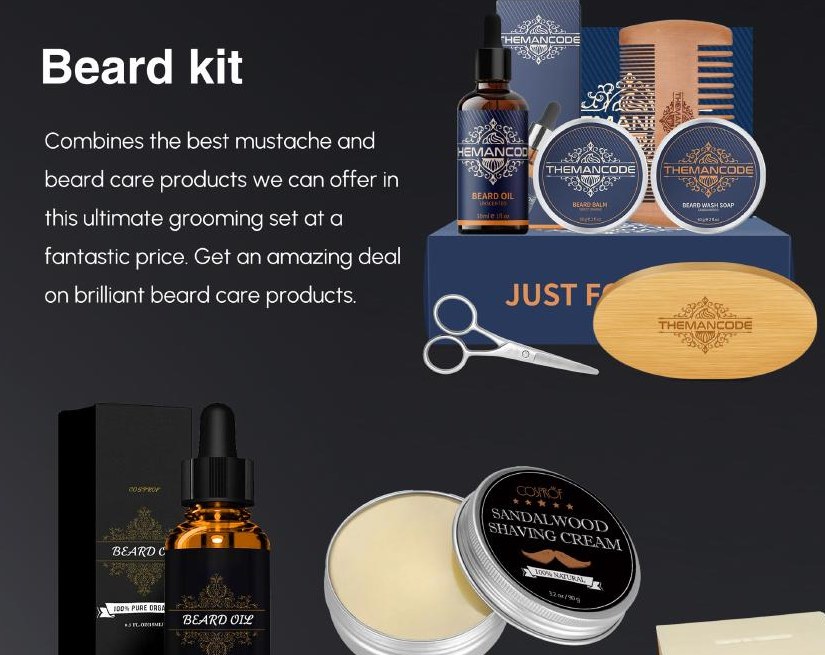
| A retail or gifting collection | Beard oil & balm kit or complete grooming kit | Product selection, accessories, individual packs and the presentation box. |
Our beard-care catalog includes conditioning and styling products that soften the beard, restore moisture and support a clean, groomed finish. Choose the benefits your brand leads with, then specify the oil feel, fragrance and presentation around that positioning.
White label, private label or custom ODM?
If your priority is a straightforward branded launch, ask us to start from an existing formula and packaging format. For a more differentiated product, describe the oil feel, fragrance, bottle and carton you want to change. For custom ODM development, send your product positioning and benchmark so formula and package design can begin from the same brief.
View a BunJoin beard oil product or explore the beard-care range.
TL;DR
- Beard oil is the right first SKU for a men’s grooming brand: simple formula, low MOQ, easy to ship.
- Decide private label vs white label vs custom ODM early – it changes cost, control, and timeline.
- Plan MOQ, packaging, sampling, compliance (MoCRA/IFRA), and the first 90 days on Amazon/DTC.
1. Why Beard Oil Is the Right Entry Product
The market data explains the opportunity better than opinion:
- The global beard grooming products market was valued at roughly US$20.7 billion in 2025 and is projected to reach US$34.5 billion by 2035, a 5.1% CAGR, with beard oil the largest topical format at about 17.5% of category revenue.
- North America held about 32.4% of global revenue in 2025 — the largest regional share, and the most competitive for Amazon-native and DTC grooming brands.
- Online channels accounted for about 38.5% of 2025 revenue and are growing faster than offline, which favours lean, e-commerce-first brands holding low initial inventory.
- Unlike trimmers, beard oil is a replenishment product. Customers rebuy every four to eight weeks, and that rhythm is what converts a single SKU into a subscription business.
For a startup, a private label beard oil line also has the gentlest entry barriers of any grooming category: low minimums, fast sampling, and regulatory requirements far lighter than those for sunscreen or anti-acne actives.
2. Private Label, White Label or Custom ODM?
Three sourcing paths exist, and the difference determines your cost, your timeline and how defensible your brand is. Understand all three before you request a quote.
| Dimension | White label | Private label | ODM / custom |
|---|---|---|---|
| Formula | Ready-made, unchanged | Selected from a proven formula bank, optionally adjusted | Developed from scratch around your brief |
| Packaging | Stock packaging, rebranded | Stock or custom with your brand | Fully custom |
| MOQ | Lowest | Low, from roughly 1,000 units | Higher |
| Time to market | Fastest | Fast — four to six weeks to sample | Slowest |
| Differentiation | Weak | Medium | Strongest |
Most successful beard brands start with private label beard oil on a proven formula, then move to ODM once sales validate the concept. A reliable men’s grooming ODM manufacturer will support all three paths and tell you honestly which one fits your stage.
3. Formulation Basics
A beard oil is a blend of carrier oils, optional functional actives, and fragrance. You do not need to be a chemist — you need to make clear product decisions.
Carrier oils brands request most often:
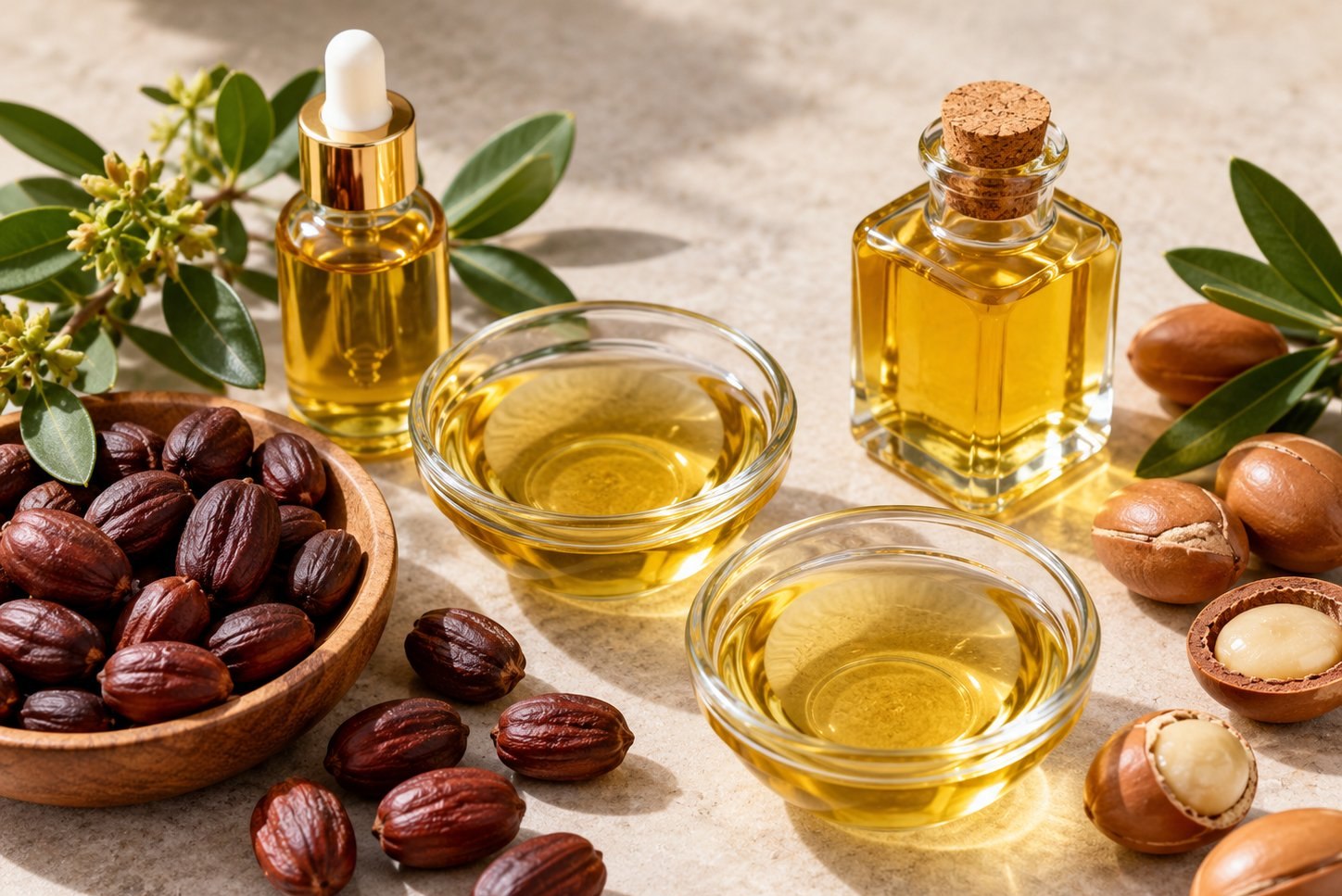
- Jojoba oil — closest to human sebum, lightweight, non-greasy; the default “clean” carrier.
- Argan oil — conditioning, premium story, strong marketing appeal.
- Castor oil — thick, adds shine and a denser feel; common in growth-positioned blends.
- Grapeseed, sweet almond, coconut — lighter or more traditional texture options.
- Saw palmetto, vitamin E, squalane — popular “active” additions with conditioning or antioxidant roles.
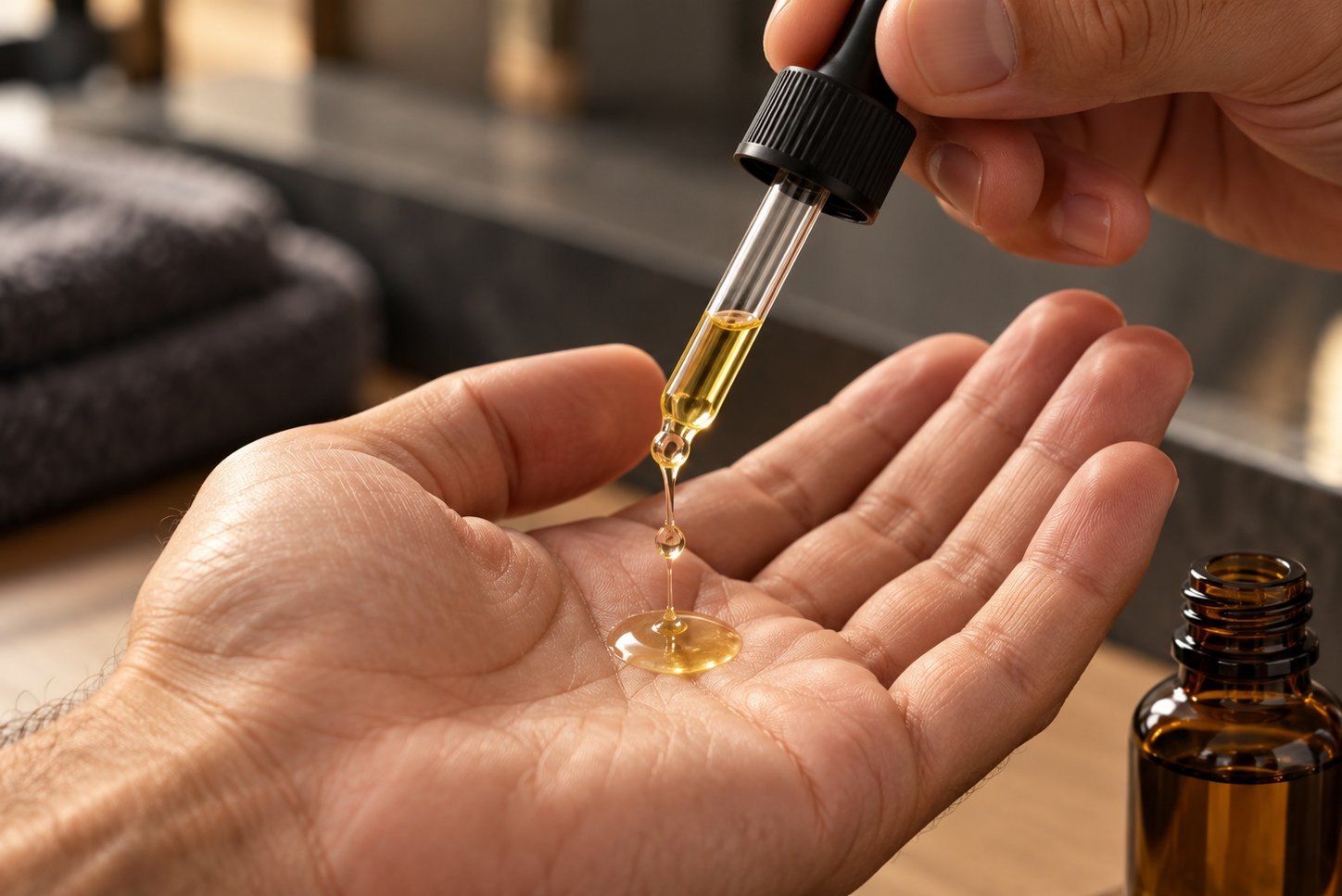
Fragrance direction is a brand decision. Sandalwood, cedarwood and woodsy accords dominate men’s grooming, while citrus and fragrance-free options are rising with the clean-beauty movement. Tell your manufacturer the texture (lightweight versus rich), the absorption speed and the skin feel you want — texture and absorption are where most customisation happens, not the scent alone.
Claim compliance matters. Avoid promising beard growth as a hard medical claim in the US unless your formula and labelling can substantiate it under FDA and FTC rules. Frame benefits as conditioning, softening and appearance — “supports a healthier-looking beard.” Your manufacturer should flag these issues proactively; if they do not, treat it as a red flag. Fragrance must also be assessed against IFRA use limits.
4. MOQ, Cost and the Math of Your First Order
Minimum order quantity is usually the first question founders ask, and it is the main reason brands wait too long to start.
- Industry-standard MOQs for private label beard oil often begin at 10,000 units.
- Flexible manufacturers support low MOQs from 1,000–2,000 units per SKU or colourway, so startups can launch without overstocking.
What actually drives per-unit cost:
- Bottle and closure — glass dropper bottles cost more than plastic; pump versus dropper changes both price and user experience.
- Label and carton — full-colour cartons, foil stamping and custom boxes add cost; a label-first launch keeps COGS low.
- Formula complexity — argan- and jojoba-heavy blends and fine fragrance raise ingredient cost.
- Order volume — your MOQ choice sets the ceiling on unit economics.
A reasonable first order for a solo founder is 1,000–3,000 units across one hero SKU — enough to test Amazon and your own store without betting the company. Ask your manufacturer for a landed-cost table across three volume bands before you commit.
5. Packaging Decisions That Affect Sales and Shipping
- Format: dropper bottles of 10–30 ml are the standard; pumps suit daily-use positioning; rollerballs are growing for targeted application.
- Material: amber glass protects oil from light and reads premium; clear glass shows colour; PET plastic cuts weight and shipping cost, which matters for Amazon FBA fees.
- Labelling: your label is your marketing. Plan label size and placement together with carton design — redesigning after sampling is expensive.
- Seasonal SKUs: 10 ml minis make strong beard care gift sets and raise average order value in Q4.
6. Sampling and the Development Timeline
A realistic private label beard oil timeline with an experienced partner:
| Stage | Typical duration |
|---|---|
| Brief, concept and formula selection | 1 week |
| Sample production | 3–4 days before shipping |
| Sample delivery | 5–12 days by courier |
| Revisions and final approval | 2–4 weeks |
| Bulk production after purchase order | 30–35 days |
| Shipping | Air 4–7 days / sea 40–45 days |
Always sample before you commit. A good manufacturer sends samples quickly and lets you test texture, scent throw and dropper performance — and will ask to test your own packaging if you supply it, to confirm fill accuracy and sealing before mass filling.
7. Compliance and Documentation
Regulatory work is not glamorous, but it is where private label beard oil projects get delayed or killed. Make sure your manufacturer can supply or support:
- SDS and COA for every raw material batch.
- INCI ingredient lists and percentage disclosure for your final label.
- Certificates on request: Free Sale Certificate, FDA facility registration support, Halal, GMP or ISO 22716, BSCI.
- MoCRA readiness in the US: under the Modernization of Cosmetics Regulation Act, responsible persons must maintain facility registration and product listings with FDA — your manufacturer should understand their role in that documentation chain (read our MoCRA explainer).
- Testing: stability, microbial or preservative challenge, and heavy-metal testing per target market expectations.
If a supplier cannot produce certificates or hesitates on documentation, walk away. Counterfeit GMP certificates are a documented industry problem — verify registration numbers independently. The FDA cosmetics labeling guide sets out declaration and claim requirements.
8. Launching: Amazon, DTC and the First 90 Days
- Start with one hero SKU — a 30 ml beard oil in one scent family — and expand after you have sales data.
- Bundle the routine: pair the oil with beard balm and a wash once the oil proves out; customers who buy a routine subscribe more (see building a full beard care system).
- Own the keyword: use “beard oil for men”, ingredient terms such as jojoba and argan, and benefit terms in your title and backend keywords.
- Photo and content: alt text, infographics and a short routine video double as A+ content and SEO assets.
- Reviews beat volume: a 4.7+ rating across your first 100 reviews compounds. Factory quality control — seal integrity, fill accuracy, batch consistency — protects that rating.
Building a Beard Oil Line with BUNJOIN
BUNJOIN is a men’s grooming product development and supply chain partner founded in 2013 and based in Guangzhou, China, serving brands in the USA, Europe and other global markets. Capabilities cover product development, formulation, packaging, compliance, manufacturing, quality control and logistics.
Our private label beard oil programs start at low minimums, which lets founders launch one hero SKU instead of committing to a full range. Development follows the same sequence every time: brief and formula selection, two to three sample rounds with stability and packaging compatibility testing, then GMP bulk filling with the documentation set your market requires. See our beard oil cost breakdown for the commercial detail behind each line item.
Ready to start? Get started with your private label or contact our team.
FAQ
What is the MOQ for private label beard oil?
Typical minimums start at 10,000 units at many factories, while low-MOQ programs begin around 1,000–2,000 units per SKU. Confirm bottle, closure and carton minimums separately, because the largest of the three sets your real entry quantity.
Can I customise the formula?
Yes. Private label lets you pick and adjust a proven formula — oils, texture, fragrance and colour — while ODM builds a fully custom formula around your brief. Sample production usually takes three to four days.
Can I supply my own bottle and have it filled?
Generally yes, but the manufacturer should test your packaging samples first to verify fill accuracy and sealing performance before mass production begins.
What documents should a supplier provide?
Qualified manufacturers provide SDS, COA and INCI declarations, and can supply Free Sale Certificates, FDA registration support, Halal, ISO 22716/GMPC and BSCI documentation on request.
What is the difference between private label and white label beard oil?
White label is a ready-made formula and stock packaging you rebrand, with the lowest MOQ. Private label beard oil lets you choose the formula and customise packaging. ODM is fully custom formula development.
How long does a first order take?
Samples take three to four days of production plus shipping; bulk production runs 30–35 days after order confirmation; then air freight takes 4–7 days or sea freight 40–45 days.
Frequently asked questions
What's the typical MOQ for private label beard oil?
Beard oil commonly starts around 1,000–3,000 bottles per SKU; balm and kits vary with their packaging.
Can I customize the beard oil scent and bottle?
Yes — carrier oil blend, fragrance, bottle, label and carton are all adjustable within compliance.
How long does a beard care line take to develop?
Sampling 1–3 weeks, production 3–6 weeks after approval. We flag format-specific risks (for example balm texture) before tooling.
Plan Your First Order With BunJoin
Tell us whether you need beard oil alone, an oil-and-balm pair or a kit. Include the first quantity per SKU, destination market, fragrance direction, bottle preference and launch date. If you have an existing product you want to improve, describe the change: lighter feel, a different scent, easier dispensing or a new presentation.
We support product concept, formula design, package design, production and delivery. Include formula, packaging and presentation choices in the same request so the quotation can address the whole project.
Send your project brief to BunJoin or email bunjoinservice@163.com.