Private label beard oil cost is the first number every buyer wants and the last number most suppliers explain honestly. A quote that reads “$1.10 per bottle, FOB China” is not one price — it is a stack of eight different components, each with its own minimum, its own quality tier and its own way of quietly moving.
This guide takes that quote apart. It is written for grooming brands and procurement managers who already have a budget and need to know what they are actually paying for: the oil base, the fragrance, the glass bottle, the dropper, the printing, the color box, the sampling round, and the freight that turns an FOB number into a landed one. Every section answers one question — what does each component add to your private label beard oil cost, and where can it be reduced without touching quality. All figures come from confirmed 2026 quotes for 30 mL amber-glass beard oil projects, presented at 1,000 / 3,000 / 5,000 bottle volumes.
Short answer: a private label 30 mL beard oil in an amber glass bottle with a glass dropper typically lands at $0.80–$1.55 per bottle FOB China at 1,000–5,000 units. FOB is only 70–90% of your true per-bottle spend — freight, entry fees and destination charges add the rest, and they hit small orders hardest. Every component of private label beard oil cost is priced out below.
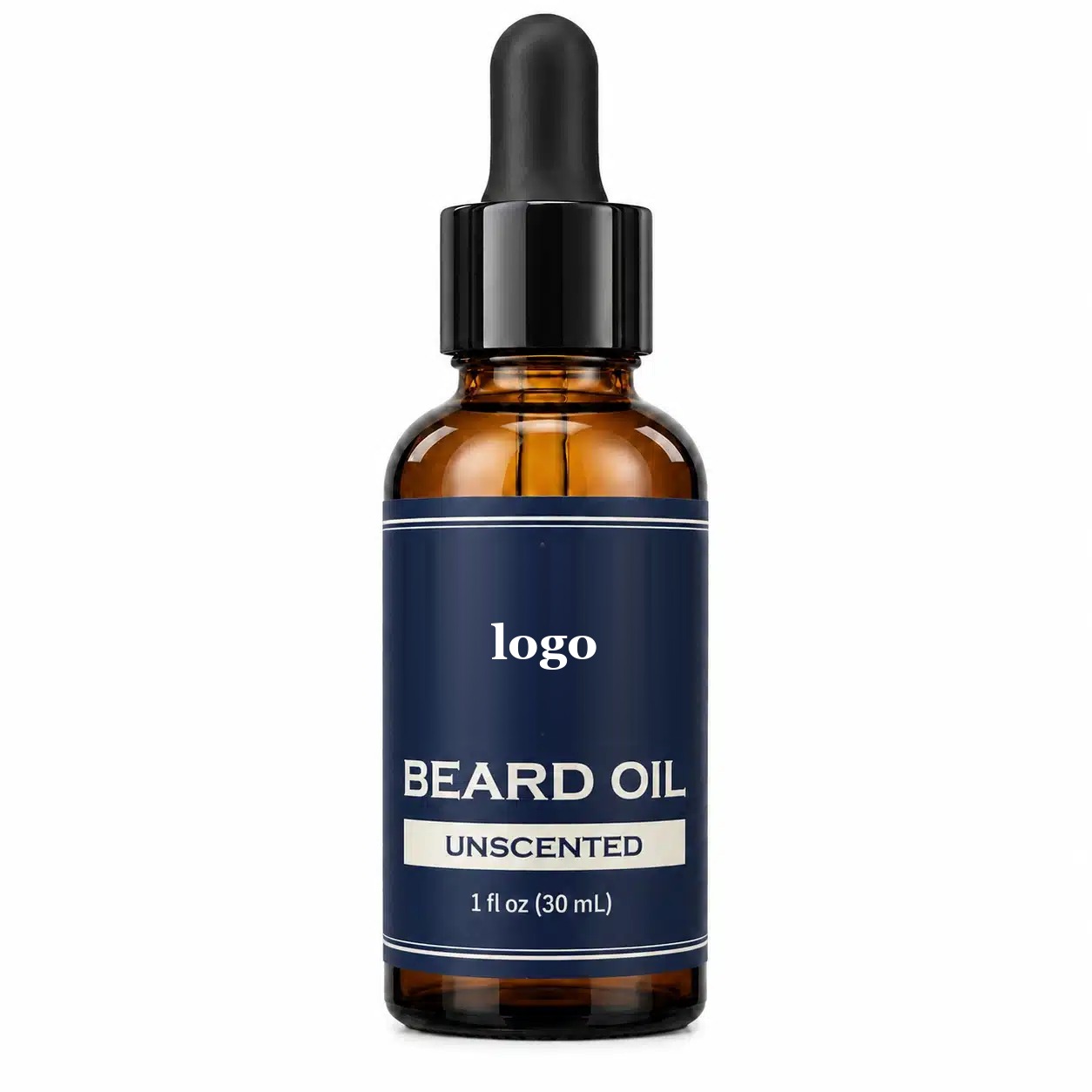
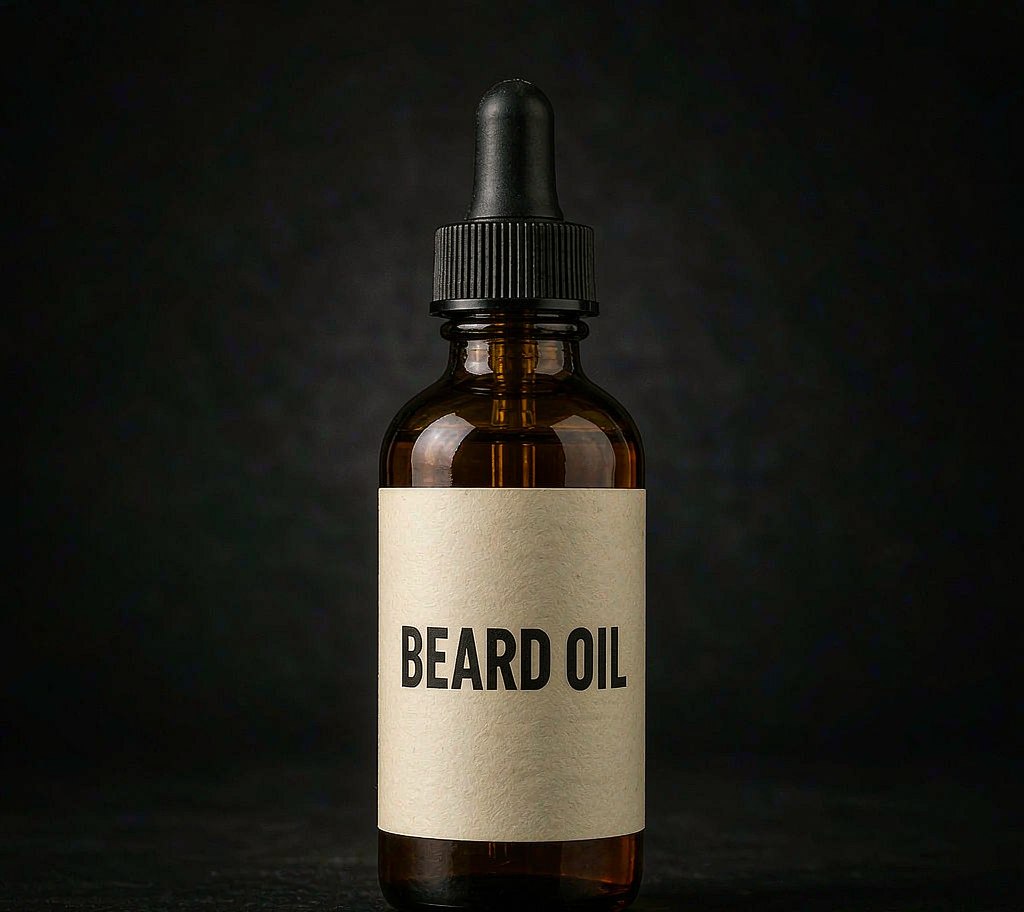
A 30 mL amber glass beard oil with a glass dropper — the format every private label beard oil cost figure in this guide is built on. The label area shown as “logo” is where your brand artwork goes.
What this guide covers
- Beard Oil Manufacturing Cost: The Eight Components in Every Quote
- Component 1: The Oil Base — What Moves Formula Price
- Component 2: Bottle and Dropper — Where Packaging Cost Is Decided
- Component 3: Printing, Boxes and Finishing
- Component 4: Sampling and Development Costs Before Production
- Confirmed Quote Scenarios: 1,000 / 3,000 / 5,000 Bottles
- FOB vs. Total Landed Cost: The Gap Buyers Forget
- How Beard Oil MOQ Is Actually Set
- Why Some Quotes Are 40% Cheaper — and What They Skip
- Payment Terms and the Extras Around the Quote
- Questions to Ask Before Accepting a Beard Oil Quote
- How BUNJOIN Quotes Beard Oil
- Frequently Asked Questions
- Get a Confirmed Quote for Your Beard Oil
TL;DR
- A private label 30 mL beard oil in amber glass with a glass dropper lands at roughly $0.80–$1.55 per bottle FOB China at 1,000–5,000 units — but FOB is only 70–90% of true cost, and freight plus entry fees add 20–35% at small volumes.
- Packaging, not the oil, drives the price: bottle, dropper and decoration together usually outweigh the formula, so optimize packaging against your retail price point.
- Compare quotes line by line — carrier-oil tier, dropper type, fill tolerance, test scope and incoterm — because a quote 40% cheaper is almost always a thinner, different specification.
Beard Oil Manufacturing Cost: The Eight Components in Every Quote
Before comparing private label beard oil cost between suppliers, agree on what a complete quote contains. When a supplier says “beard oil is $0.90,” you need to know which of these lines are included and which are quietly excluded — because every excluded line reappears later as an invoice or a compromise.
| Cost component | Share of FOB price | Typical range (USD / bottle, 30 mL) |
|---|---|---|
| Oil formula (carrier oils, actives, vitamin E) | 35–45% | $0.30–0.65 |
| Amber glass bottle, 30 mL | 12–18% | $0.09–0.18 |
| Glass dropper assembly with cap | 10–15% | $0.08–0.15 |
| Label / direct printing | 3–8% | $0.03–0.09 |
| Filling, assembly and QC labour | 8–12% | $0.06–0.12 |
| Inner carton / color box (optional) | 8–20% | $0.10–0.28 |
| Packing, cartons and palletising | 3–5% | $0.03–0.06 |
Rule of thumb: the formula is the largest single component but the packaging trio (bottle + dropper + print) together usually outweighs it. That is why private label beard oil cost is decided more by packaging choices than by what is inside the bottle.
Component 1: The Oil Base — What Moves Formula Price
Beard oil formulas look similar on a label and behave very differently on skin. The price spread between a basic blend and a premium one is more than 3x, and it is driven almost entirely by the carrier-oil mix.
| Carrier oil | Cost tier | What it contributes |
|---|---|---|
| Grapeseed / fractionated coconut | $ | Light feel, fast absorption, low cost — the backbone of entry formulas |
| Sweet almond / sunflower | $–$$ | Softer skin feel, good slip, stable supply |
| Jojoba | $$–$$$ | Closest to skin sebum, premium feel, price moves with harvests |
| Argan | $$$ | Premium positioning and marketing story; highest cost driver |
| Castor | $ | Thickness and gloss; over-use feels sticky |
Other formula levers: vitamin E dosage (natural tocopherol costs several times more than synthetic), botanical extracts (mostly a marketing decision — measure cost vs. claim), and squalane, which adds a premium dry-touch finish. A credible beard oil manufacturing cost quote states the carrier-oil percentages, not just “natural oils.” When you compare private label beard oil cost between suppliers, ask for those percentages in writing.
Fragrance: the cheapest place to build (or lose) a brand
Fragrance typically adds $0.02–0.08 per bottle and yet decides repeat purchase. Fragrance is where private label beard oil cost per bottle moves the least, but reorder rates move the most. The real cost questions are:
| Fragrance option | Cost impact | What to confirm |
|---|---|---|
| Fragrance oil (IFRA-compliant) | Lowest | IFRA certificate and allergen declaration included |
| Essential oil blend (cedarwood, sandalwood, pine) | Medium — natural cedarwood and sandalwood fluctuate | Batch-to-batch consistency plan |
| Fragrance-free | Lowest of all | Still needs oxidation-stability protection (vitamin E) |
Component 2: Bottle and Dropper — Where Packaging Cost Is Decided
The 30 mL amber glass bottle with a glass pipette dropper is the category default for good reason: it protects oil from UV, photographs well, and signals “apothecary quality.” But it is not the only route, the cost differences are large, and this choice swings private label beard oil cost more than any other packaging decision.
| Packaging option | Unit cost (at 3,000+) | Trade-off |
|---|---|---|
| 30 mL amber glass + glass dropper | $0.22–0.33 | The category standard; heaviest to ship |
| 50–60 mL amber glass + glass dropper | $0.28–0.40 | Per-mL formula cost drops; perceived value rises |
| 30 mL amber PET + plastic dropper | $0.10–0.16 | Lighter freight, e-commerce safe; weaker shelf presence |
| Aluminium bottle + cap | $0.15–0.25 | Distinct look; needs a liner compatible with oils |
Fig. 1 — Amber glass with a dropper is the category default; staying on stock moulds is what keeps packaging MOQ low.
Freight reality check: glass roughly doubles the shipping weight per unit versus PET. At LCL volumes that can add $0.10–0.20 per bottle in freight alone — a packaging choice that looks cheaper on the FOB sheet can be more expensive landed.
Component 3: Printing, Boxes and Finishing
Decoration is where private label beard oil cost quotes diverge most, because the same bottle can carry anything from a $0.03 sticker to a $0.30 multi-process finish.
| Decoration route | Unit cost (3,000+) | Best for |
|---|---|---|
| Pressure-sensitive (self-adhesive) label, waterproof | $0.03–0.09 | Default route; fastest, lowest MOQ |
| Silk-screen direct print on glass | $0.08–0.15 | No-label premium look; needs higher minimums |
| Hot stamping / foil accents on label | +$0.02–0.06 | Retail shelves, gift positioning |
| Custom color box with insert | $0.10–0.28 | Amazon listings, gift sets, barbershop resale |
| Plain export carton only | ~$0.02 | Cost-first first run; unbox-appeal handled by your listing |
A practical 2026 pattern: launch with a waterproof adhesive label and a plain carton, then add the color box once a SKU proves itself. The box rarely convinces a first-time buyer who cannot hold it — the product photos and listing do.
Component 4: Sampling and Development Costs Before Production
Sampling and testing are the part of private label beard oil cost you pay before a single production bottle is made — and most buyers underestimate them. Ask which of them are credited back at production; a supplier confident in its conversion rate usually credits formula development fees.
| Item | Typical cost (USD) | Usually credited at production? |
|---|---|---|
| Stock formula sample | $0–50 + freight | Often free |
| Custom formula development (per route) | $150–500 | Usually credited |
| Printed label proof / dieline mockup | $0–100 | Yes |
| Pre-production golden sample | $50–150 | Usually credited |
| Stability + microbiological testing | $200–600 per SKU | No |
| Third-party lab verification (optional) | $150–400 | No |
Budget roughly $500–1,200 per SKU in pre-production costs for a custom formula with proper testing. Skipping the testing line is the most expensive saving in this entire guide — it is how a stable product becomes a leaking, oxidised one at month four.
Confirmed Quote Scenarios: 1,000 / 3,000 / 5,000 Bottles
The numbers below are representative private label beard oil cost quotes (FOB Guangzhou, 2026) for the same specification: 30 mL amber glass bottle, glass dropper with black cap, stock platform formula with custom fragrance, waterproof adhesive label, plain export carton.
| Cost component | 1,000 bottles | 3,000 bottles | 5,000 bottles |
|---|---|---|---|
| Oil formula (30 mL fill) | $0.62 | $0.48 | $0.40 |
| Amber glass bottle | $0.19 | $0.15 | $0.13 |
| Glass dropper assembly | $0.16 | $0.13 | $0.11 |
| Label (digital print) | $0.09 | $0.05 | $0.04 |
| Filling, assembly & QC | $0.12 | $0.09 | $0.08 |
| Packing & export carton | $0.06 | $0.05 | $0.04 |
| FOB per bottle | $1.24 | $0.95 | $0.80 |
| Optional: custom color box | +$0.30 | +$0.20 | +$0.15 |
| FOB with color box | $1.54 | $1.15 | $0.95 |
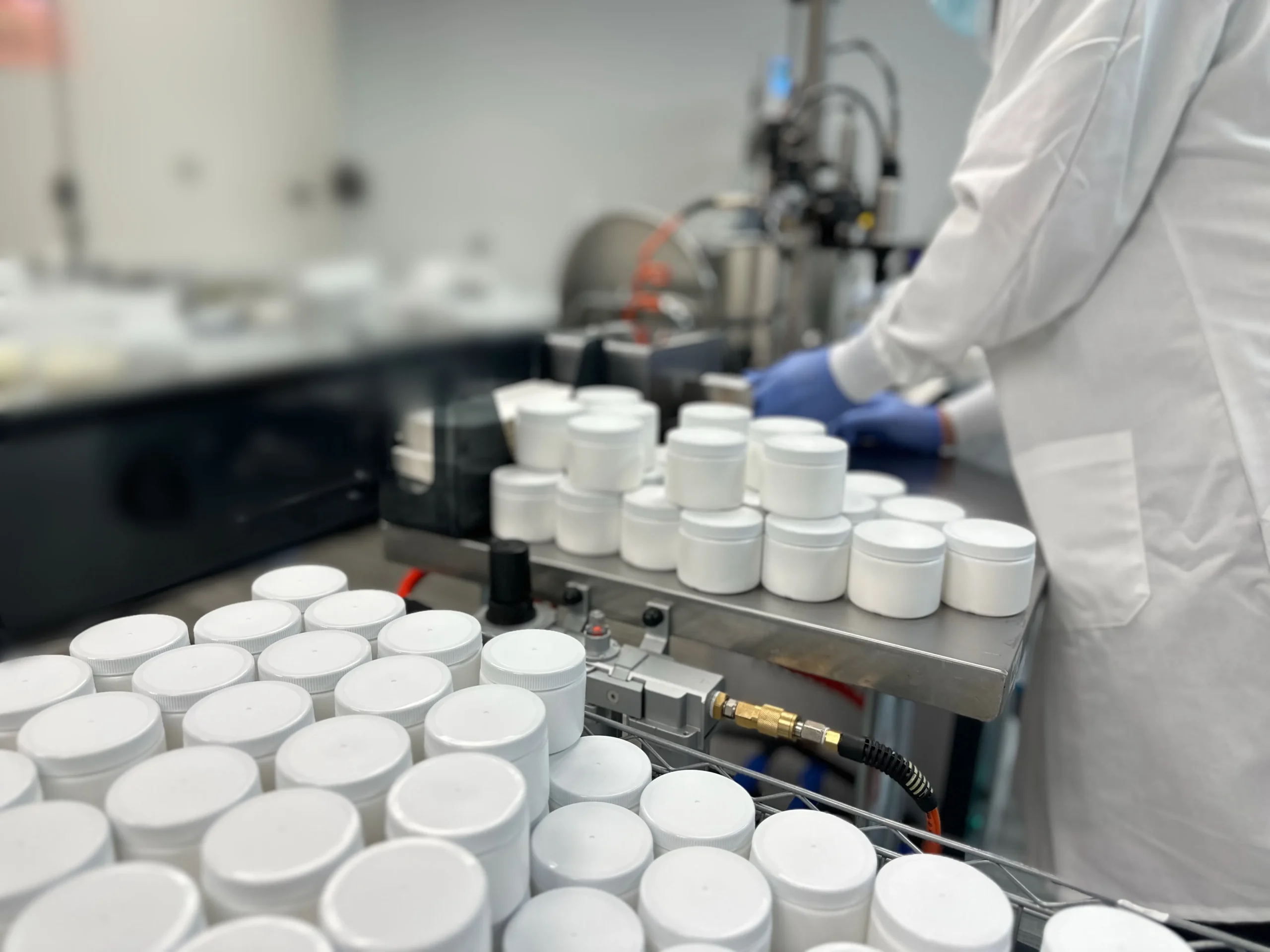
Fig. 2 — Filling and QC: where every component cost in the table above is actually consumed.
Three things to notice in these private label beard oil cost scenarios:
- The formula benefits least from scale. Blending 5,000 bottles does not cost much less per bottle than blending 1,000 — the savings are in packaging and setup, not oil.
- Stepped, not smooth. Pricing drops at component minimums (label print runs, bottle pallet quantities), so a 4,000-unit order can cost more than a 5,000-unit order. Always quote both sides of a breakpoint.
- The color box is a bigger decision than it looks. At 1,000 units it adds 24% to FOB. That is a real retail-positioning decision, not a detail.
FOB vs. Total Landed Cost: The Gap Buyers Forget
A private label beard oil cost comparison is only honest once freight is included. FOB (Free On Board) means the goods are loaded on the vessel in China and your costs begin there. Everything after — ocean freight, insurance, customs entry, port fees, inland delivery — is yours. For beard oil at these volumes, that “everything after” is rarely trivial.
| Scenario (US destination, sea freight) | FOB / bottle | Freight + handling | Entry fees & brokerage | Indicative landed / bottle |
|---|---|---|---|---|
| 1,000 bottles (LCL, shared container) | $1.24 | +$0.38 | +$0.05 | $1.67 |
| 3,000 bottles (LCL) | $0.95 | +$0.22 | +$0.04 | $1.21 |
| 5,000 bottles (FCL, near-full 20 ft) | $0.80 | +$0.12 | +$0.03 | $0.95 |
What this table is really saying: at 1,000 units, shipping and entry costs add roughly 35% on top of FOB; at 5,000 units in a near-full container, under 20%. Compare suppliers on landed cost, never on FOB — and note two details:
- Duty: beard oil generally enters the US duty-free under its cosmetic classification (confirm the exact HS code with your broker), but Merchandise Processing Fees and brokerage still apply, and MoCRA facility registration and product listing are separate requirements before you import — see the FDA’s MoCRA guidance. In the EU, import VAT is recoverable but is a cash-flow item.
- Weight tax: the glass bottle and glass dropper you chose for shelf appeal are also why your freight line is what it is. PET or aluminium changes this math significantly.
How Beard Oil MOQ Is Actually Set
Your beard oil MOQ is not one number — it is the largest minimum among every component in the order. A 1,000-bottle formula minimum means nothing if the dropper’s minimum is 5,000. MOQ and private label beard oil cost move together: every component you swap to lower the minimum changes a price line too.
| Component | Typical minimum | How to lower it |
|---|---|---|
| Formula batch | 500–1,000 bottles | Stock platform + custom fragrance instead of fully bespoke blend |
| Amber glass bottle (stock mould) | 3,000–5,000 | Stock mould is mandatory at low volume; custom moulds start at 10,000+ |
| Glass dropper | 3,000–5,000 | Match the bottle’s stock supplier, not two different ones |
| Label print | 1,000 digital / 3,000+ offset | Digital print keeps the MOQ low; move to offset when volume justifies |
| Color box | 1,000–2,000 (digital) | Plain carton + branded sticker below 2,000 units |
Practical move: the bottle and dropper set the floor at 3,000 for most factories — unless the supplier stocks them in ongoing production. At BUNJOIN, running beard oil continuously means stock moulds and droppers are available from 1,000-unit runs. Ask any supplier directly: is this component on the shelf or made to order? The answer changes your MOQ more than anything else in this table.
Why Some Quotes Are 40% Cheaper — and What They Skip
If one private label beard oil cost quote comes in far below the others, it is almost never efficiency. It is a different specification. The common gaps:
| Where the saving hides | What you actually get |
|---|---|
| “Same” formula | Carrier-oil blend with minimal jojoba/argan, synthetic vitamin E at low dosage, no actives |
| “Same” dropper | Plastic pipette instead of glass; thinner bulb that perishes in oil |
| No testing | No stability, oxidation or microbiological data — the batch ships on trust |
| Fill tolerance | Filled at 29 mL instead of 30 mL — invisible on arrival, a compliance issue later |
| No allergen/IFRA docs | Fragrance shipped without the paperwork your market’s inspector will ask for |
A quote is comparable only when every line matches. The fastest way to normalise three quotes: send all suppliers the same one-page brief (fill volume, carrier-oil tier, dropper type, label route, box, incoterm, test scope) and require itemised pricing per component.
Payment Terms and the Extras Around the Quote
Two items sit outside the unit price but inside your real private label beard oil cost: how you pay, and what happens when the specification changes.
| Item | Typical 2026 terms | Budget allowance |
|---|---|---|
| Deposit / balance | 30% deposit, 70% before shipment (T/T) | Cash-flow item, not a cost |
| Bank charges | Sender and intermediary fees on international transfers | +0.3–0.8% of order value |
| Re-sampling or spec change after approval | Charged per round | $80–250 per change |
| Rush production | Compresses the normal lead time | +10–25% on labour lines |
| Custom mould tooling | Only if you leave stock moulds | $1,500–6,000, one-off |
Budget 3–5% of order value for these. They are not hidden — they are simply outside the unit price, and they are the reason an “all-in” number quoted on the phone rarely survives contact with the invoice.
Questions to Ask Before Accepting a Beard Oil Quote
- Which carrier oils and percentages are in this price — and what changes if jojoba goes up 20%?
- Is the dropper glass pipette or plastic, and what is the bulb material?
- Is the bottle a stock mould, and what quantity unlocks each price break?
- What fill tolerance is written into the order?
- Which tests are included — stability, oxidation, microbiological — and will I receive the reports?
- Does the fragrance come with an IFRA certificate and allergen declaration?
- What is the incoterm, and can you quote both FOB and DDP so I can see the gap?
- Which component sets the MOQ, and what swaps lower it?
- Are development and sampling fees credited at production?
- What happens if the first batch fails the agreed spec?
How BUNJOIN Quotes Beard Oil
BUNJOIN is a men’s grooming product development and supply chain partner based in Guangzhou, working with US, European and global brands since 2013. The quotation practice described in this guide is how we quote by default — every private label beard oil cost quote we issue is built the same way:
- Component-level pricing — formula, bottle, dropper, print, box, filling and packing shown as separate lines, so you can see what each decision costs before you make it.
- Written specification with every quote — carrier-oil tiers, dropper type, fill tolerance, test scope and incoterm stated on the same page as the price.
- Stock-mould packaging at low MOQ — 30/50/60 mL amber glass and droppers held in ongoing production, so first runs start from 1,000 bottles.
- Testing and compliance included as standard — stability, microbiological and COA documentation per batch, with MoCRA-ready documentation for US market entries.
If you are still shaping the product itself, our private label beard oil development guide covers formula and positioning, the beard oil vs beard balm comparison helps you decide the format mix, and the beard care private label guide shows how oil, balm and wax work as a range.
Frequently Asked Questions
What is a realistic beard oil MOQ for a first run?
With stock-mould amber glass bottles, glass droppers and digital-printed labels, 1,000 bottles is a realistic first-run MOQ. The constraint is never the oil — it is whether the packaging components are stocked or made to order.
How much does beard oil manufacturing cost per bottle at low volume?
For a 30 mL amber-glass build with a glass dropper: roughly $1.20–1.55 FOB at 1,000 bottles, dropping to $0.80–1.00 at 5,000. A custom color box adds $0.15–0.30 depending on volume.
Why is my FOB price different from what I pay per bottle?
FOB covers the goods loaded in China only. Ocean freight, insurance, customs entry, brokerage and inland delivery come on top — typically 20–35% at 1,000–3,000-unit LCL volumes, and under 20% at container-fill volumes.
Does a color box change the price much?
Yes — expect $0.15–0.30 per bottle, which is up to a quarter of FOB at 1,000 units. It is worth it for retail and gifting; skip it for a cost-first first run and let your product listing carry the unboxing.
What drives private label beard oil cost the most?
Packaging, not oil. The bottle, dropper and decoration together usually outweigh the formula in a 30 mL build, and they are also where the widest price spread exists between suppliers. Fix the formula first, then optimise packaging against your retail price point.
Can I start cheaper with a plastic bottle?
PET with a plastic dropper can cut packaging cost roughly in half and reduces freight weight significantly. The trade-off is shelf presence — most established beard oil brands stay with glass for exactly that reason.
Get a Confirmed Quote for Your Beard Oil
Send us three things — bottle type, fill size and target quantity — and we will return a confirmed, component-level quote for your private label beard oil cost at every volume: formula tier, packaging options, FOB and DDP pricing, MOQ build-up, and the test scope included in the price. No “starting from” numbers; a spec you can compare line by line.
Submit your bottle type, capacity and quantity for a custom quote →