Finding a private label men’s grooming manufacturer looks easy at first.
Search online, request a few catalogs, compare prices, pick some black bottles and add your logo. Done, right?
Well, not quite.
Plenty of manufacturers can make a beard oil, pomade or face wash. The harder part is finding one that can repeatedly produce the same formula, source reliable packaging, provide the right documents and deliver on schedule. That is where many projects get messy.
The market opportunity is real. NielsenIQ reported that the US men’s grooming category reached $7.1 billion in sales in 2025, up 6.9% year over year. Online sales increased by 27.6%. Body wash, deodorant, fragrance, shaving and hair products were among the notable growth areas. You can read the full NielsenIQ men’s grooming market report.
Still, a growing market does not automatically create a good product.
This guide explains how private label men’s grooming manufacturing works, what products and materials are involved, how to evaluate factories and what to check before approving mass production.
The goal is simple: help you spend money with fewer surprises.
TL;DR
- A private label men’s grooming manufacturer can make skincare, haircare, beard, shave, body, and fragrance.
- Start with the customer, not the catalog; write a brief manufacturers can actually quote.
- Evaluate on standards, testing, samples, MOQ/cost/lead time, and contract/formula ownership; watch red flags.
What Is a Private Label Men’s Grooming Manufacturer?

A private label manufacturer produces grooming products that another company sells under its own brand.
The manufacturer may provide an existing formula, adjust a mature formula or develop something new. It may also help with bottles, labels, cartons, testing, production and shipping.
Your brand owns the customer relationship. The manufacturer handles some or all of the product development and production work.
Private label is a bit like buying a well-built house and choosing the paint, kitchen and furniture. Custom ODM is closer to hiring an architect and starting with a blank piece of paper.
Both can work. They simply solve different problems.
Private label vs white label vs OEM vs ODM
People use these terms loosely. Even factories sometimes mix them up, which is a little awkward.
Here is the practical difference.
| Manufacturing model | Who provides the formula or specification? | Typical customization | Best suited to |
| White label | Manufacturer | Logo, label and basic packaging | Quick market testing |
| Private label | Usually manufacturer | Fragrance, texture, color and packaging adjustments | Startups and channel sellers |
| OEM | Buyer or brand | Production follows the buyer’s specification | Established brands with product knowledge |
| ODM | Manufacturer develops from the buyer’s brief | Formula, packaging and product development | Brands seeking differentiation |
| Contract manufacturing | Often buyer-owned | Focused mainly on production and filling | Brands with formulas or internal R&D |
| BYOF | Buyer brings its own formula | Scale-up, production and packaging | Brands that already control a formula |
The boundaries are not fixed. A supplier may call a lightly adjusted stock formula “ODM,” while another may call it semi-custom private label.
Do not rely on the label. Ask what work is actually included.
What Products Can a Men’s Grooming Manufacturer Make?
Men’s grooming now covers much more than shaving foam and strong cologne.
A full-range manufacturer may work across beard care, hair styling, skincare, body care, fragrance and gift sets. Some manufacturers also produce grooming devices, razors or accessories, but these require different equipment and standards.
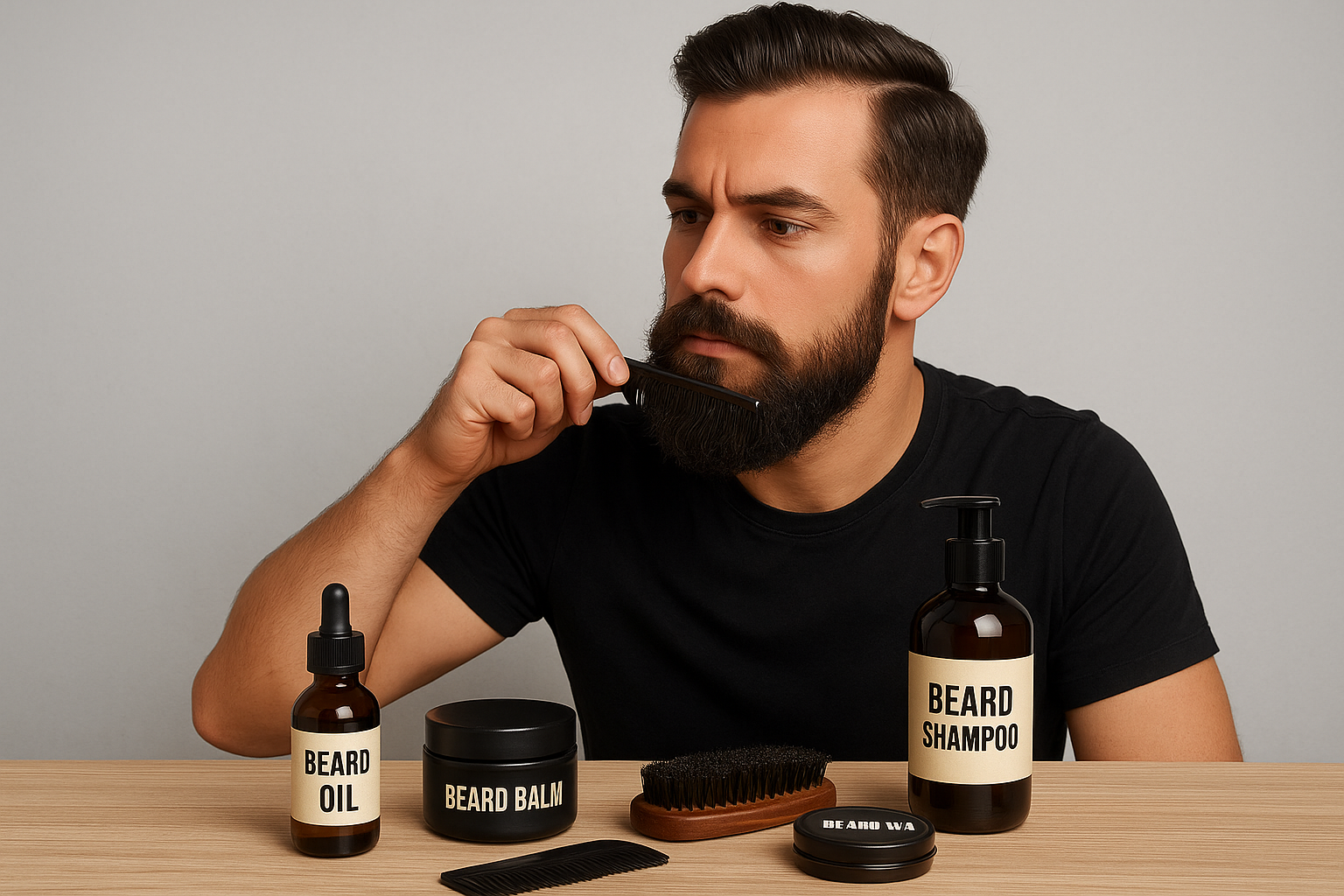
Beard care and shaving products
Common products include:
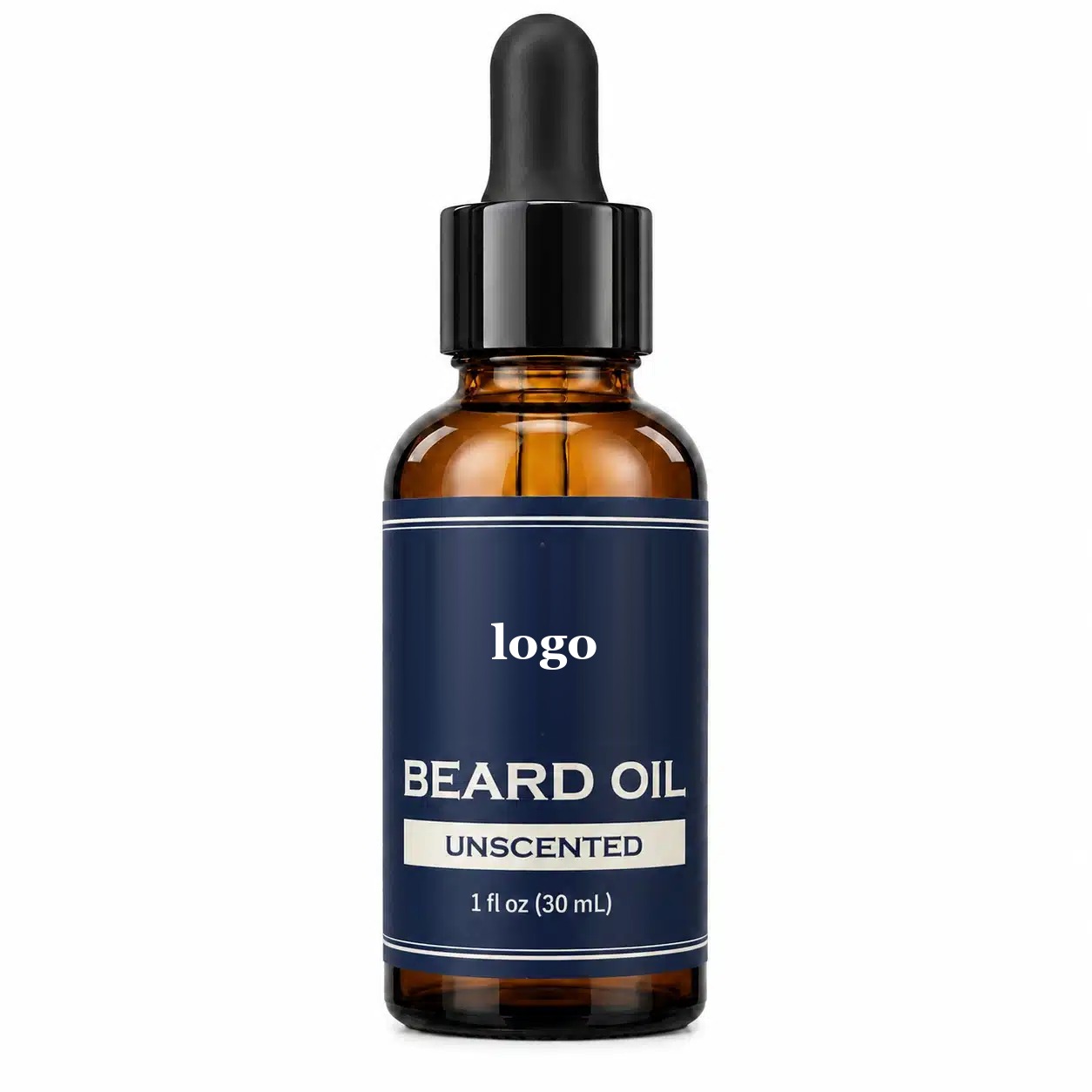
- Beard oil
- Beard balm
- Beard butter
- Mustache wax
- Beard wash
- Beard conditioner
- Shaving cream
- Shaving gel
- Shaving soap
- Pre-shave oil
- Aftershave balm
- Post-shave serum
- Ingrown-hair care
Beard products may look simple, especially oils and balms. Yet small details matter.
A beard oil that feels fine on the hand can become heavy on facial hair. A balm can turn grainy after temperature changes. A shaving cream may perform well with one razor and poorly with another.
Hair care and styling products
This category includes:
- Pomade
- Hair clay
- Styling paste
- Styling wax
- Styling powder
- Sea salt spray
- Curl cream
- Hair gel
- Shampoo
- Conditioner
- Scalp serum
- Hair-thickening spray
A manufacturer should understand more than “strong hold” or “matte finish.”
For example, a clay for short, thick hair may need a different wax balance from a product designed for fine hair. Hold, shine, texture, spreadability, restylability and washability all affect the user experience.
Men’s skincare and body care
Potential products include:
- Facial cleanser
- Foaming face wash
- Moisturizer
- Gel cream
- Face serum
- Eye cream
- Face scrub
- Face mask
- Body wash
- Body lotion
- Deodorant
- Hand cream
- Foot care
- Intimate wash
- Tattoo balm
Men often say they want “simple skincare.” That does not necessarily mean a simple formula. It usually means fast use, a clean finish and no confusing ten-step routine.
A lightweight moisturizer may still need careful work on emulsion stability, skin feel, preservation and packaging.
Fragrance and grooming kits
Fragrance-related formats include:
- Solid cologne
- Eau de parfum
- Body mist
- Fragrance balm
- Scented beard oil
- Essential-oil blends
Solid cologne can be convenient for travel and gifting, but the wax base must release fragrance properly. Too hard and the user cannot pick up enough product. Too soft and it may melt during transport.
Manufacturers may also combine products into:
- Beard grooming kits
- Shaving sets
- Hair styling sets
- Skincare starter kits
- Travel kits
- Subscription boxes
- Corporate gifts
- Holiday gift sets
A kit has its own MOQ, assembly and packaging issues. Three low-MOQ products do not always create one low-MOQ kit. The box supplier may have a completely different number in mind.
Start With the Customer, Not the Product Catalog

“Please send me your catalog” is a normal first message. It is not a useful product brief.
A catalog shows what a manufacturer has made before. It does not tell the factory what your customer needs, how you sell or how much the product can cost.
Before choosing products, define four things.
Who is the target user?
Think about:
- Age
- Lifestyle
- Skin or hair type
- Grooming habits
- Main problem
- Fragrance preference
- Price sensitivity
- Expected routine
“Men aged 18 to 55” is too broad.
“A man aged 25 to 40 who shops online, uses one or two grooming products and wants a non-greasy beard routine” is far more useful.
What problem does the product solve?
A product should have one clear job.
A beard oil might focus on a light finish and skin comfort. A pomade might offer medium hold with easy washout. A moisturizer might target quick absorption without a shiny finish.
Trying to solve six problems at once usually produces vague positioning and a long ingredient wish list.
Where will the product be sold?
The sales channel affects the product, pack and economics.
| Sales channel | Good starting products | Important considerations |
| Amazon FBA | Hero SKUs, grooming kits, refills | Leakage, pack dimensions, review risk |
| DTC website | Differentiated formulas and routines | Story, margin and repeat purchase |
| Barbershop | Pomade, shaving and beard care | Professional performance and back-bar use |
| Retail store | Easy-to-understand daily products | Shelf impact, cartons, barcodes and testers |
| Subscription box | Consumable routines | Reorder interval and shipping weight |
| Corporate gifting | Grooming kits | Presentation and fixed delivery dates |
| Hotel or spa | Body, hair and shaving products | Cost per use and bulk packaging |
What is the target retail price?
Work backward from retail, not forward from a factory quote.
A $20 retail product cannot carry the same packaging, formula cost and freight as an $80 product. Your selling fees, fulfillment, marketing, duties, returns and wholesale margin also need room.
A cheap factory price can still create an unprofitable product. That happens more than people admit.
Formula Systems, Ingredients and Packaging Materials
A product name does not tell you how the product is made.
Two beard balms can use different waxes, oils, antioxidants and production temperatures. Two facial cleansers can have completely different surfactant systems and preservation needs.
Understanding the basic formula type makes supplier conversations much easier.
Common formula systems

Anhydrous oils
Anhydrous means the formula contains little or no water.
Examples include:
- Beard oil
- Pre-shave oil
- Body oil
- Oil serum
- Some fragrance oils
These formulas often use carrier oils, oil-soluble actives, antioxidants and fragrance.
They may be easier to preserve than water-based products, but oxidation, fragrance stability and packaging compatibility still matter.
Wax-and-butter systems
These are common in:
- Beard balm
- Mustache wax
- Pomade
- Solid cologne
- Tattoo balm
- Styling wax
The ratio of wax, butter and oil controls hardness, pickup, melting, spreadability and temperature stability.
A formula that feels perfect in an air-conditioned sample room may behave very differently inside a delivery truck in Dubai or Texas.
Emulsions
Emulsions combine oil and water phases.
Examples include:
- Moisturizers
- Aftershave balms
- Conditioners
- Cream pomades
- Body lotions
- Eye creams
They require suitable emulsifiers, preservatives, manufacturing controls and stability work.
Surfactant systems
Surfactants are used in cleansing and foaming products such as:
- Face wash
- Beard wash
- Shampoo
- Body wash
- Shaving foam
- Intimate wash
The system affects foam, cleansing strength, irritation potential, viscosity and rinse feel.
“Sulfate-free” does not automatically mean gentle. The full formula and usage level matter.
Hydroalcoholic systems
These may appear in:
- Aftershave splash
- Fragrance
- Body spray
- Some toners
Alcohol level affects sensory feel, fragrance solubility, flammability, shipping and packaging.
Powders and solid sticks
Examples include:
- Hair styling powder
- Deodorant stick
- Cleansing stick
- Solid fragrance
- Waterless grooming products
These products need good flow, pickup, payoff and pack compatibility.
Common ingredient groups
A men’s grooming formula may contain:
- Carrier oils such as jojoba, argan or grapeseed oil
- Waxes such as beeswax or plant-derived alternatives
- Butters such as shea or cocoa butter
- Humectants such as glycerin
- Emollients for softness and slip
- Surfactants for cleansing
- Emulsifiers for oil-and-water systems
- Rheology modifiers for thickness
- Preservatives
- Antioxidants
- Fragrance or essential oils
- Botanical extracts
- Cosmetic actives
- Chelating agents
- pH adjusters
An ingredient list alone does not prove performance.
Think of it like a recipe. Flour, butter and sugar could become a biscuit, cake or a rather unfortunate lump. The method and proportions still count.
Packaging materials
Common packaging materials include:
- PET
- HDPE
- LDPE
- PP
- Glass
- Aluminum
- Tinplate
- Paperboard
- Flexible laminate
These materials are used across bottles, pumps, droppers, jars, tubes, tins, cartons and pouches.
The packaging should be reviewed as a system. That includes the container, closure, liner, gasket, pump, label, ink and decoration.
A good formula in a bad pump is still a bad product. It is like serving good coffee in a cup that leaks.
How to Write a Product Brief Manufacturers Can Quote

A clear brief saves time on both sides.
It also helps you compare quotations fairly. If each manufacturer is quoting a different formula or pack, the prices do not mean much.
Include the following information:
- Target market or country
- Selling channel
- Target customer
- Product category
- Benchmark product
- Main performance goal
- Desired texture and finish
- Fragrance direction
- Ingredients wanted or avoided
- Packaging format and capacity
- First-order quantity
- Target cost or retail position
- Required tests and documents
- Target launch date
A simple RFQ might look like this:
We are developing a two-SKU beard care line for US DTC and barbershop sales. The products are a 30 ml lightweight beard oil and a 60 g medium-hold beard balm. We want a clean woody scent, non-greasy finish and stock packaging with custom labels. Our initial estimate is 2,000 units per SKU. Target launch is Q2. Please quote private label and semi-custom options, including samples, testing, packaging, production and FOB pricing.
That brief is not perfect. It is, however, much better than “How much for beard oil?”
How to Evaluate a Private Label Men’s Grooming Manufacturer
A polished website is not the same as a capable factory.
Likewise, an old-fashioned website does not automatically mean poor manufacturing. Some very good factories are strangely bad at marketing themselves.
You need evidence.
Check relevant product experience
Ask whether the manufacturer has worked with the same formula system and packaging format.
Useful questions include:
- Have you produced this type of product before?
- What usually goes wrong during scale-up?
- Which packaging formats work best with this formula?
- Can you share a typical specification structure?
- What testing would you recommend?
- Can the same formula be produced consistently at higher volume?
A supplier that understands the product will usually discuss risks, not only possibilities.
Review R&D and sampling capability
Find out who develops the formula.
Is there an internal chemist or formulation team? Is development passed to an external laboratory? Who records sample changes? How many revisions are included?
A professional sample process should identify:
- Formula version
- Sample date
- Requested change
- Completed change
- Remaining issue
- Approval status
Without version control, feedback becomes messy very quickly. “Make it less greasy” may be interpreted differently by three different people.
Review the manufacturing site
Ask for:
- Factory address
- Business registration details
- Production-area photos or video
- Equipment relevant to your product
- Filling range
- Batch-size range
- Quality-control area
- Warehouse controls
- Audit reports where available
- Certificate scope and validity
If possible, arrange a live video tour or physical visit.
Check that the address on certificates matches the site producing your goods. A certificate from a related company, trading office or different factory may not cover your project.
BunJoin has operated from Guangzhou since 2013 and provides a visible company location and direct contact details on its company information page.
Evaluate quality controls
Ask how the manufacturer handles:
- Incoming raw materials
- Supplier approval
- Material identification
- Weighing and dispensing
- Batch production
- In-process inspection
- Filling accuracy
- Packaging inspection
- Finished-product release
- Retained samples
- Complaints
- Non-conforming goods
- Corrective actions
- Product recalls
Do not accept “strict QC” as a complete answer. Everyone says strict QC. Ask what gets checked, when it gets checked and where the result is recorded.
Assess packaging capability
Some factories make the formula but outsource nearly all packaging work. That is normal.
What matters is how the supply chain is controlled.
Ask:
- Who purchases the components?
- Who approves the packaging supplier?
- Who checks dimensions and appearance?
- Who performs compatibility testing?
- What happens if the pump or bottle changes?
- Will you receive a pre-production assembled sample?
- Who owns any custom mold?
Judge communication
Communication is not a soft extra. It is part of quality.
Confirm:
- A named project owner
- Expected response times
- Written sample feedback
- Approval points
- Escalation process
- Holiday calendars
- Language capability
- Time-zone overlap
A slightly higher quote from a clear, organized supplier may be cheaper than six months of confusion.
Use a weighted supplier scorecard
| Evaluation area | Suggested weight | Evidence to request |
| Relevant product experience | 20% | Similar formats, specifications and samples |
| Quality system | 20% | Procedures, records and audit evidence |
| R&D and sampling | 15% | Sample plan and revision history |
| Compliance support | 15% | Market-relevant documents |
| Packaging control | 10% | Compatibility and supplier controls |
| Commercial terms | 10% | Clear MOQ, price and payment terms |
| Communication | 10% | Named project owner and response process |
Score suppliers against the same brief. Otherwise, the comparison becomes mostly gut feeling.
Standards, Testing and Regulatory Responsibilities
A factory can help with compliance. It cannot magically transfer every legal responsibility away from the brand owner, importer or Responsible Person.
The responsibilities depend on the market, product, claims and supply agreement.
This section is general guidance, not legal advice.
ISO 22716 and cosmetic GMP
ISO 22716 provides guidelines for cosmetic production, control, storage and shipment.
It covers the manufacturing environment rather than proving that one particular formula is suitable for every market. A current certificate with a relevant scope is useful evidence, but it is not the whole compliance file.
You can review the official description of ISO 22716 cosmetic Good Manufacturing Practices.
Ask for:
- Certificate number
- Issuing body
- Site address
- Scope
- Issue date
- Expiry date
- Audit status
Selling cosmetics in the United States
The Modernization of Cosmetics Regulation Act, or MoCRA, introduced requirements covering areas such as facility registration, product listing, safety substantiation and serious adverse-event reporting.
The “Responsible Person” is generally the manufacturer, packer or distributor whose name appears on the product label.
For imported private label products, the brand should clarify:
- Who will be the Responsible Person?
- Which facility must be registered?
- Who submits the product listing?
- Who maintains safety substantiation?
- Who receives adverse-event reports?
- Who updates the listing after product changes?
The FDA explains these requirements on its cosmetic facility registration and product listing page.
Be careful with claims.
A cosmetic claim should describe appearance, cleansing, grooming or cosmetic condition. Claims about treating disease or affecting the structure or function of the body may cause the product to be regulated as a drug.
“Helps beard hair look fuller” and “regrows beard follicles” are not the same kind of claim.
The FDA provides a useful explanation of cosmetic labeling and drug-claim boundaries.
Also, ordinary cosmetics are not generally “FDA approved.” Facility registration or product listing is not product approval.
Selling cosmetics in the European Union
EU cosmetics must comply with Regulation (EC) No 1223/2009.
Common requirements include:
- An EU-based Responsible Person
- Cosmetic Product Safety Report
- Product Information File
- CPNP notification
- GMP evidence
- Compliant ingredients
- Suitable labeling
- Claims substantiation
- Serious undesirable-effect reporting
The Responsible Person must ensure the finished product is compliant. The overseas factory may supply much of the technical information, but the factory does not automatically become the EU Responsible Person.
The legal foundation is available in the EU Cosmetics Regulation 1223/2009.
An ingredient appearing in the CosIng database does not automatically mean it is approved for unrestricted cosmetic use.
Restrictions and conditions still need to be checked in the regulation and its annexes.
Selling cosmetics in Great Britain
Products sold in England, Scotland and Wales need a UK-established Responsible Person.
A Product Information File must be maintained, a safety assessment must be completed and the product must be notified through the UK system before it is placed on the market.
The UK government explains these responsibilities in its guidance on making cosmetic products available in Great Britain.
Northern Ireland follows a different regulatory route, so do not treat “UK compliance” as one simple checkbox.
Documents buyers should request
Depending on the product and market, the file may include:
- Full INCI list
- Formula composition for the safety assessor
- Product specification
- Raw-material documentation
- Certificate of Analysis
- Safety Data Sheet
- Microbiological results
- Preservative-efficacy results
- Stability data
- Packaging-compatibility data
- GMP statement or certificate
- Manufacturing method
- Batch records
- Label information
- Claims-support data
- Free Sale Certificate where relevant
- Export and customs documents
A COA, SDS or Free Sale Certificate cannot replace a complete market compliance assessment. They have different jobs.
Samples and Tests to Complete Before Mass Production
A sample is not only for deciding whether the product smells nice.
It should help you confirm formula performance, packaging, appearance, instructions and production feasibility.
Benchmark samples
If you send a benchmark, explain what you like about it.
For example:
- Texture
- Absorption
- Hold
- Shine
- Foam
- Rinse feel
- Fragrance strength
- Packaging
- Price position
Do not simply say “copy this.” The manufacturer may not know which feature matters most.
Development samples
Each sample should have a version number.
Record feedback in practical language:
- Absorbs too slowly
- Fragrance is too strong after 20 minutes
- Balm is too hard below room temperature
- Pomade pulls during application
- Cleanser foam disappears too quickly
- Pump dispenses too much product
Stability testing
Stability work looks at changes over time and under different conditions.
The plan may evaluate:
- Appearance
- Color
- Odor
- pH
- Viscosity
- Separation
- Weight loss
- Packaging interaction
- Performance
There is no single stability schedule that fits every product and market. The plan should match the formula, packaging, shelf-life target and regulatory strategy.
Microbiological and preservative testing
Water-based products may require microbiological testing and preservative-efficacy or challenge testing.
An anhydrous oil and a water-based face wash do not carry the same microbial risk. Still, manufacturing hygiene and contamination control matter for both.
Packaging compatibility
Compatibility testing checks how the formula and packaging behave together.
Possible problems include:
- Pump failure
- Tube paneling
- Bottle swelling
- Seal damage
- Label lifting
- Ink smearing
- Corrosion
- Fragrance loss
- Formula discoloration
- Leakage
Pre-production and golden samples
Before mass production, approve an assembled pre-production sample when possible.
The final approved reference should cover:
- Formula
- Color
- Fragrance
- Texture
- Fill weight
- Container
- Closure
- Label
- Carton
- Batch coding
- Shipping configuration
This becomes the golden sample. Production should be judged against it.
MOQ, Cost and Lead Time: What the Quote Is Really Telling You

MOQ means minimum order quantity. It sounds like one number, but a grooming project may contain several MOQs hiding inside each other.
The four MOQs inside one product
Formula MOQ
This is influenced by:
- Mixing-vessel size
- Batch efficiency
- Raw-material quantity
- Production loss
- Filling speed
- Cleaning and setup time
Packaging MOQ
The bottle, jar, tube, pump or tin may come from another supplier.
A factory might be able to mix enough beard oil for 1,000 bottles while the custom dropper supplier requires 5,000 pieces.
The liquid is not always the problem. Quite often, the bottle is the boss.
Decoration MOQ
Printing, coating, hot stamping, screen printing and color matching may have their own minimums.
Labels are usually more flexible than direct printing.
Kit MOQ
Gift boxes, inserts, bags and assembly create another layer.
The box may require a higher quantity than the products inside it.
What affects the total cost?
| Cost area | What it may include | Common surprise |
| Formula | Ingredients, mixing and filling | Premium actives or fragrance minimums |
| Packaging | Bottle, pump, jar, tube or closure | Component MOQ exceeds formula MOQ |
| Decoration | Label, print, coating and color matching | Setup and plate charges |
| Development | Lab work and sample revisions | Custom work is not included in unit price |
| Testing | Stability, micro and compatibility | Some tests are quoted separately |
| Packing | Cartons, inserts and assembly | Gift-set labor and material |
| Freight | Export packing and transport | A low unit price creates a high landed cost |
| Compliance | Safety assessment and notification work | The brand may remain responsible |
Ask for an itemized quotation.
At minimum, it should state:
- Formula
- Fill size
- Packaging
- Decoration
- Individual carton
- Master carton
- Testing
- Sample cost
- Tooling or setup
- Unit price
- MOQ
- Incoterm
- Payment terms
- Lead time
- Quote validity
MOQ is not the same as economical quantity
A supplier may agree to make 300 pieces, but the setup and development costs still exist.
The result can be technically possible and financially silly.
At low volume, stock packaging, labels and mature formulas are often more sensible. Once demand is proven, you can invest in custom components or a more differentiated formula.
BunJoin generally supports starting quantities around 1,000–2,000 pieces for suitable projects, though the exact MOQ depends on formula, packaging and decoration.
Think in landed cost
Landed cost includes more than the factory price.
Add:
- Product cost
- Packaging
- Testing
- Inspection
- Freight
- Insurance
- Duties
- Customs fees
- Local transport
- Warehousing
- Compliance work
- Fulfillment preparation
A $2.20 product can become a $4.10 product after everything arrives. That is the number your margin has to survive.
Separate the timeline into stages
A useful timeline should include:
- Brief and feasibility
- Initial quotation
- Formula sampling
- Sample revisions
- Testing
- Packaging sourcing
- Artwork approval
- Material production
- Bulk manufacturing
- Filling and packing
- Inspection
- Freight
Do not accept “30 days” without asking when those 30 days begin.
Is it after deposit? Formula approval? Packaging arrival? Artwork approval? Those are very different dates.
Domestic vs Overseas Manufacturing
There is no universally best manufacturing country.
The right choice depends on product type, volume, target market, positioning and how much operational work your team can handle.
Manufacturing locally
Possible advantages:
- Easier site visits
- Shorter communication chain
- Lower freight complexity
- Faster small repeat orders
- Familiar market regulations
- Easier legal enforcement
Possible disadvantages:
- Higher development or production cost
- Fewer packaging choices
- Higher labor cost
- Limited willingness to handle small brands
- Narrower product-category coverage
Manufacturing in China
Possible advantages:
- Broad packaging ecosystem
- Access to many personal-care formats
- Competitive scale economics
- Integrated sourcing
- Flexible decoration options
- Experience with export projects
Possible disadvantages:
- Longer freight time
- Time-zone differences
- More complex import work
- Greater need for written specifications
- Supplier verification challenges
- Risk of misunderstandings when the brief is vague
Manufacturing in Korea, the EU or elsewhere
Korean manufacturers may be attractive for skincare-led positioning and texture innovation. European suppliers may suit premium positioning, regional regulatory familiarity or specific ingredient stories.
But the country name does not guarantee the product.
A good Chinese factory may be more organized than a poor European factory. A good US laboratory may be the right partner for custom active skincare but too expensive for a basic high-volume body wash.
Compare the actual supplier, not only the flag beside its address.
Contracts, Formula Ownership and Commercial Risk

Many projects discuss the formula for weeks and the contract for ten minutes. It should probably be the other way around.
Before paying a deposit, clarify the following points.
Who owns the formula?
Possible arrangements include:
- Manufacturer-owned stock formula
- Manufacturer-owned adjusted formula
- Shared or licensed formula
- Buyer-owned custom formula
- Buyer-provided formula
Paying a development fee does not automatically transfer formula ownership.
If exclusivity matters, put it in writing.
Can the manufacturer sell the formula to another brand?
Private label formulas are often non-exclusive. That is part of why they are faster and less expensive.
You may be able to negotiate:
- Market exclusivity
- Country exclusivity
- Channel exclusivity
- Fragrance exclusivity
- Packaging exclusivity
- Full formula ownership
Each option may affect cost and MOQ.
Who owns the artwork and tooling?
Confirm ownership of:
- Logo files
- Label artwork
- Carton artwork
- Photography
- Printing plates
- Custom molds
- Tooling
- Product names
- Barcodes
What happens when something changes?
The contract should require approval before changing:
- Raw-material supplier
- Ingredient grade
- Fragrance
- Preservative
- Formula percentage
- Packaging component
- Color
- Manufacturing site
- Test method
Even a “small” pump change can affect output and leakage.
What happens if goods are defective?
Define:
- Inspection method
- Acceptable quality level
- Claim period
- Evidence required
- Rework options
- Replacement terms
- Credit terms
- Freight responsibility
- Disposal responsibility
Also confirm payment milestones and late-delivery handling.
A handshake is friendly. A written agreement is friendlier when something goes wrong.
Common Red Flags and the Practical Fix
| Red flag | Why it matters | Practical response |
| One MOQ for every product | Formula and packaging requirements differ | Request an MOQ breakdown |
| “FDA-approved cosmetics” | The wording is usually inaccurate | Ask what is registered or listed |
| No written specification | The bulk batch may drift from the sample | Approve a signed product specification |
| Certificates with unclear scope | They may not cover the production site | Verify the address, issuer and validity |
| Very low price with no detail | Packaging, tests or setup may be excluded | Request an itemized quotation |
| Unlimited custom samples for free | It may indicate poor development control | Ask for a structured revision plan |
| Formula changes without approval | Performance and compliance may change | Add written change control |
| No compatibility review | Leaks or pack failures may appear later | Test the final formula and pack together |
| No pre-production sample | Artwork errors can reach the full order | Require assembled PPS approval |
| Pressure to pay immediately | Due diligence is being skipped | Verify the company and terms first |
| Refusal to show the factory | The supplier may be a trader or broker | Request a live tour or independent audit |
| Guarantees about every market | Compliance responsibilities vary | Confirm the exact market and legal role |
A trading company is not automatically a red flag. Some trading and sourcing companies provide useful project management and access to several factories.
The red flag is pretending to own a factory when they do not.
Ask who performs each step and where it happens.
A Simple First-Launch Scenario
Imagine a new DTC brand wants to launch:
- Beard oil
- Beard balm
- Beard wash
- Beard conditioner
- Mustache wax
- Grooming kit
That sounds like a strong collection. It is also six SKUs, several formula systems and a rather large first inventory.
A safer first phase might be:
- One lightweight beard oil
- One medium-hold beard balm
- Stock bottles and tins
- One shared fragrance direction
- Custom labels and simple cartons
- Around 2,000 units per SKU
This gives the brand two products with different use cases but one clear routine.
After real customers buy, the brand can review:
- Which product sells faster?
- Is the fragrance liked?
- How often do customers reorder?
- Is the balm hold strong enough?
- Is the oil pack leaking?
- Are buyers asking for a wash?
The beard wash can become phase two. The gift set can wait until the products have reviews.
It is not as exciting as launching six products at once. It is usually kinder to cash flow, though.
Final Manufacturer Selection Checklist
Before choosing a private label men’s grooming manufacturer, confirm that:
- The manufacturer has relevant product experience
- The cooperation model is clearly defined
- Formula ownership is written down
- Exclusivity terms are understood
- The target market is confirmed
- Regulatory responsibilities are assigned
- Claims have been reviewed
- The formula specification is documented
- Packaging materials are confirmed
- Compatibility testing is planned
- Sample versions are recorded
- Testing responsibilities are written
- MOQ is broken down
- Pricing is itemized
- Payment milestones are clear
- Lead time is separated by stage
- Change control is agreed
- The golden sample is approved
- Inspection standards are defined
- Defect handling is written
- Freight terms are confirmed
- Reorder planning has been discussed
If a supplier can answer these points clearly, you are no longer comparing catalogs. You are comparing manufacturing partners.
Conclusion
Choosing a private label men’s grooming manufacturer is not mainly about finding someone who can put your logo on a bottle.
It is about finding a partner that understands the product, records decisions, controls production and gives you the information needed to sell in your target market.
Start with the customer and channel. Then define the formula, packaging, quantity and price position.
Compare total cost rather than unit price. Verify certificates instead of collecting colorful PDFs. Approve written specifications, not just a nice-smelling sample.
Most importantly, ask the uncomfortable questions before paying the deposit.
A good manufacturer does not make the project sound magically easy. It makes the difficult parts visible and manageable.
If you are preparing a beard care, shaving, hair styling, skincare or body care project, you can send your product brief to BunJoin for an initial feasibility, sampling and MOQ discussion.
Frequently Asked Questions
What is a private label men’s grooming manufacturer?
It is a company that develops or manufactures grooming products sold under another company’s brand.
The manufacturer may offer ready-made formulas, semi-custom formulas or complete ODM development. Services can include formulation, sampling, packaging, testing, filling, labeling, packing and export support.
What is the difference between white label, private label, OEM and ODM?
White label usually means choosing an existing product and adding basic branding.
Private label may allow more adjustments to fragrance, texture, color and packaging. OEM normally means producing according to a buyer-provided specification. ODM means the manufacturer helps design and develop the product from the buyer’s brief.
Because suppliers use these terms differently, always confirm what work and ownership are included.
How much does it cost to launch a private label men’s grooming line?
The cost depends on:
- Number of SKUs
- Order quantity
- Formula type
- Packaging
- Decoration
- Testing
- Compliance
- Freight
- Duties
- Marketing preparation
A two-SKU launch using mature formulas and stock packaging may require much less capital than a five-SKU custom range with bespoke bottles.
Request a complete landed-cost model before committing.
What is the typical MOQ for men’s grooming products?
Typical MOQs range from a few hundred to several thousand units per SKU.
The actual number depends on formula batch size, packaging components and decoration. BunJoin commonly works around a starting range of 1,000–2,000 units for suitable products, but every project must be reviewed individually.
Can I start with fewer than 1,000 units per SKU?
Sometimes.
White label products, stock formulas and stock packaging provide the best chance of a very low MOQ. However, the unit price may be higher.
A low production MOQ does not guarantee a low packaging MOQ. Ask for both numbers.
Why is the packaging MOQ higher than the formula MOQ?
Formula production and packaging production are separate processes.
A cosmetics factory might mix a small batch, while a bottle supplier needs a larger run to operate a mold, complete color matching or perform decoration efficiently.
Using a stock bottle with a custom label can reduce this problem.
How long does product development take?
A simple white label project may move quickly once packaging and artwork are ready.
Semi-custom and ODM projects take longer because they can include formula development, revisions, testing, packaging sourcing and regulatory preparation.
Ask for a stage-by-stage timeline. Avoid planning around one vague lead-time number.
Can a manufacturer copy an existing grooming product?
A manufacturer can use a benchmark to understand texture, scent, performance and packaging direction.
An exact copy may be unrealistic or inappropriate because the original formula, process, fragrance and intellectual property may not be available.
A better brief explains which benchmark characteristics matter and allows the formulator to build toward those goals.
Who owns a custom cosmetic formula?
Ownership depends on the contract.
A stock private label formula is usually owned by the manufacturer. A custom formula may still be manufacturer-owned unless the agreement explicitly transfers ownership or grants exclusivity.
Clarify ownership, usage rights and market exclusivity before development begins.
What tests are required before mass production?
The testing plan depends on the formula, packaging, claims and target market.
Common work includes:
- Stability testing
- Microbiological testing
- Preservative-efficacy testing
- Packaging-compatibility testing
- Safety assessment
- Performance or claims testing
The final plan should be agreed with the manufacturer and relevant regulatory specialist.
What documents should a manufacturer provide?
Common documents include:
- INCI list
- Product specification
- COA
- SDS
- Stability information
- Microbiological results
- Compatibility information
- GMP evidence
- Batch records
- Packaging specifications
- Export documents
Not every document is available at the same project stage. Confirm when each item will be supplied.
Does the FDA approve private label men’s grooming products?
Ordinary cosmetics are not generally pre-approved by the FDA.
MoCRA introduced facility registration, product listing and other responsibilities, but registration and listing are not the same as FDA product approval.
Cosmetic labels and claims must still comply with applicable US law.
Can one manufacturer produce beard care, skincare and hair products?
Some full-service manufacturers can work across these categories.
However, check whether the factory has the right mixing, filling, testing and quality experience for every formula system.
Being good at beard oil does not automatically mean being good at face cream or aerosol styling products.
Is it better to manufacture in China or locally?
Neither option is always better.
China may offer a broad packaging ecosystem, competitive scale and multi-category sourcing. Local manufacturing may offer easier visits, shorter freight routes and closer regulatory familiarity.
Compare product capability, total cost, communication, risk and reorder speed.
What should I include in my first RFQ?
Include:
- Product category
- Target customer
- Destination market
- Sales channel
- Benchmark
- Formula and performance goals
- Texture and scent direction
- Packaging format
- First-order quantity
- Target cost
- Required documents
- Launch date
The clearer the brief, the more useful the quotation will be.
Ready to build this under your own brand?
BunJoin develops and manufactures private label men’s grooming & skincare — formula, packaging, MOQ and compliance (MoCRA/FDA) handled end to end.
Frequently asked questions
What is a typical private label MOQ for men's grooming?
Most SKUs start at 1,000–5,000 units; formats that need custom tooling or filling run higher. We confirm the exact minimum after your brief.
How long does private label production take?
Feasibility and samples usually take 1–3 weeks, then full production 3–6 weeks after approval, plus freight. We give a date range in the quote.
Can the formula, scent and packaging be customized?
Yes. Scent profile, active level, bottle or jar, label and carton are all adjustable, and we check claims against MoCRA/FDA before sign-off.