Men’s skincare has evolved beyond simple cleansing and moisturizing. Today, men are increasingly concerned about the ingredients in their products, especially preservatives. Preservatives ensure product safety by preventing microbial growth, but not all preservatives are created equal. In this article, we will explore three commonly used preservatives—phenoxyethanol, potassium sorbate, and ethylhexylglycerin—and analyze their safety, usage limits, and alternatives for men’s grooming products.
Why Preservatives Matter in Men’s Skincare
Skincare products, particularly those with water-based formulations like creams, lotions, and gels, can be a breeding ground for bacteria and mold. Without preservatives, these products can quickly become contaminated, posing health risks such as skin irritation or infections. Selecting the right preservative is critical to both product safety and consumer trust.
Phenoxyethanol: Popular but Controversial
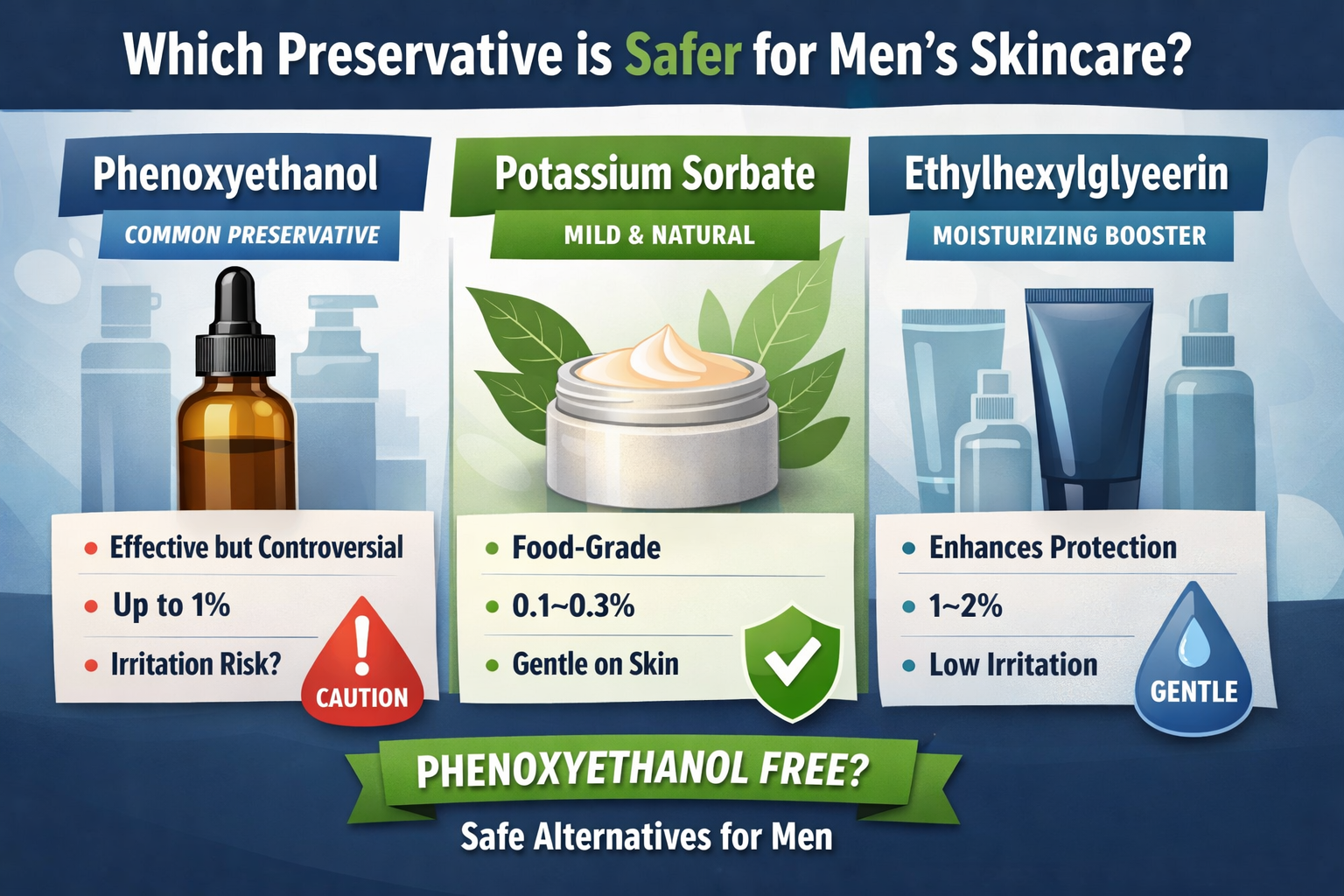
Phenoxyethanol is widely used in cosmetic products due to its effectiveness against bacteria and yeast. Its typical usage concentration is up to 1%, which is considered safe by regulatory authorities such as the European Commission and FDA. However, phenoxyethanol has faced scrutiny due to concerns about skin irritation and potential toxicity in infants when ingested. For men with sensitive skin or those seeking “clean” formulations, many brands now opt for phenoxyethanol-free products.
Pros:
-
Broad-spectrum antimicrobial activity
-
Stable in a wide pH range
-
Compatible with many formulations
Cons:
-
May cause mild irritation in sensitive skin
-
Limited use in baby or highly sensitive skincare
Potassium Sorbate: Gentle and Food-Grade
Potassium sorbate is the potassium salt of sorbic acid and is considered a mild, food-grade preservative. It works primarily against yeast and mold, making it ideal for formulations with low water activity. Its maximum usage concentration is usually 0.1–0.3%, and it is often combined with other preservatives to broaden antimicrobial protection.
Pros:
-
Low irritation potential
-
Natural-derived and widely recognized as safe
-
Suitable for sensitive and “clean” cosmetic formulations
Cons:
-
Less effective against bacteria on its own
-
Limited stability in high pH or alkaline products
Ethylhexylglycerin: A Multi-Purpose Alternative
Ethylhexylglycerin is increasingly used as a preservative booster rather than a stand-alone preservative. It enhances the effectiveness of other preservatives and also acts as a skin-conditioning agent, making it particularly suitable for men’s skincare products like aftershaves, lotions, and serums.
Pros:
-
Gentle and low irritation
-
Provides moisturizing benefits
-
Enhances overall preservative system
Cons:
-
Insufficient antimicrobial activity alone
-
Usually needs combination with other preservatives for broad protection
Choosing the Right Preservative for Men’s Products
When formulating men’s skincare products, it is crucial to balance efficacy, safety, and consumer preference. For example:
-
Sensitive skin lines: Opt for potassium sorbate or ethylhexylglycerin as primary preservatives.
-
Active or water-rich products: Consider phenoxyethanol at safe concentrations combined with ethylhexylglycerin.
-
Clean or “phenoxyethanol-free” marketing: Use potassium sorbate plus ethylhexylglycerin or other natural preservative blends.
Manufacturers should also validate preservative systems through challenge testing to ensure microbial safety without exceeding regulatory limits.
Regulatory Guidelines and Best Practices
-
Phenoxyethanol: ≤1% in cosmetic formulations
-
Potassium Sorbate: ≤0.3%, effective in pH ≤6.5
-
Ethylhexylglycerin: Typically ≤1–2%, often as a co-preservative
Regular compliance with regulations such as EU Cosmetics Regulation (EC) No 1223/2009 or FDA guidelines ensures that men’s skincare products remain safe and marketable globally.
Conclusion
Selecting a preservative is a critical step in men’s skincare formulation. Phenoxyethanol offers broad-spectrum protection but may not appeal to all consumers due to safety perceptions. Potassium sorbate is gentle and widely accepted, especially for sensitive or “clean” lines. Ethylhexylglycerin enhances preservative efficacy and adds moisturizing benefits. By understanding the safety profiles and proper usage of these preservatives, brands can create effective, safe, and appealing skincare solutions for modern men.