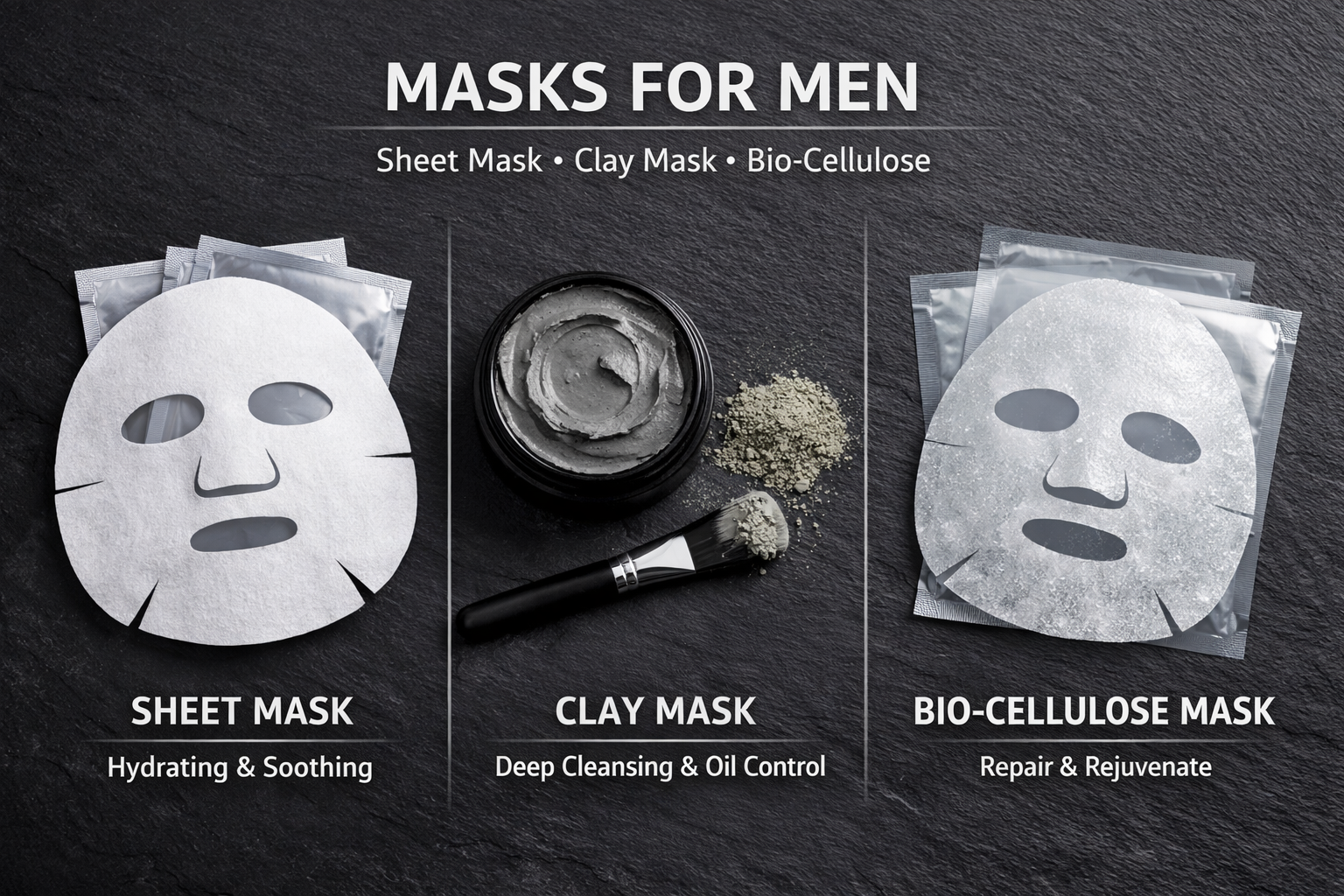
In today’s skincare market, men’s grooming has evolved far beyond basic cleansing and shaving. One of the fastest-growing segments is facial masks, which offer targeted care, hydration, and skin repair. For brands and OEMs in the male skincare sector, understanding the differences between sheet masks, clay masks, and bio-cellulose masks is critical for product development and successful marketing.
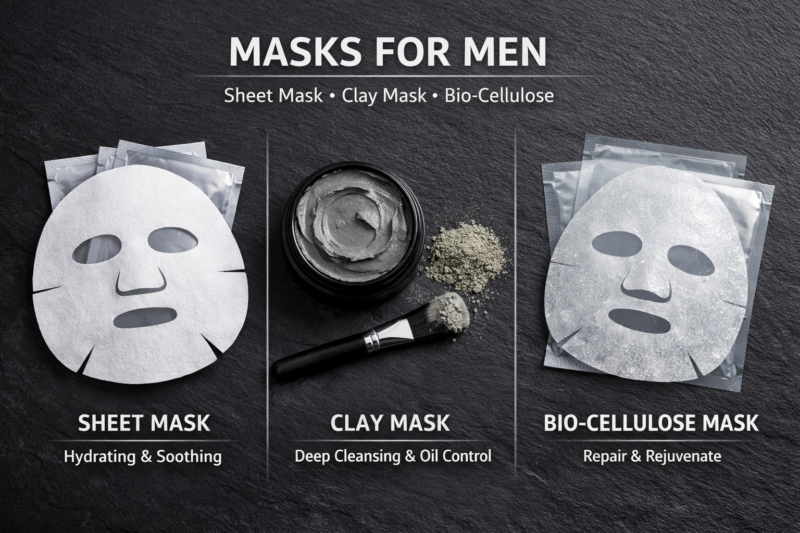
- Discover the differences between sheet masks, clay masks, and bio-cellulose masks for men
1. Sheet Masks: Quick Hydration and Nutrient Delivery
Sheet masks are pre-cut fabric masks soaked in serum or essence, designed to fit the face closely and deliver active ingredients efficiently. Popular materials include cotton, hydrogel, and non-woven fabrics. For men, sheet masks are ideal for hydration, soothing irritation, and delivering antioxidants.
From an OEM perspective, sheet mask production involves soaking the mask base in concentrated serum, precise cutting for face fit, and careful packaging to maintain moisture and efficacy. Single-use sachets or multi-pack boxes are standard. Brands can formulate masks specifically for men’s skin concerns, such as oil control, pore tightening, and post-shave soothing.
2. Clay Masks: Deep Cleansing and Oil Control
Clay masks are powder- or paste-based formulations that contain natural clays such as kaolin or bentonite. They are known for their ability to absorb excess oil, remove impurities, and gently exfoliate dead skin cells. Men with oily or combination skin types benefit particularly from clay masks, as they help reduce shine and prevent breakouts.
The production of clay masks differs significantly from sheet masks. It involves mixing powdered clay with other active ingredients, ensuring a smooth, spreadable texture, and filling into tubes, jars, or sachets. Packaging must prevent drying and maintain the product’s consistency, as clay masks are sensitive to humidity and temperature. For OEMs, customizing clay masks with charcoal, tea tree oil, or volcanic ash can address specific male skin needs.
3. Bio-Cellulose Masks: Advanced Skin Repair and Luxury Care
Bio-cellulose masks are a high-end category, made from natural fibers produced by bacteria fermentation. These masks have a unique 3D structure that adheres tightly to the skin, allowing superior serum absorption and long-lasting hydration. They are often used for repairing sensitive or stressed skin, delivering anti-aging ingredients, or calming post-shave irritation.
Producing bio-cellulose masks requires more advanced technology. The bacterial fermentation process creates the cellulose sheet, which is then infused with serums and packaged in airtight pouches to preserve efficacy. For men’s skincare, bio-cellulose masks can be positioned as premium treatments for rejuvenation, brightening, or hydration after shaving and outdoor exposure.
4. Choosing the Right Mask for Men’s Skin
Each mask type serves a distinct purpose. Sheet masks are perfect for daily hydration and convenience. Clay masks target oil control and deep cleansing. Bio-cellulose masks offer premium care and intensive repair. By understanding these differences, brands can design a product portfolio that addresses the diverse needs of male consumers, whether for post-workout refreshment, urban skin protection, or anti-aging routines.
5. Packaging Considerations
Men’s skincare packaging trends favor simplicity, modern aesthetics, and functionality. For sheet masks, foil sachets with easy-tear openings are standard. Clay masks are usually in jars or tubes, offering reusability and ease of use. Bio-cellulose masks require individual sealed pouches to maintain serum concentration and mask integrity. Sustainable packaging is also gaining traction in men’s skincare, aligning with the growing eco-conscious market segment.
6. OEM Opportunities for Men’s Masks
For brands looking to enter or expand in men’s skincare, partnering with an experienced sheet mask OEM can streamline production, ensure high-quality formulations, and allow customization for target demographics. Whether it’s adding natural extracts, vitamins, or charcoal for oil control, OEM partnerships offer flexibility to create unique products that meet market demand.
Conclusion
Understanding the differences between sheet masks, clay masks, and bio-cellulose masks is essential for both brands and manufacturers in the male skincare market. Each type offers unique benefits, requires specific production methods, and demands careful packaging. By leveraging these insights, brands can build a diverse, effective, and appealing facial mask lineup tailored to men’s skincare needs.