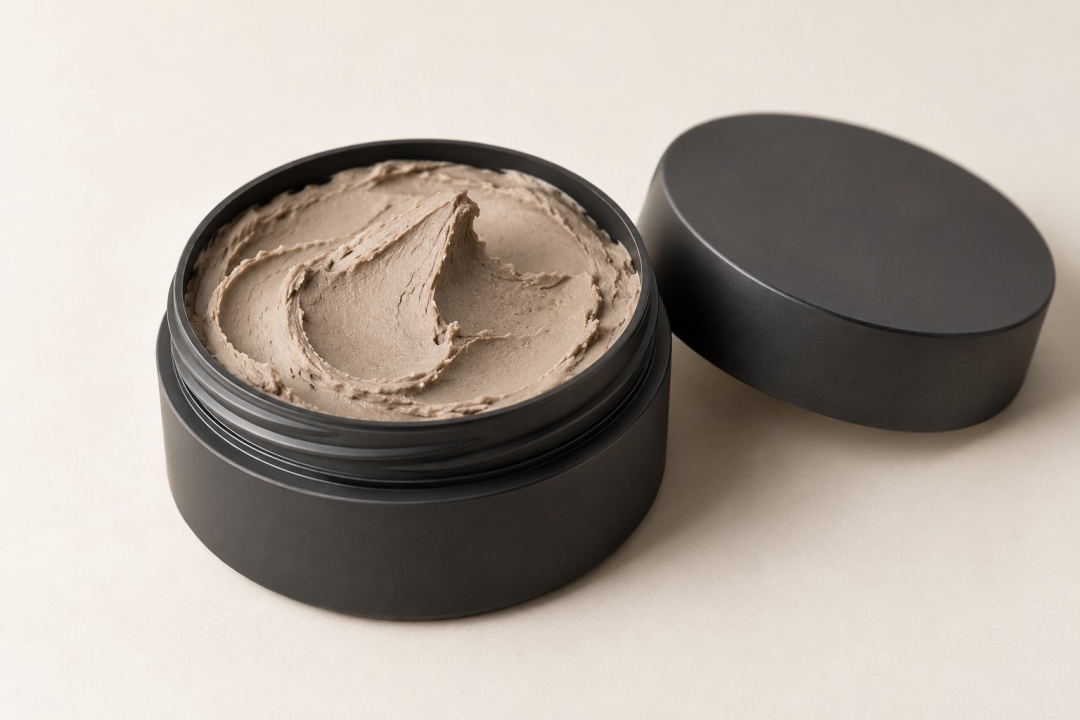
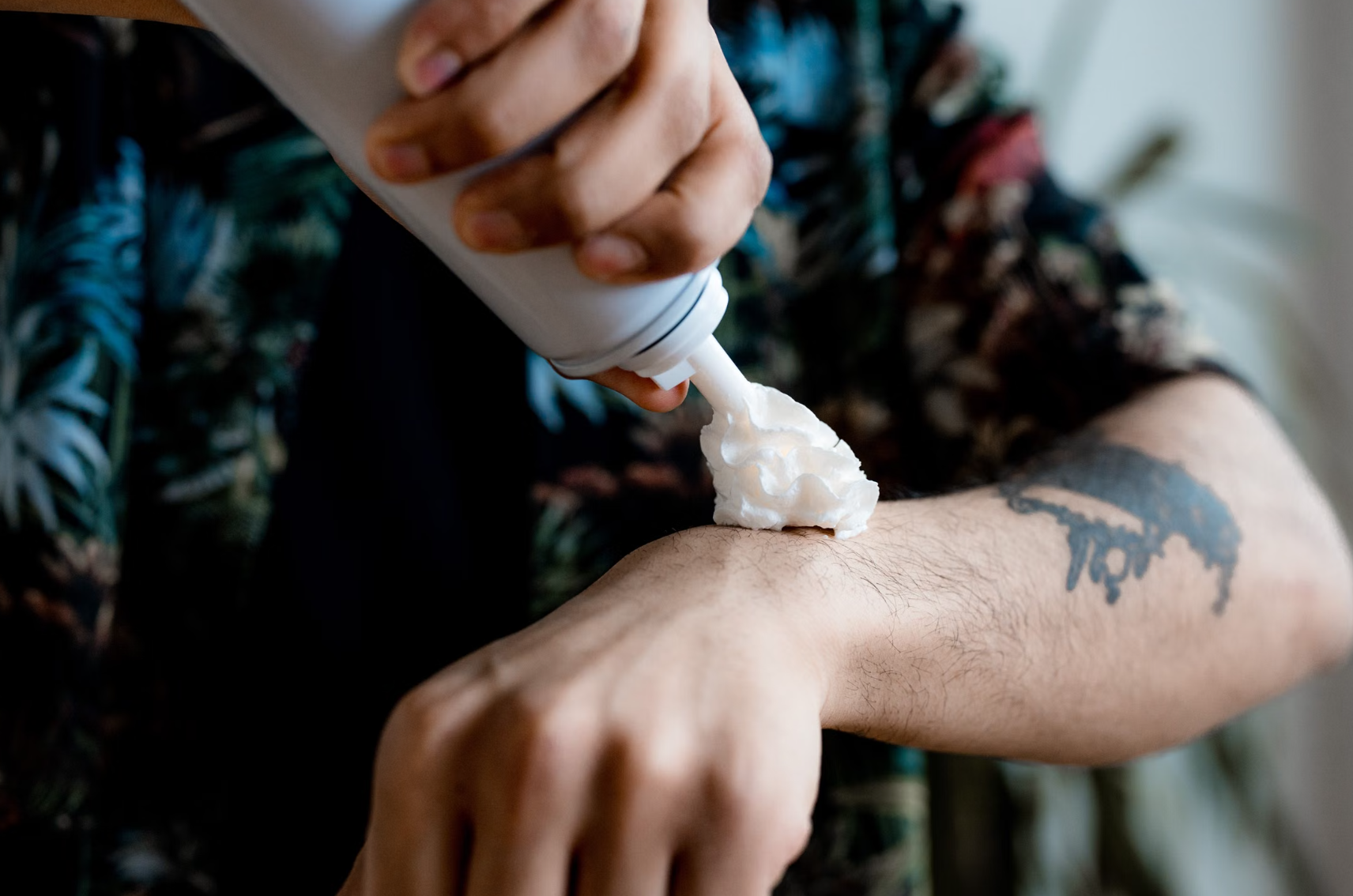
A bathroom shelf full of bottles is not a product strategy.
It happens often. A new brand chooses a wash, lotion, scrub, spray, and deodorant because they look good together. At launch, every product tells roughly the same story: fresh scent, clean ingredients, premium feel. But which one is the hero? Nobody is quite sure.
Think of a body care range like a small toolbox. Each tool needs a different job. Five similar screwdrivers are not a complete set.
This guide explains how to define the category, choose a first line, brief formulas and packaging, plan testing and claims, and evaluate a manufacturer. The goal is a system people understand and reorder—not masculine colors around a generic formula.
The market is moving. NielsenIQ reports that U.S. men’s grooming reached $7.1 billion, up 6.9% year over year, while online sales increased 27.6%. Bath and shower led the category, with body wash at roughly $1 billion. The same report recorded 11.4% deodorant growth and 150% growth for whole-body deodorants. These are U.S. figures for the wider men’s grooming category, not a global body care forecast, but they show where attention is going. Read the NielsenIQ men’s grooming analysis.
TL;DR
- Private label men’s body care spans wash, lotion, scrub, butter, deodorant – each needs different formula logic.
- Choose product roles before ingredients; fragrance is a formula decision, not just a mood board.
- Match the line to real use; packaging is part of performance; audit the manufacturer on MOQ/cost/timeline.
What Counts as Private Label Men’s Body Care?

Body care generally covers products intended to cleanse, moisturize, exfoliate, perfume, deodorize, or improve the appearance and feel of skin below the face. Typical formats include body wash, shower gel, bar soap, lotion, body butter, scrub, deodorant, body spray, wipes, and hand or foot products.
The edge of the category gets blurry. A 3-in-1 wash crosses body, hair, and sometimes beard care. An aftershave belongs mainly to shaving and facial care. Antiperspirant may sit next to deodorant on the shelf, but its U.S. regulatory path is different. Medicated body-acne, eczema, antifungal, pain-relief, or SPF products are not ordinary cosmetic extensions.
Manufacturing language is blurry too:
| Development model | What usually changes | Best fit | Main watch-out |
| Stock private label | Branding, label, carton, and selected stock packaging | Faster market test | Limited differentiation and possible shared formula |
| Semi-custom | Fragrance, color, texture, selected ingredients, or packaging | Defined concept with a moderate budget | Changes may require new stability or compatibility work |
| Custom ODM | Formula and package developed from a brand brief | Differentiated hero product or established brand | More samples, testing, time, and ownership decisions |
| OEM / contract manufacturing | Buyer supplies or owns the formula and specification | Experienced product team | Technology transfer and responsibilities must be explicit |
Suppliers use these terms differently. The contract matters more than the acronym. Confirm who owns the formula, whether it is exclusive, which tests cover the exact formula-package combination, and which factory will mix and fill the batch. The broader private label men’s grooming manufacturer guide explains these sourcing models in more detail.
Choose Product Roles Before Choosing Ingredients

Start with a routine, not a catalog.
Build the Foundation
Body wash and lotion make a simple two-step system. The wash is the frequent-use entry product; lotion creates a natural bundle. Both need a defined user, finish, fragrance level, and price position.
Pick One Hero
The hero gives the brand a reason to exist: perhaps a scent-led shower gel, quick-dry lotion, cosmetic deodorant, winter balm, or gym wash. One clear use case beats ten fashionable ingredients.
Add Extensions After Learning
Scrubs, body butter, hand cream, foot cream, body spray, travel sizes, wipes, and refills can follow. Adjacent facial skincare can work too, but it needs its own product logic. A men’s skincare product-line guide is more useful than treating one lotion as suitable for every part of the body.
| Product | Consumer job | Commercial role | Development watch-out |
| Body wash | Cleanse with a chosen foam and after-feel | Core repeat-purchase SKU | Mildness, fragrance, viscosity, pump, microbiology |
| Bar soap | Convenient cleansing and scent delivery | Value, gift, hotel, or traditional format | Cracking, sweating, lather, fragrance retention |
| 3-in-1 wash | Simplify gym or travel routines | Convenience hero | Compromise across scalp, hair, beard, and body |
| Body lotion | Improve softness and reduce dry feel | Bundle and replenishment anchor | Tack, rub-in, pilling, pump compatibility |
| Body butter or balm | Provide a richer moisture experience | Premium or seasonal extension | Heat stability, greasiness, oxidation |
| Body scrub | Improve surface feel through exfoliation | Sensory and content-led extension | Abrasion, shower slip, separation, rinse behavior |
| Deodorant | Reduce or mask body odor | Daily-use hero | Claim wording, stains, residue, package function |
| Antiperspirant | Reduce perspiration | High-demand regulated format | U.S. OTC drug requirements and specialist capability |
Body Wash Formulation: Foam Is Not the Whole Story
A body wash is a surfactant system, not scented water with bubbles.
Anionic surfactants often provide strong cleansing and foam. Amphoteric and nonionic materials can help adjust mildness, foam character, and rinse. Real formulas usually use blends. The right balance depends on skin feel, use frequency, fragrance, cost, pH, water hardness, and the desired appearance.
“Sulfate-free” can be useful positioning, but it does not automatically prove mildness. A poorly balanced alternative system may still leave skin tight. Test the finished product at the intended dose and frequency.
Formats also behave differently:
- Clear or pearlized gel: Familiar and easy to understand, though fragrance and appearance affect viscosity.
- Cream or oil-to-milk wash: Richer sensory positioning with different emulsification needs.
- Concentrated refill: Lower pack weight, but dosing and transfer matter.
- 3-in-1 wash: Convenient, yet difficult to optimize for scalp, hair, beard, and body equally.
Common problems are ordinary: fragrance thins the gel, the pump struggles when cold, or foam changes in hard water. A strong cleanser may impress in a hand test but feel tiring after a week. Benchmark rinse and after-feel, not only foam height.
Lotions, Butters, Scrubs, and Deodorants Need Different Formula Logic

Body Lotion Has to Spread Far
Body lotion is used over a larger area than face cream. Spread, rub-in time, tack, fragrance, and cost per application matter a lot.
Glycerin and betaine support hydration concepts. Squalane, esters, oils, and butters affect slip and softness. Emulsifiers and rheology modifiers create texture, while preservation, chelation, antioxidants, and pH control protect quality.
A premium lotion that needs ten pumps and five minutes to absorb may not feel premium at 7:30 on a Monday morning.
Scrubs Need More Than Attractive Particles
Physical scrubs need controlled abrasion, suspension, rinse, and shower-safety review. Acid-positioned products need suitable pH, instructions, tolerance assessment, and careful claims. “Natural particles” do not automatically mean gentle or drain-friendly.
Jars used in a wet shower environment also create different contamination and water-entry risks from a closed tube.
Deodorant Is Not the Same as Antiperspirant
A cosmetic deodorant can mask or reduce odor through fragrance and suitable deodorizing strategies. The brief should define residue, glide, drying time, stain transfer, fragrance strength, and duration claims.
An antiperspirant is intended to reduce perspiration. In the United States, that makes it an OTC drug product. The manufacturer needs the appropriate active ingredients, controls, labeling capability, and effectiveness approach. Do not casually add “48-hour sweat protection” to cosmetic deodorant artwork because it sounds stronger.
The FDA explains that ordinary deodorant may be a cosmetic, while a deodorant that is also an antiperspirant can be both a cosmetic and a drug. Review the FDA cosmetic-versus-drug explanation. The official 21 CFR Part 350 antiperspirant framework covers active ingredients, labeling, and effectiveness considerations.
Fragrance Is a Formula Decision, Not Just a Mood Board
Scent can connect body wash, lotion, deodorant, and spray into a recognizable system. It can also thin a wash, discolor a lotion, interact with packaging, irritate some users, or overwhelm their cologne.
Plan a scent hierarchy. The wash may deliver a noticeable shower experience. The lotion can sit closer to skin. A body spray is deliberately more fragrance-led. They do not all need the same intensity.
Ask for documentation suited to the correct product application and intended market. IFRA Standards use differs by exposure and product category, so a general fragrance statement is not enough. The IFRA Standards documentation is the appropriate industry starting point.
Also define “fragrance-free,” “unscented,” essential-oil-led, and perfume-led concepts carefully. These words are not interchangeable.
Match the Product Line to Real Use
A useful body care line is built around a situation:
- Everyday shower: Body wash plus fast-absorbing lotion.
- Gym and post-workout: Compact wash, cosmetic deodorant, wipes, or quick-dry lotion.
- Dry weather: Cream wash plus a richer emulsion or balm.
- Travel and hotel: Leak-resistant small formats, bulk dispensers, broad scent acceptance, and reliable replenishment.
- Barbershop or professional retail: Products used visibly during service, supported by back-bar and take-home sizes.
The channel changes the brief. Amazon reviews expose leakage and unclear instructions. DTC supports education and bundles. Retail needs recognition, margin, and documentation. Hotels prioritize unit cost, refill systems, fragrance acceptance, and supply continuity.
Packaging Is Part of Product Performance
The package controls dose, protects the formula, carries the brand, and survives freight. It often sets the true MOQ.
| Package | Best suited to | Strength | Watch-out |
| Pump bottle | Body wash and lotion | Easy daily dosing | Viscosity window, leakage, cold priming |
| Flip-top bottle or tube | Wash, scrub, cream | Familiar and travel-friendly | Seal, cap breakage, paneling, residue |
| Jar | Butter, balm, scrub | Easy access and premium look | Water entry, oxidation, lid seal |
| Stick | Deodorant or targeted balm | Portable and controlled | Pay-off, drag, sweating, heat stability |
| Spray | Body fragrance or deodorant | Fast large-area use | Valve, spray pattern, flammability and freight where relevant |
| Refill pouch | Wash or lotion refill | Lower pack weight and refill story | Seal integrity, transfer mess, shelf presentation |
Test formula compatibility in the final or representative component. Check leakage, pump output, valve performance, stress cracking, discoloration, label adhesion, decoration rub-off, closure fit, and product left behind.
For e-commerce, add realistic drop, vibration, and temperature exposure. For shower use, check wet-hand grip and label durability. A good-looking bottle that slides onto the floor every morning is, well, not good design.
Test the Finished Product, Package, and Routine
Testing should answer four questions: Will the formula remain acceptable? Will the package work? Is the product adequately supported as safe? Does it deliver the claimed experience?
| Test or record | Question it answers | Typical use |
| Stability program | Do appearance, odor, pH, viscosity, and quality remain acceptable? | Development and shelf-life support |
| Microbiological limits | Does the sample or batch meet microbial specifications? | Development and production release |
| Preservative-effectiveness test | Can the preservation system control a defined microbial challenge? | Suitable water-based formula validation |
| Package compatibility | Does the formula affect the bottle, pump, valve, label, or closure? | Before final package approval |
| Safety substantiation | Is there adequate support for safe labeled use? | Before market placement |
| Performance or consumer study | Does the finished product support the stated benefit? | Before publishing the relevant claim |
| Batch specification and COA | Did this batch meet approved release limits? | Production release |
Performance checks may include foam, rinse, cleansing after-feel, lotion spread, absorption, tack, deodorant residue, stain transfer, odor control, and package dose. Match “24-hour odor protection,” “clinically tested,” or percentage claims to a suitable finished-product protocol.
The FDA does not prescribe one universal test package for every cosmetic; companies remain responsible for safety. Its cosmetic product testing overview provides useful context. Raw materials, water, manufacturing, preservation, packaging, transport, and consumer use can all introduce microbial problems, as explained in the FDA’s guidance on microbiological safety and cosmetics.
Remember: a COA says whether one batch met selected release limits. It does not replace stability, compatibility, safety work, or claim substantiation.
Claims and Standards Can Change the Manufacturing Path
Ordinary cosmetic territory includes cleansing, moisturizing, softening, perfuming, deodorizing, and improving appearance or feel. Other claims can change the product category:
- Reducing perspiration
- Treating body acne, eczema, fungal conditions, folliculitis, inflammation, or pain
- Killing germs or preventing disease
- Removing cellulite or changing body structure
- Providing SPF protection
Review intended use before formula development and artwork. Claims appear not only on the label, but also in advertising, product pages, social content, and retailer listings.
For U.S. cosmetics, the brand and manufacturer should agree who handles responsible-person activities, safety substantiation, adverse-event processes, facility registration, product listing, and updates where applicable. The FDA MoCRA overview is the official starting point. BunJoin’s guide to MoCRA roles and documents for men’s grooming brands translates those responsibilities into a practical sourcing workflow.
ISO 22716 gives cosmetic GMP guidance for production, control, storage, and shipment. It does not prove that every formula is stable or every claim is supported.
The product file may require an approved formula and INCI list, specifications, raw-material controls, batch record, COA, stability, microbiology, preservation data, package compatibility, safety support, traceability, and change control. Destination markets may add more requirements. One global-looking label is not automatically a global-compliant label.
How to Audit a Men’s Body Care Manufacturer
A polished website and a row of certification logos are not a factory audit.
First identify the actual mixing and filling site. A sourcing partner may coordinate several qualified manufacturers, but the structure must be transparent.
Check Technical Capability
- Does the facility routinely make surfactant washes, emulsions, scrubs, sticks, or sprays?
- Can its process handle the required viscosity, fragrance load, package, and batch size?
- Which tests are performed internally, and which use qualified external laboratories?
- If antiperspirant is requested, does the site have relevant drug-product capability?
Check the Quality System
- How are raw materials approved and traced?
- How are formulas, specifications, and artwork version-controlled?
- What happens when a batch deviates from specification?
- How are complaints, corrective actions, retention samples, and records handled?
- Will the buyer be notified before a material, formula, package, or site changes?
Check Commercial Ownership
- Is MOQ driven by bulk, bottles, pumps, printing, labels, or cartons?
- Who owns the formula, artwork, mold, and test reports?
- How many sample rounds are included?
- How is the approved benchmark signed off?
- What happens with overruns, defects, rework, and component delays?
You can review how BunJoin supports global brands for context on development, sourcing, production, and delivery. Whichever partner you choose, ask for evidence tied to the exact format and site—not a generic certificate pack.
MOQ, Cost, and Timeline: What Actually Moves the Quote?
There is no honest universal MOQ.
A factory may mix a modest wash batch while the selected pump requires many more units. A custom bottle color, printed tube, carton finish, fragrance, mold, or gift set can move the minimum again. Ask for separate minimums for bulk, every packaging component, and finished units.
Stock formula and packaging are fastest. Semi-custom adds samples and validation. Custom ODM adds revisions, compatibility work, claims support, and market documents. Sticks, sprays, and antiperspirants may require different equipment.
Compare total landed project cost, including:
- Formula and raw materials
- Packaging, printing, tooling, and assembly
- Testing and regulatory documents
- Inspection, freight, duty, and warehousing
- Excess components and reorder minimums
- Delays, rework, and relabeling risk
The cheapest unit quote can become the most expensive launch when pumps leak or 8,000 unused cartons sit in storage.
Three Practical Launch Architectures
1. Lean Shower Duo
Body wash + fast-absorbing lotion
This is a clear routine with manageable inventory and natural bundle logic. Make one item the hero through fragrance, texture, packaging, or a supported benefit.
2. Active-Lifestyle Trio
Multifunctional wash + cosmetic deodorant + travel-size hand/body lotion
This system is built around gym, work, and travel convenience. Leak resistance and fast use matter more than a long ritual. Keep sweat-reduction claims away from an ordinary cosmetic deodorant.
3. Premium Scent-Led System
Body wash + body lotion + body spray or deodorant
Use a coordinated scent with different intensity by format. The wash creates the shower moment, the lotion stays close, and the spray leads the fragrance story.
Hotels can adapt the shower duo into small formats or dispensers. Barbershops can use professional sizes and sell take-home packs. In every case, postpone products without a distinct role.
A Practical RFQ Checklist
Before asking for a quote, give the manufacturer enough information to price the product you actually mean:
- Target user, market, channel, price tier, and forecast
- Product role, format, benchmark, and use occasion
- Foam, rinse, spread, absorption, fragrance, residue, and dose targets
- Intended claims and prohibited claims
- Packaging type, size, decoration, shipping conditions, and sustainability preferences
- Stock, semi-custom, or custom model
- Formula ownership and exclusivity expectations
- Required tests, specifications, quality records, and market documents
- Target cost, desired MOQ, launch date, and sample-approval process
Once the product architecture is clear, you can discuss your men’s body care brief instead of sending the classic email: “Please quote premium body wash.”
Conclusion
A strong private label men’s body care line is a coordinated product, formula, fragrance, package, claims, and supply system. It is not a row of dark bottles with the same woody scent.
Start with one defined user, one practical routine, and one hero reason to buy. Validate the formula in its final package. Support the claims. Then choose a men’s grooming product-development partner that explains tradeoffs, documents decisions, and protects batch-to-batch consistency.
Two or three products with clear jobs can build a brand. Eight products saying “fresh and premium” mostly build inventory.
Frequently Asked Questions
1. What products can be included in a private label men’s body care line?
Common products include body wash, bar soap, 3-in-1 wash, lotion, body butter, scrub, deodorant, body spray, wipes, and hand or foot care. Antiperspirant and medicated formats need separate regulatory and manufacturing review.
2. Should a new brand launch body wash or a 3-in-1 product first?
Choose body wash when focused body-cleansing performance and premium sensory design matter most. Choose 3-in-1 when convenience is the main promise, such as gym or travel use. Test hair, scalp, beard, and body performance if all are claimed.
3. What is the difference between deodorant and antiperspirant?
Deodorant manages or masks body odor. Antiperspirant reduces perspiration. In the United States, an ordinary deodorant may be cosmetic, while antiperspirant is an OTC drug product and must follow the relevant drug framework.
4. What is a typical MOQ for private label body wash or lotion?
There is no single standard. Stock formulas and packaging may support smaller quantities. Custom formulas, printed bottles, pumps, cartons, fragrances, and special decoration raise minimums. Ask for bulk, component, and finished-unit MOQs separately.
5. How much does it cost to launch a men’s body care line?
Cost depends on the number of SKUs, development model, formula, package, decoration, testing, claims, freight, and inventory. A stock two-SKU launch is much lighter than a custom five-SKU scent system. Budget the whole project, not only unit price.
6. How long does custom body care development take?
Stock private label is generally fastest. Semi-custom and custom products require briefing, samples, revisions, package sourcing, stability and compatibility work, artwork, production, and shipping. Ask for a milestone schedule with dependencies instead of one optimistic date.
7. Which ingredients are commonly used in men’s body wash and lotion?
Body washes use blended surfactants, viscosity modifiers, preservatives, chelators, fragrance, and supporting materials. Lotions commonly use humectants, emollients, emulsifiers, texture modifiers, antioxidants, and preservation. Suitability matters more than a fashionable ingredient list.
8. What tests should private label body care products pass?
Testing may include stability, microbial limits, preservative effectiveness where appropriate, packaging compatibility, transport checks, safety substantiation, performance or consumer studies, and batch-release specifications. The exact plan depends on formula, package, claims, use, and market.
9. Can body care products claim antibacterial, anti-acne, eczema, sweat-reduction, or SPF benefits?
Those claims may create drug or other regulatory requirements in the United States. Review intended use, active ingredients, evidence, labeling, and market before development. Do not add medical wording to an ordinary cosmetic because it sounds persuasive.
10. How do I verify that a body care manufacturer is reliable?
Verify the real production site, relevant format experience, quality system, formula control, traceability, stability and microbial evidence, package compatibility, change notification, complaint handling, and commercial ownership. Request evidence for the exact product and facility.
Frequently asked questions
What is the typical MOQ for private label body care or bar soap?
Body care and bar soap usually start at 1,000–5,000 units; bar soap tooling can raise the minimum.
Can formula and format be customized?
Yes — base, fragrance, shape and packaging are adjustable; we match the format to channel and climate.
How long does production take?
Samples 1–3 weeks, production 3–6 weeks after approval.