Private label MOQ varies because four separate minimums stack on top of each other: the smallest batch a mixing tank can run, the minimum a bottle or tube factory will accept, the setup cost of a printing line, and the cost of developing a formula from scratch. One supplier quoting 500 units and another quoting 10,000 units are often describing the same product at different points on that stack.
Understanding private label MOQ before you request a quote turns a confusing number into a set of choices you can actually control. This guide breaks down each minimum, shows typical ranges by component type, compares the three production routes, and ends with a checklist you can send to any manufacturer.
- TL;DR
- The Four Minimums Behind Every Private Label MOQ
- How to Tell Which Private Label MOQ Floor Is Binding
- 1. Formula: The Smallest Batch a Tank Can Run
- 2. Cosmetic Packaging MOQ: Bottles, Tubes and Closures
- 3. Printing and Decoration: Plates, Screens and Foils
- 4. Custom Development Cost and Why It Raises Minimums
- Stock, Semi-Custom or Full Custom: Three Routes Compared
- Why Unit Cost Rises as Order Size Falls
- 7 Ways to Lower Your First Order
- MOQ Questions to Ask Before You Request a Quote
- How BUNJOIN Matches MOQ to Product Type and Order Size
- FAQ
TL;DR
- Private label MOQ is not a single number — it is the highest of four stacked minimums: formula batch, packaging component, printing and decoration, and custom-development recovery.
- Find which floor binds before negotiating: ask one supplier for three quotes (stock, stock plus label, and custom); switching to stock packaging or labels usually lowers it fastest.
- For a first launch, start at stock or semi-custom and move up after the first reorder; always compare quotes at two or three volume tiers, never just one.
The Four Minimums Behind Every Private Label MOQ
Most first-time buyers expect a single number. In practice, a manufacturer adds up four independent floors, and the highest one sets the quote. If you only negotiate the total, you end up pushing on the wrong lever.
| Minimum | Who sets it | Typical range | What raises it |
|---|---|---|---|
| Formula batch | Filling factory | 50–100 kg per batch | Emulsion complexity, active ingredients |
| Component run | Bottle / tube supplier | 500–10,000 units | Custom colour, custom mould, special closure |
| Printing setup | Printer / decorator | 1,000–10,000 units | Colour count, foil, emboss, plate making |
| Development recovery | Manufacturer | Added as fee or volume | New formula, stability testing, documentation |
When a buyer asks why private label MOQ is high, the answer is rarely arbitrary. It is usually one of these four floors binding on that specific project — and the fix depends on which one it is.
How to Tell Which Private Label MOQ Floor Is Binding
Ask one factory to quote the same product three ways: stock packaging, stock packaging plus a custom label, and your preferred custom component. The jump between those three numbers tells you where private label MOQ is actually being set — and where your negotiating room is.
- All three quotes similar: the formula batch is the constraint, and no packaging change will lower private label MOQ.
- Quote two close to quote one, quote three much higher: the component supplier is the constraint, so switching to stock packaging is the fastest fix.
- A large gap between quote two and quote three caused only by printing: ask for labels instead of direct printing.
- Quotes that do not move at all regardless of packaging: development recovery is priced into volume, and a development fee may unlock a lower minimum.
This test takes one email and usually saves weeks. Buyers who skip it tend to switch suppliers over a number that was set by a packaging vendor, not by the manufacturer they were negotiating with.
1. Formula: The Smallest Batch a Tank Can Run
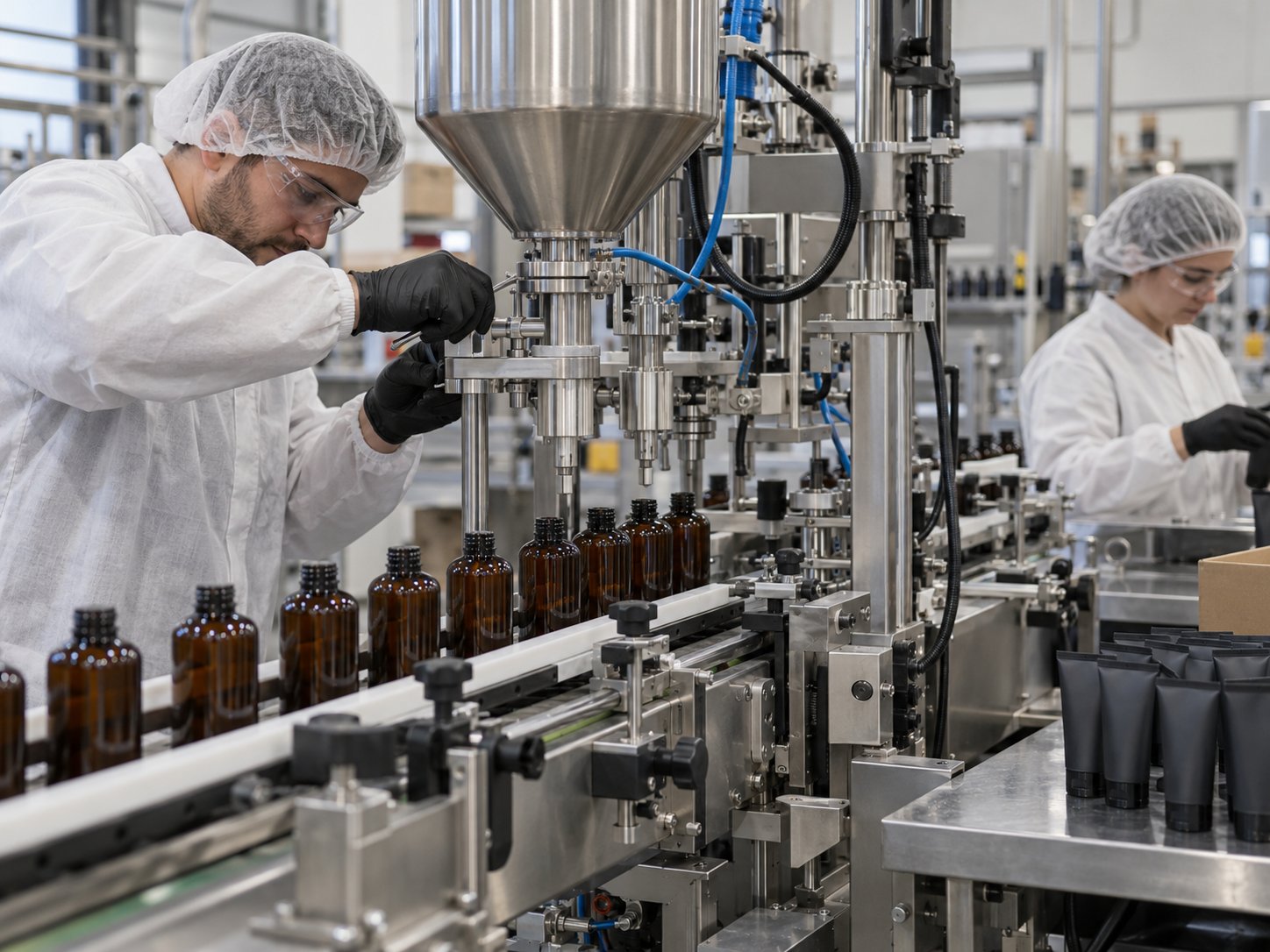
Industrial emulsifying tanks have a minimum working volume. Below roughly 50–100 kg, the mixing blades cannot build a stable emulsion, and the batch fails viscosity or stability checks. Cleaning and sanitising the line takes the same time whether the factory runs 100 units or 50,000, so a very small run carries nearly all the fixed cost of a large one.
The practical effect is easy to convert. A 100 kg batch of a 100 mL product yields about 1,000 filled units; a 50 kg batch yields about 500. Below that, factories either switch to a pilot vessel with higher labour cost per unit, or decline the order.
Specialty actives add a second floor. Raw materials such as stabilised vitamin C, peptides or rare botanical extracts are sold in 5–25 kg packs. If your formula uses 0.5% of one active, the manufacturer needs enough finished volume to consume the pack before it expires — another reason private label MOQ rises with formula complexity.
2. Cosmetic Packaging MOQ: Bottles, Tubes and Closures
For most first orders, cosmetic packaging MOQ — not the formula — is the real constraint. A factory may happily blend 500 units, while the bottle supplier requires 3,000 of a custom-coloured glass bottle before it will schedule a run.
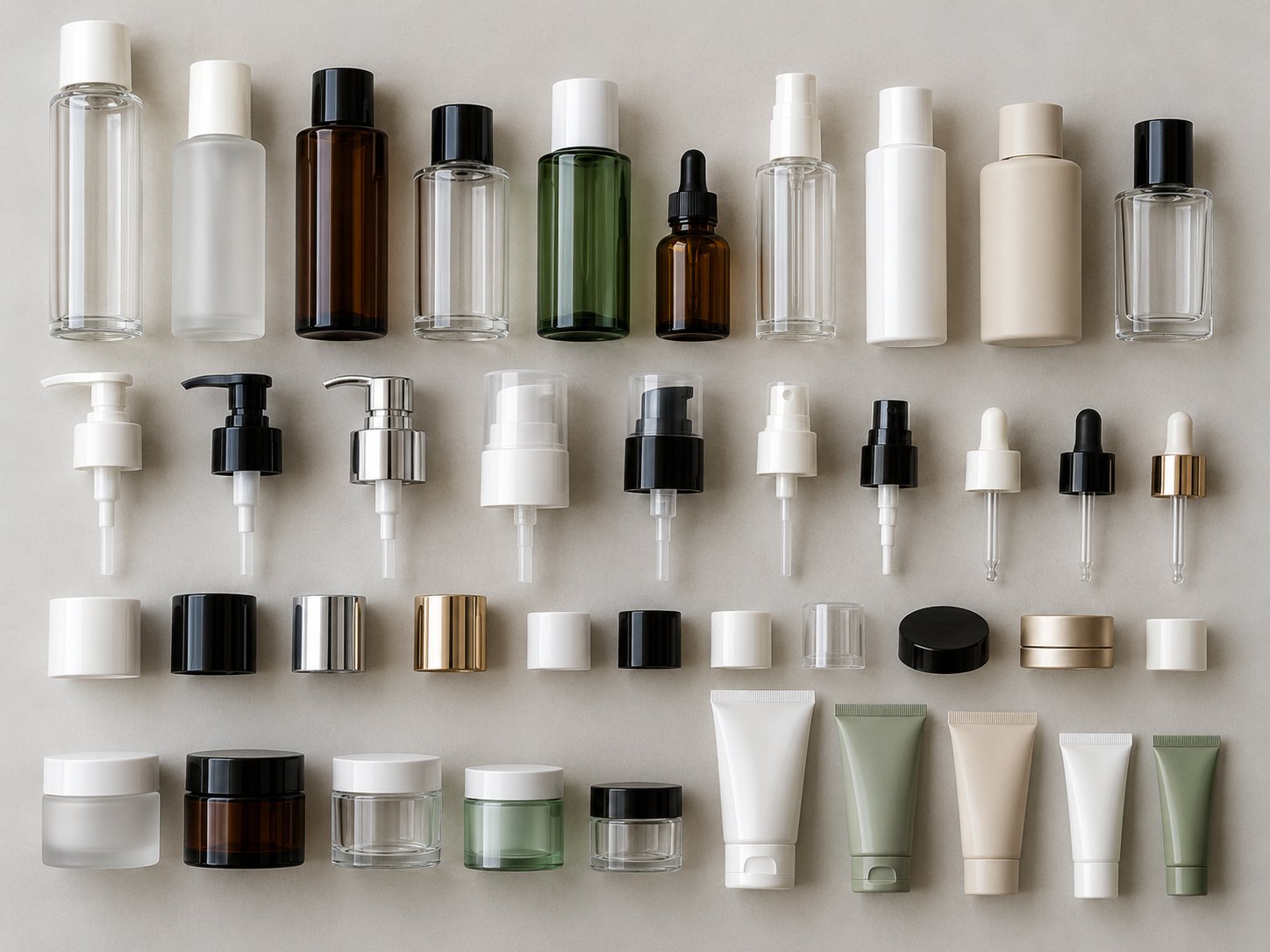
| Component | Typical MOQ | What raises the minimum |
|---|---|---|
| Stock plastic bottle | 500–3,000 | Custom colour matching, special resin |
| Stock glass bottle | 1,000–5,000 | Frosting, spray coating, custom colour |
| Airless pump | 3,000–10,000 | Custom actuator, metallised finish |
| Squeeze tube | 1,000–5,000 | Custom diameter, cap style, board stock |
| New mould | 10,000+ | Tooling cost, cavity count |
| Printed carton | 500–3,000 | Foil, emboss, rigid board |
| Digital label | 100–1,000 | Special substrate, cold foil |
One of the most effective ways to reduce cosmetic packaging MOQ is consolidation. If a cleanser, a toner and a serum share one bottle and one closure, you order 3,000 of a single component instead of 1,000 of three different ones — the same shelf variety, one supplier tier.
3. Printing and Decoration: Plates, Screens and Foils
Screen printing, pad printing and hot stamping all require physical tooling: screens, plates or dies. The setup cost is fixed, so printers price it into a minimum run, commonly 5,000–10,000 units for direct printing on the container. Colour count multiplies the cost, because each additional colour is another pass and another screen.
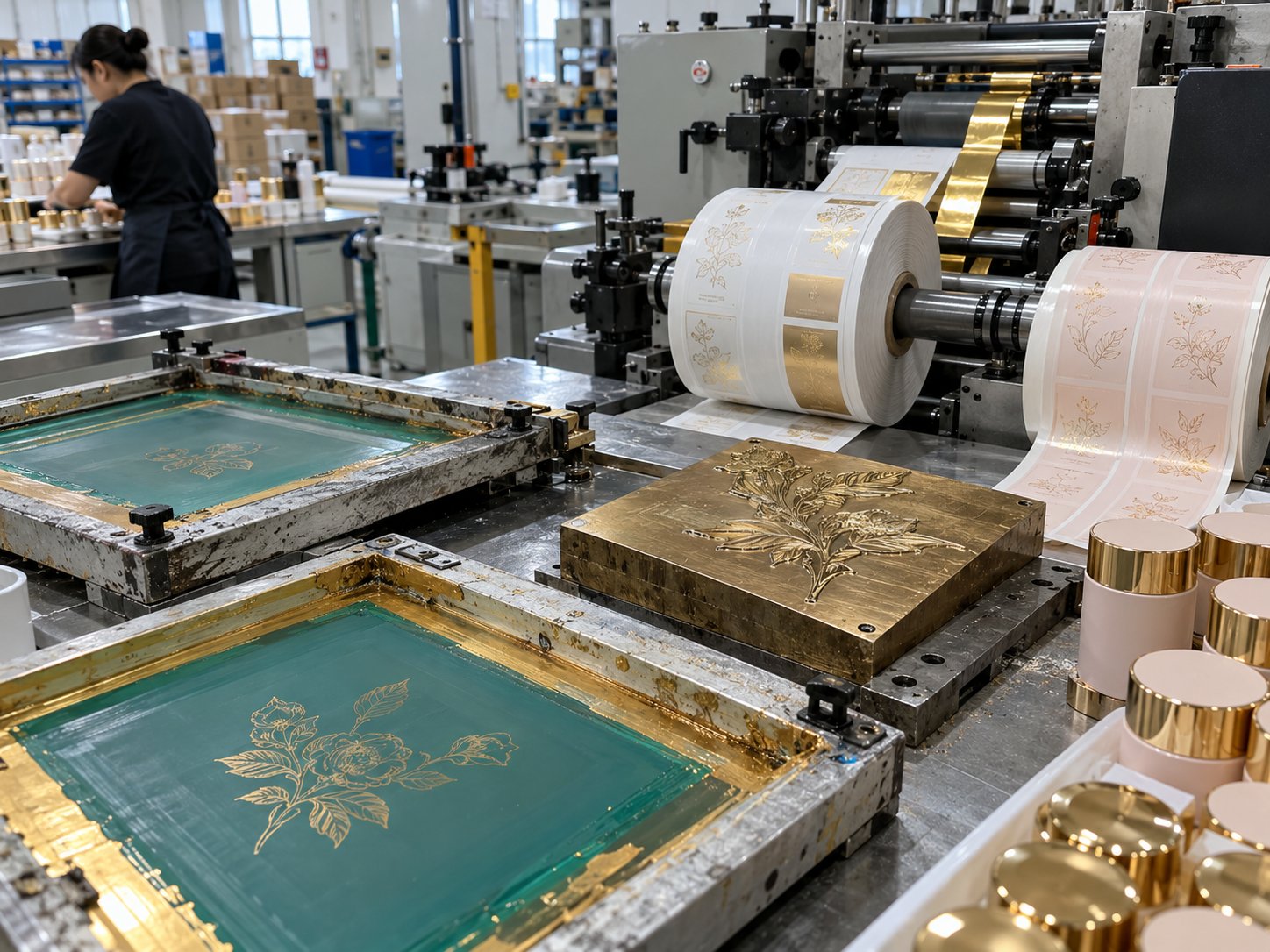
Labels are the exception. Digital label printing has almost no tooling, which is why small brands can order 100–1,000 labels and still look finished. This is the main reason the industry standard first-launch combination is a stock container plus a custom label plus custom secondary packaging.
4. Custom Development Cost and Why It Raises Minimums
A formula built from scratch carries R&D hours, stability testing, packaging compatibility testing, microbial challenge testing and regulatory documentation. Factories recover that cost either as a development fee or as a higher minimum order. A stock formula has already absorbed all of it, which is why it can start at a few hundred units.
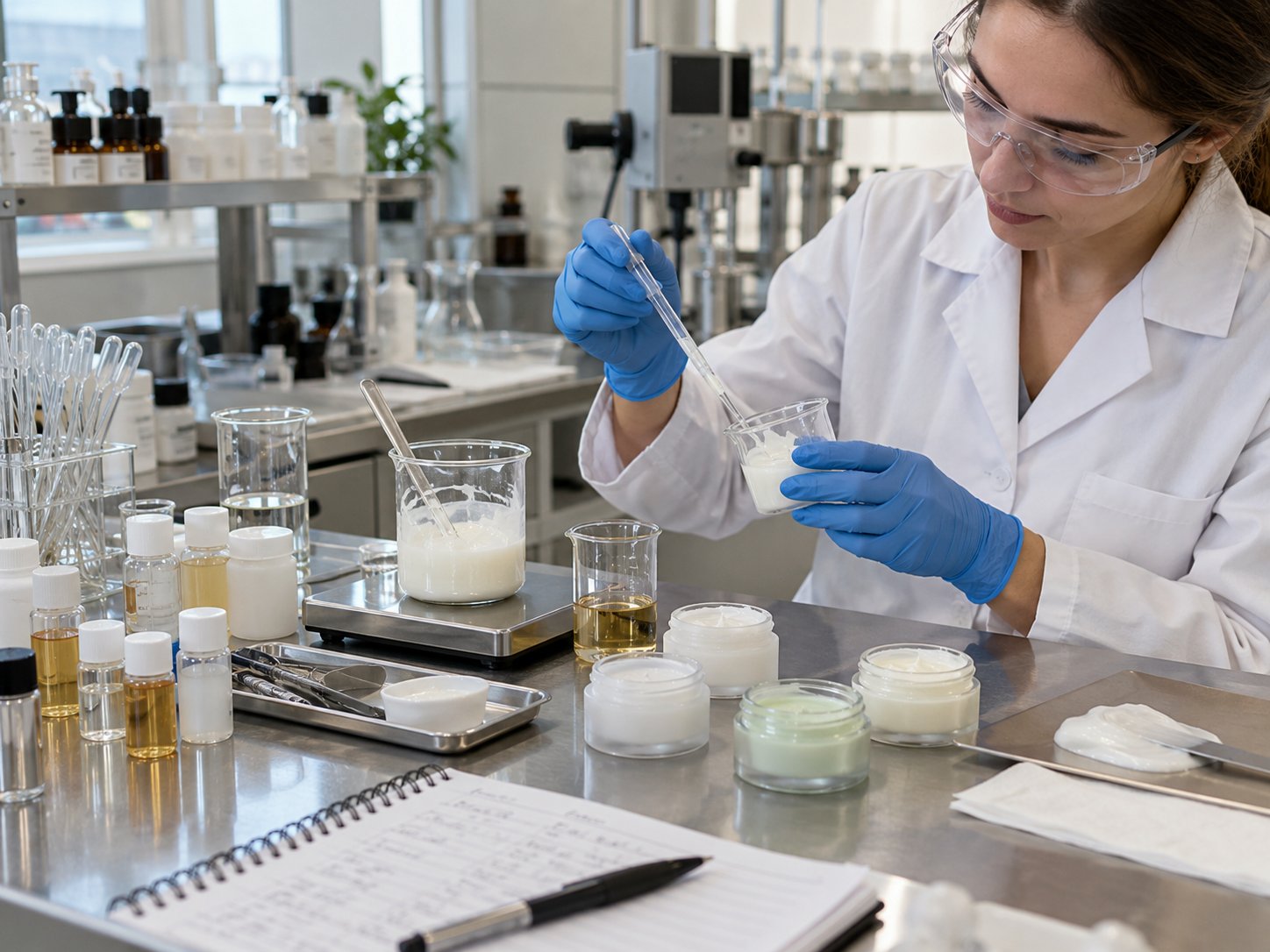
Between the two sits the semi-custom route: a tested base formula adjusted for fragrance, active level or texture. It keeps most of the testing history intact while giving you meaningful differentiation — and it keeps small batch cosmetics manufacturing commercially viable for a first launch.
Documentation is not optional. Under ISO 22716 good manufacturing practice, every batch needs traceable production and quality records, and market rules such as MoCRA in the United States add labelling and facility requirements that apply regardless of order size.
Stock, Semi-Custom or Full Custom: Three Routes Compared
Choose the route before you negotiate the number. The route determines which of the four minimums binds, and therefore which concession is actually worth asking for.
| Route | Typical first-order MOQ | Lead time | Unit cost | Differentiation |
|---|---|---|---|---|
| Stock formula + stock packaging | 100–1,000 | 2–4 weeks after artwork | Lowest at low volume | Low |
| Semi-custom (tweaked base, custom label and carton) | 500–3,000 | 4–8 weeks | Medium | Medium |
| Full custom (new formula, new mould) | 5,000–10,000+ | 3–6 months | Highest at low volume, best at scale | High |
If your goal is to validate demand before committing capital, start at stock or semi-custom and move up after the first reorder. Many brands discover that the constraint was never the formula — it was the packaging tier they chose in week one.
Why Unit Cost Rises as Order Size Falls
Fixed costs do not shrink with the order: line cleaning, printing setup, QC retains, documentation, and inbound material handling are essentially constant. Spread across 500 units they add dollars per unit; spread across 5,000 they add cents.
Consider a simplified example. If fixed setup is $900 per run, 500 units adds $1.80 per unit, while 3,000 units adds $0.30 per unit. At a $35 retail price, that difference is the gap between a margin that barely covers customer acquisition and one that funds growth.
So the useful question is not “how do I get the lowest private label MOQ” but “which order size produces a unit cost my retail price can carry”. Answering that requires a quote at two or three volume tiers, not one.
7 Ways to Lower Your First Order
- Share components across SKUs. One bottle, one closure, three formulas — you reach a higher component tier once instead of three times.
- Use labels instead of direct printing. A stock bottle plus a premium label avoids screen and plate setup entirely.
- Start from a tested base formula. Adjust fragrance or active level rather than commissioning a new emulsion.
- Limit print colours. Each extra colour is another pass, another screen and another setup charge.
- Accept standard closure colours. Custom closure colour often carries its own component minimum.
- Offer a blanket order. Committing to a second run on a schedule can unlock a lower first-run minimum.
- Size the order to freight. Shipping economics matter at small volumes; review Incoterms rules before comparing landed cost between two MOQ tiers.
MOQ Questions to Ask Before You Request a Quote
- Which of the four minimums is binding on my project?
- Is the MOQ quoted per SKU, per component, or per production run?
- Does it apply to stock packaging, custom packaging, or both?
- What is the unit price at MOQ, at 2× MOQ and at 5× MOQ?
- Are printing plates charged separately, and are they reusable on reorders?
- Is the formula stock, tweaked, or newly developed?
- Which stability, microbial and compatibility tests are included?
- What documentation do I receive for my target market?
- What is the sample and approval timeline before production starts?
- What happens to leftover components after the first run?
Suppliers who answer these precisely are usually the ones whose private label MOQ you can plan around. Vague answers at quote stage tend to become change orders later.
How BUNJOIN Matches MOQ to Product Type and Order Size
BUNJOIN is a men’s grooming product development and supply chain partner founded in 2013 and based in Guangzhou, China, supplying brands in the USA, Europe and other global markets. Its work covers product development, formulation, packaging, compliance documentation, manufacturing, quality control and logistics.
In practice, matching MOQ to a project means mapping two inputs — product type and first-order quantity — onto the routes that are technically feasible at that volume, then showing the minimum and unit cost at each tier so the trade-off is visible before you commit.
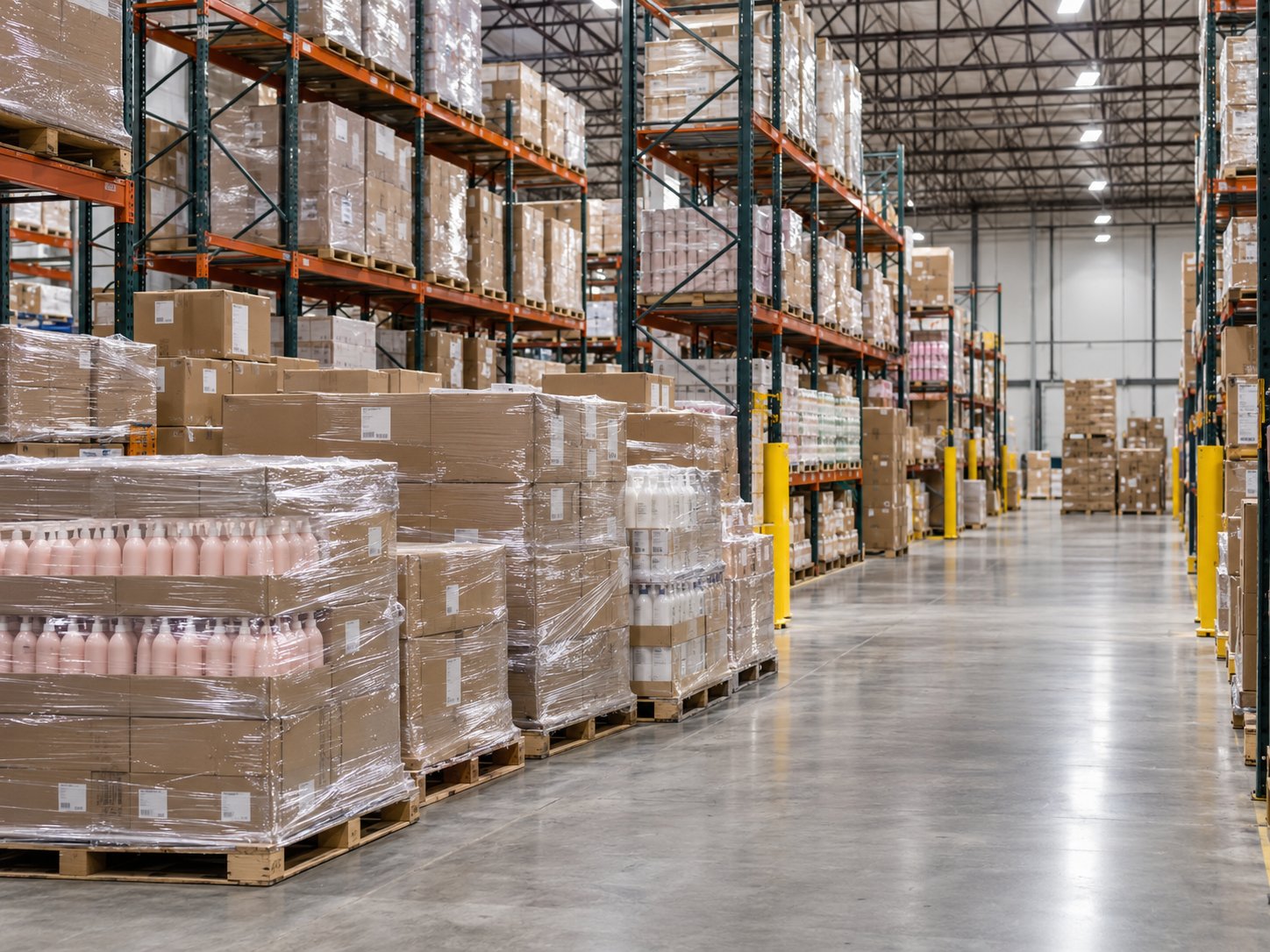
For men’s grooming specifically, the binding minimum is usually the component: a beard oil dropper bottle, a balm tin or a pump bottle each sits at a different tier. Grouping a range onto shared components is often the difference between a 3,000-unit private label MOQ and a 1,000-unit one. Related reading: OEM vs ODM vs OBM and private label beard oil cost.
FAQ
What is a typical private label MOQ?
Stock formula with stock packaging usually starts at 100–1,000 units. Semi-custom projects with a custom label and carton typically run 500–3,000. Full custom work with a new mould starts around 5,000–10,000 units per SKU.
Why is cosmetic packaging MOQ higher than the formula minimum?
Component factories run automated lines and charge setup separately from filling. A manufacturer can blend 500 units, but the bottle supplier may require 3,000 before it schedules a colour-matched run — packaging is the constraint in most first orders.
Is small batch cosmetics manufacturing realistic for a first launch?
Yes, provided you accept stock components and label-based branding. Small batch cosmetics manufacturing works best when the formula is tested, the container is shared across SKUs, and decoration is limited to labels and secondary cartons.
Does the quoted MOQ include labels and cartons?
Usually not. Labels and printed cartons are quoted separately because they come from different suppliers with different minimums. Always ask which items the headline number covers.
How do I compare two private label MOQ quotes?
Never compare the headline number alone. Compare the same product at the same volume tier, with the same packaging route, and check what is included: testing, documentation, plates and freight. A 1,000-unit private label MOQ that excludes stability testing is not cheaper than a 3,000-unit quote that includes it.
Can a reorder be smaller than the first private label MOQ?
Sometimes. If leftover components are stored after the first run, a reorder only has to clear the formula batch minimum, because the component floor has already been met. Ask whether the factory will hold your components and what the storage terms are.
Conclusion
Private label MOQ is not one number — it is the highest of four floors. Identify which floor binds, then change that input: share components, switch printing to labels, or start from a tested base formula. Each move lowers the minimum without changing what the customer sees.
Next step: send us your product type and target first-order quantity, and we will map the production routes that work at that volume — with the MOQ, unit cost and lead time shown at each tier.
Ready to build this under your own brand?
BunJoin develops and manufactures private label men’s grooming & skincare — formula, packaging, MOQ and compliance (MoCRA/FDA) handled end to end.
Frequently asked questions
What is a typical private label MOQ for men's grooming?
Most SKUs start at 1,000–5,000 units; formats that need custom tooling or filling run higher. We confirm the exact minimum after your brief.
How long does private label production take?
Feasibility and samples usually take 1–3 weeks, then full production 3–6 weeks after approval, plus freight. We give a date range in the quote.
Can the formula, scent and packaging be customized?
Yes. Scent profile, active level, bottle or jar, label and carton are all adjustable, and we check claims against MoCRA/FDA before sign-off.