Beard Oil vs Beard Balm: How to Build a Private Label Beard Care Range
Beard oil vs balm is the first product decision most grooming brands face when they move past a single hero SKU into a real beard care line. Both condition and soften facial hair, but they differ in texture, skin feel, and how they sit inside a product range — and for most new brands, beard oil is the safer first SKU. This guide gives founders and product managers a side-by-side framework for choosing formats, planning bottle-and-jar combinations, and deciding whether to launch singles or a bundle.
We write this from the formulation bench, not a catalog. As a private-label manufacturer we have taken both formats from brief to stable production batch, and the trade-offs below are the ones that actually show up in sampling, pilot runs, and shelf-life review. Nothing here assumes a sales figure or a margin number; where cost matters, we point you to our pricing guide for real ranges.
TL;DR — which format should your line lead with?
- Launch beard oil first in most cases. It carries the lowest formulation risk, the simplest packaging, and the easiest path to a consistent scent.
- Lead with beard balm only if your brand story is hold, training, or a “grooming ritual” tin.
- Both cross-sell into a full beard system within the first year, with the first SKU feeding the second.
- Use the decision table to map brand need → combo → development confirmation before you brief a factory.
At a glance: beard oil vs balm
The fastest way to frame the beard oil vs balm decision is one comparison table. Read this first, then use the deeper sections to justify the call for your specific brand and your specific sales market.
| Attribute | Beard oil | Beard balm |
|---|---|---|
| Form / texture | Light liquid in a dropper bottle | Soft solid in a tin or jar |
| Primary job | Conditions hair and skin, adds sheen | Conditions plus light hold and shape |
| Best for | Daily softness, itch relief, shine | Styling, taming, longer beards |
| Skin feel | Dry-touch, fast absorb | Slight cushion, more residue |
| Hold | None | Light to medium |
| Scent throw | Subtle, from carrier and oil | Stronger, from the wax base |
| Packaging | Amber dropper bottle | Tin, slim jar, or wide-mouth |
| Formulation risk | Low | Low to medium (hardness, melt) |
| Line role | Gateway SKU | Finishing or ritual SKU |
| Cross-sell | Pulls in balm, comb, wash | Pulls in oil, wash, kit |
What each product actually is
Beard oil vs balm starts with the base. Beard oil is a leave-in blend of carrier oils — usually jojoba, argan, or grapeseed — with a small percentage of essential or fragrance oil. You work a few drops through a dry or towel-dried beard; the oils condition the hair and the skin underneath. The basics of carrier oils explain why the base choice drives both feel and shelf life.
Beard balm is a soft solid: carrier oils plus butters and waxes (often shea butter and beeswax) that set at room temperature. It conditions like an oil but adds light hold and a protective layer, so it also tames flyaways and shapes longer beards. The wax is what separates balm from oil on the shelf and in the daily routine.
Usage appeal: which job each one does
On usage appeal, beard oil vs balm splits by routine. Oil is the daily conditioner almost every bearded customer wants: a few drops, spread, done. It sells the promise of a softer, less itchy beard and healthier-looking skin, which is the widest entry point in the category.
Balm sells a second promise: control. Customers with longer or unruly beards use it to shape, tame, and add a groomed finish. It reads as a “step two” product, which makes it a stronger cross-sell than a first purchase for a cold audience that has never tried your brand.
Skin feel and finish
For skin feel, beard oil vs balm again serve different jobs. Oil absorbs fast and leaves a dry-to-light touch with a soft sheen; most formulas feel clean within minutes. That makes oil the safer choice for customers who dislike residue or who live in warm, humid markets.
Balm leaves more cushion and a faint waxy film by design — that is the hold. On very hot shelves it can soften or sweat in the tin, which is a real formulation and shipping consideration we confirm during sampling, not after launch and not from a guess.
Fragrance consistency across the line
Fragrance consistency is where a two-format line earns or loses trust. If your oil smells like sandalwood and your balm smells like citrus, the routine feels disjointed. Pick one scent family — woody, citrus, unscented, or fresh — and carry it across every SKU from day one so the line reads as one brand.
This is why beard oil vs balm scent matching matters more than it looks. Balm’s wax base holds and throws more fragrance than a thin oil, so the same dosage smells stronger in the tin. We tune the balm’s fragrance load down to match the oil, and we confirm the match on skin during sampling rather than on paper.
Packaging: bottle and jar combinations
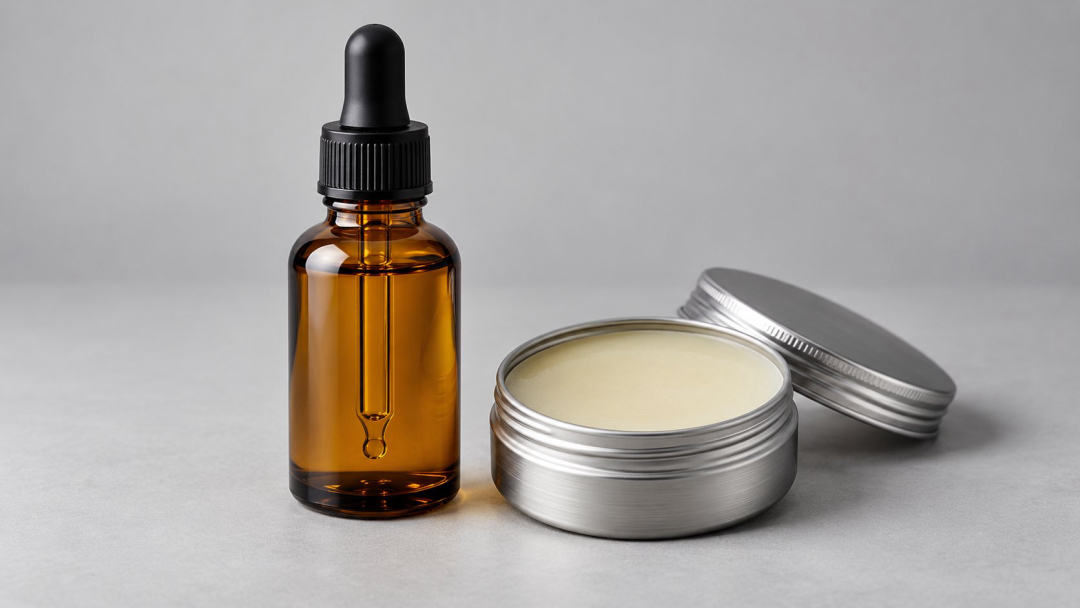
Packaging is where beard oil vs balm becomes a physical buying decision. Oil ships in an amber or clear dropper bottle, typically 30–50 ml, with a tamper-evident cap and a dip tube. Balm ships in a tin (15–60 g) or a slim glass jar, sometimes wide-mouth for easy scoopability.
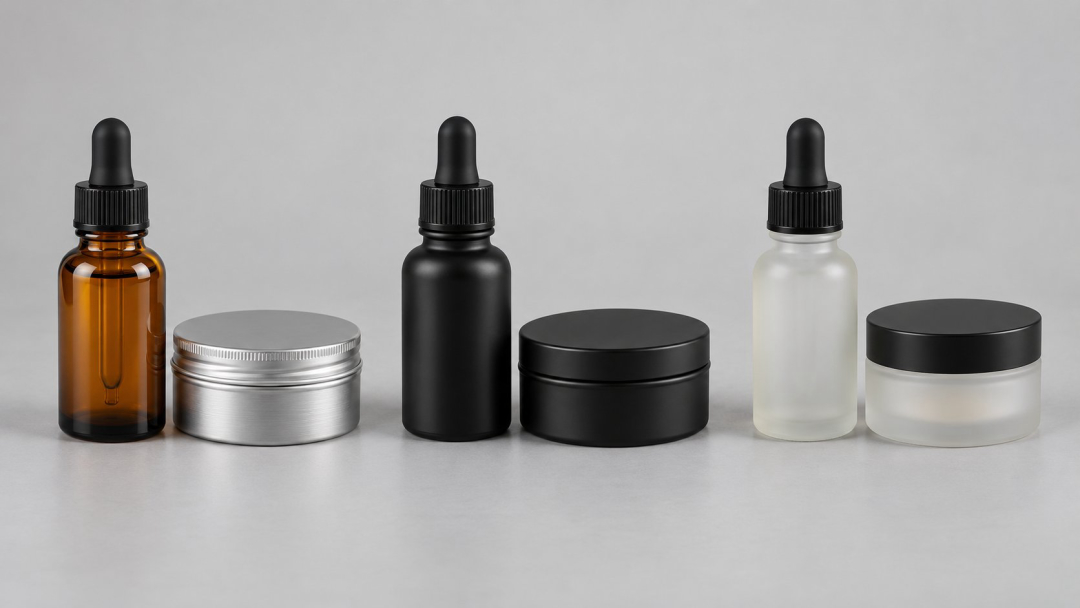
The combination play is a matched dropper bottle plus a tin, often in the same color and print, so the pair reads as one brand on the shelf. Bottle and tin minimums differ, and our packaging minimums guide breaks down how container MOQs shape your first order and your cash plan.
Single SKU or bundle: which to launch first
The beard oil vs balm call on launch format depends on where your brand is. Launch one SKU first when you are proving the concept, watching cash, or still learning your audience. Launch oil as the hero; it is the lowest-risk way to test scent and price before committing to a second tool.
Launch a bundle — oil plus balm, often with a comb — when you already have an audience, a gift or ritual angle, or a retail slot that expects a set. A bundle lifts average order value and tells a complete “care system” story from day one instead of from year two.
Either way, the second SKU should be the complement, not a rival. Oil first pulls balm; balm first pulls oil. The choice is timing and budget, not a forever decision — most lines carry both within the first year once the data is in.
Decision table: beard oil vs balm — brand need to combo to confirmation
Use this beard oil vs balm decision table to turn the comparison above into a brief you can hand a manufacturer. The third column is the list of items to confirm during sampling so nothing surprises you at production or at the warehouse.
| Brand need | Recommended combo | Development confirmation items |
|---|---|---|
| New DTC beard brand, softness focus | Oil first (30 ml dropper); balm as SKU 2 | Carrier oil base, fragrance family, dropper bottle MOQ |
| Beard-care ritual or gift brand | Oil + balm bundle (tin + dropper) | Tin liner, balm hardness, matched scent |
| Barbershop / salon private label | Balm first (tin, easy live demo) | Balm melt point, tub size, scoop feel |
| Premium unisex grooming system | Oil + balm + comb kit | Scent continuity across 3 SKUs, kit MOQ |
| Budget / mass-market entry | Oil only, then balm | Unit-cost ceiling, bottle spec |
| Established line adding beard | Match your existing audience | Scent continuity with current line |
Beard oil vs balm: the bottom line
For most first-time beard brands, beard oil is the better first SKU: lowest formulation risk, simplest packaging, and the easiest route to a consistent scent. Lead with balm only when your story is hold, training, or a grooming ritual tin that customers buy as a set.
And you do not have to choose forever. The beard oil vs balm question is really which door you open first; the other follows once your audience and your channel tell you which they actually want to reorder.
Frequently asked questions
Is beard oil or balm better for a new brand?
Launch beard oil first in most cases. It carries the lowest formulation risk, the simplest packaging, and the easiest path to a consistent scent. Choose balm first only when your brand story is hold, training, or a grooming ritual that sells as a tin.
Can a brand launch both beard oil and balm?
Yes. Most lines carry both within the first year. Launch one as the hero, then add the other as a cross-sell SKU once you understand your audience and your channel. The two formats support each other rather than compete.
Which is easier to manufacture, beard oil or balm?
Beard oil is easier. It is a low-temperature blend of oils with no heating, emulsifying, or setting step. Beard balm needs a heated wax-and-butter phase and a controlled set, so it carries slightly more formulation and stability work before it is shelf-stable.
How do I keep the scent consistent across oil and balm?
Pick one scent family and carry it across both SKUs from the start. Because balm’s wax base throws more fragrance than a thin oil, tune the balm’s fragrance load down to match the oil, and confirm the match on skin during sampling rather than trusting the formula on paper.
Should I launch a single SKU or a bundle?
Launch a single SKU when you are proving the concept or watching cash. Launch a bundle when you already have an audience, a gift angle, or a retail slot that expects a set. The second SKU should complement, not compete with, the first one you ship.
Discuss your beard care range
The fastest way to make the call is to brief us on your line. Tell us your existing SKUs (if any), your target positioning, your sales market, and your first-order quantity, and we will propose a beard oil vs balm combination with matching samples for your combo so you can test it against your customer.
As your private-label beard care manufacturer we will also flag the format and packaging risks specific to your market before you commit to tooling. Our beard oil cost guide covers real pricing ranges, and our beard oil vs balm positioning guide covers the consumer side of the same decision.
Submit your brief through our range inquiry form and we will return a feasibility read and proposed starting formulas for your beard care range within a few working days.