Private label pomade development involves more than choosing a jar, selecting a fragrance and adding your brand label. The product needs to deliver the styling result, application experience and washout performance your target customers expect, and each one must be defined before sampling starts.
TL;DR — 7 essentials for private label pomade development
- A private label pomade brief must define hold, shine and washability as three separate specifications. A strong-hold formula does not automatically need a high-shine finish, and “easy washout” is a test result, not a product name.
- Choose the base around the customer, not the trend. Water-based systems usually favour everyday styling and convenient shampoo removal; oil- and wax-based systems favour richer, pliable, traditional styling.
- Evaluate the whole use cycle: pickup, spreadability, hold, restylability, residue, flaking and shampoo removal, using one consistent application method for every private label pomade sample.
- Request samples with a written scorecard covering appearance, texture, hold, shine, washability, fragrance, stability and packaging. Give feedback as a development instruction, not a verdict.
- Brief fragrance, packaging and compliance separately. BUNJOIN supports packaging selection, not packaging design; artwork comes from the brand. EU-bound projects should be checked against the European Commission cosmetics framework.
- Budget the whole timeline. BUNJOIN’s bulk production reference is 30–35 days; sampling, packaging procurement and artwork approval sit outside that window. Standard reference payment terms are a 50% deposit and 50% balance.
- Put it in writing. A private label pomade brief listing base, hold, shine, washability, texture, fragrance, packaging, quantity and target market gives the manufacturer a comparable starting point for sampling and quotation.

For men’s grooming brands, three factors deserve particular attention in a private label pomade brief: hold, shine and washability. A customer who prefers a classic slick-back style may want a different finish from someone looking for flexible everyday styling and an easier washout experience.
Before working with a hair styling product manufacturer, brands should translate these customer expectations into clear product development requirements. This private label pomade guide explains how to choose a pomade base, define performance targets, evaluate samples, select packaging and prepare for bulk production.
Browse the private label hair pomade product page for an overview of available formats before you write the brief.
1. Choose the Right Private Label Pomade Base: Water-Based or Oil-Based?
One of the first decisions in private label pomade development is the formula direction. Water-based and oil-based pomades are two common approaches, with differences in formula structure, application feel and washout considerations.
The base alone does not determine the final hold, shine or user experience. Waxes, oils, polymers, emulsifiers and other ingredients also influence the finished private label pomade formula. Our men’s hair styling OEM/ODM guide shows how those choices fit into a wider product range.

Water-Based Pomade
Water-based pomades use water as a major component of the formula. Depending on the formulation, they can be designed for smooth application, defined styling and relatively convenient shampoo removal. In a private label pomade brief, they are often considered by brands targeting everyday styling and easy maintenance.
- Application: Assess whether the formula spreads evenly without excessive drag.
- Hold: The polymer and wax system should support the intended level of styling control.
- Finish: The formula can be developed toward a natural, medium-shine or high-shine result.
- Washability: Evaluate how much shampooing is needed to remove product residue.
- Stability: Check for separation or texture changes during storage.
Oil-Based Pomade
Oil-based pomades generally use oils and waxes as important components. They are often associated with traditional pomade styling and can be developed for a richer, pliable styling feel, so state the intended private label pomade position clearly.
- Application: Check whether the product is easy to scoop and distribute through the hair.
- Hold: The balance of oils and waxes influences control and flexibility.
- Finish: Different oil and wax combinations can create different shine levels.
- Washability: Depending on the formula, removal may require more shampooing.
- Texture: The product should remain workable without feeling excessively greasy or difficult to spread.
Water-Based vs. Oil-Based Pomade: Buyer Comparison
| Evaluation factor | Water-based | Oil-based |
|---|---|---|
| Formula direction | Water-based system | Oil- and wax-based system |
| Application feel | Often lighter and smoother | Often richer and more substantial |
| Styling control | Depends on the polymer and wax system | Depends on the oil and wax balance |
| Shine | Can range from natural to high shine | Can range from natural to high shine |
| Washability | Often easier to wash out | May require more shampooing |
| Typical texture | Cream, gel-cream or paste | Wax, balm or creamy wax |
| Potential positioning | Everyday styling and convenient washout | Traditional styling and flexible control |
Which should your brand choose? Consider a water-based direction if your target customers prioritize everyday styling and convenient washout. Consider an oil-based direction if your brand serves traditional pomade users who prefer a richer styling experience. For a private label pomade, neither is automatically better; the right choice depends on the target customer, positioning and finished formula.
2. Define Private Label Pomade Hold and Shine Separately
A common mistake in private label pomade development is treating hold and shine as the same performance characteristic. They are separate attributes. A strong-hold pomade does not have to deliver a high-shine finish, and a high-shine pomade does not automatically need maximum hold.

Understanding Hold Levels
| Hold level | Expected experience | Typical customer |
|---|---|---|
| Light hold | Gentle control with natural movement | Customers who prefer relaxed, casual styles |
| Medium hold | Balanced control with some flexibility | Everyday styling users |
| Strong hold | More substantial control for structured styles | Customers who want a more defined hairstyle |
These are product-positioning descriptions, not universal laboratory standards. Actual hold should be evaluated using a consistent application method, hair type and testing environment. Customer complaints about men’s hair styling products show why consistent test conditions matter when comparing private label pomade samples.
Understanding Shine Levels
| Shine level | Expected appearance | Product positioning |
|---|---|---|
| Matte | Minimal visible shine | Natural, understated styling |
| Natural shine | Subtle, healthy-looking finish | Everyday grooming |
| Medium shine | Noticeably polished appearance | Classic styling |
| High shine | Glossy, defined appearance | Slick and traditional hairstyles |
Hold and shine in a private label pomade can be combined in different ways. For example, medium hold with natural shine can suit everyday styling; strong hold with a matte finish can suit structured styles with less visible shine; and strong hold with high shine can suit classic slick-back looks.
3. Private Label Pomade Washability, Texture and Restyling: What to Evaluate?
Hold and shine may attract customers, but the overall application experience can influence whether they buy again. A well-developed private label pomade should perform throughout the full use cycle, from opening the jar to washing the product out.
1. Pickup and Scoopability
Can customers easily scoop the product from the jar? A formula that is too firm may require excessive effort, while one that is too soft may feel messy or raise storage-stability concerns. Check scoopability, texture consistency and residue on the fingers.
2. Spreadability
Can the product be distributed evenly between the palms and through the hair? Look for smooth distribution, limited drag, minimal clumping and consistent coverage.
3. Hold and Restylability
Does the pomade provide the expected styling control? Also assess whether users can reshape their hair during the day and whether the product maintains the intended style. Restylability matters to customers who prefer flexible styling rather than a rigid finish.
4. Residue and Flaking
Check for visible white residue, unwanted buildup or flakes after application. Test different application amounts and, where practical, different hair types.
5. Washability
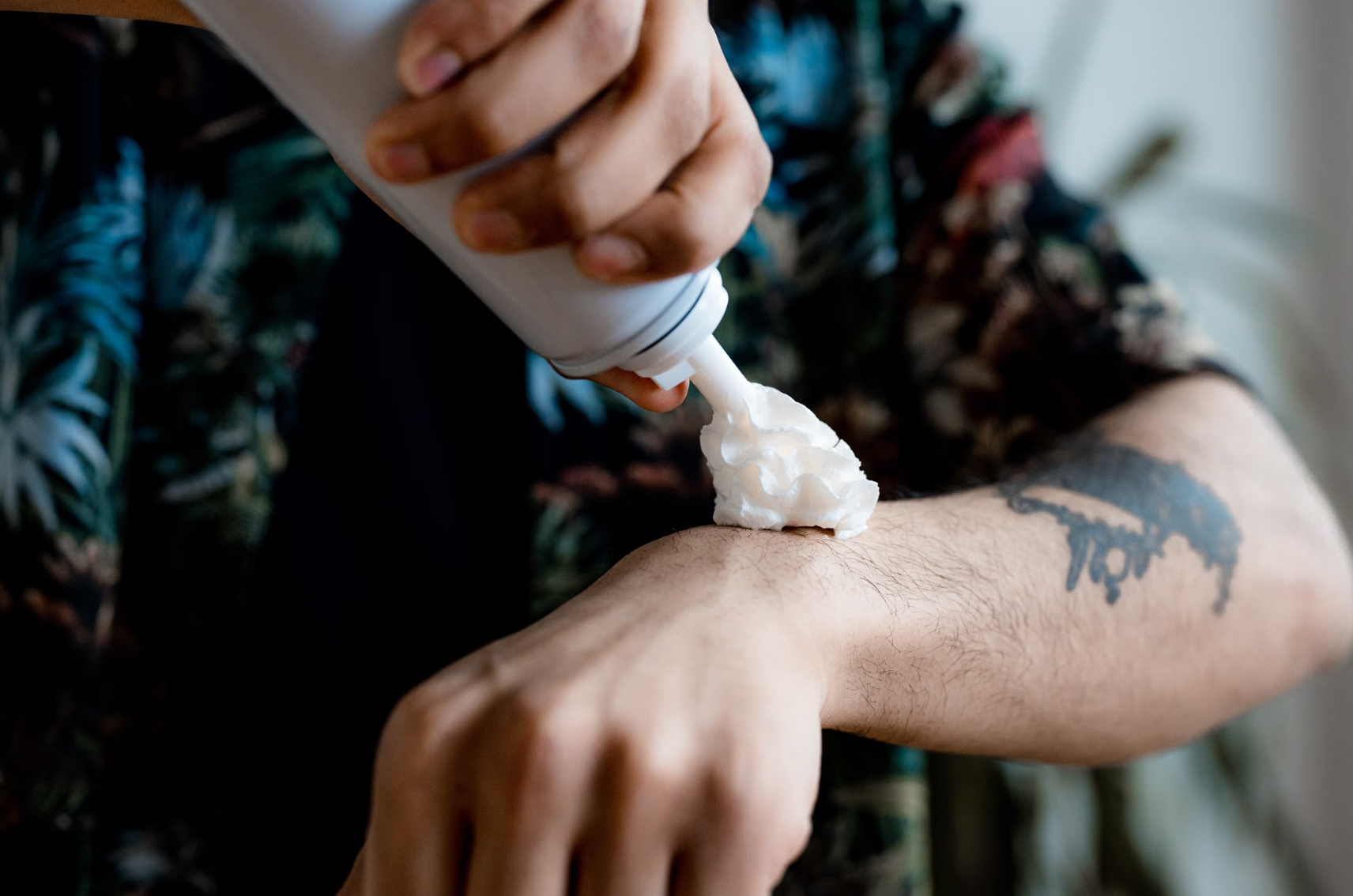
Assess private label pomade washability through an actual shampoo test rather than relying only on a product name or supplier description. Record how much product remains after the first shampoo, whether additional shampooing is needed, whether hair still feels coated after rinsing and how manageable it feels after washing.
4. Fragrance and Packaging for Private Label Pomade
The formula is only one part of the finished private label pomade. Fragrance and packaging also influence how customers perceive the brand and product.
Fragrance Development
| Fragrance direction | Brand positioning |
|---|---|
| Fresh / aquatic | Clean, refreshing and suitable for everyday use |
| Woody | Classic, mature and sophisticated |
| Citrus | Fresh and energetic |
| Herbal | Natural and understated |
| Unscented | For customers who prefer fragrance-free products |
When preparing a private label pomade fragrance brief, specify the preferred fragrance direction, intensity, whether the scent should remain noticeable after application, whether a scented or unscented version is required and whether it should coordinate with your existing range.
Choosing the Right Pomade Packaging

Pomade is commonly packed in jars because customers need convenient access to the formula. However, container material, opening size and lid design should be selected according to the formula, product positioning and sales channel.
| Packaging option | Characteristics | Considerations |
|---|---|---|
| Plastic jar | Lightweight and practical | Check formula compatibility and lid sealing |
| Glass jar | Premium appearance and substantial feel | Consider shipping weight and breakage risk |
| Aluminum tin | Portable and compact | Check lining and formula compatibility |
| Wide-mouth jar | Convenient access to styling products | Ensure the opening suits the product texture |
For a private label pomade, confirm the container material and capacity, jar diameter and opening size, lid material and closure, label or printing method, inner seal or protective closure where appropriate, and outer carton requirements if needed.
BunJoin can support packaging material selection and coordinate suitable packaging options. Please note that we provide packaging selection support, not packaging design services. Customers should provide their own artwork and design files.
For more packaging guidance, read Custom Cosmetic Packaging: Stock Bottles vs Custom Colors and Printing. Packaging decisions for a private label pomade should also consider formula compatibility; our cosmetic packaging MOQ and cost guide explains how component minimums affect unit price.
5. How to Evaluate a Private Label Pomade Sample
Receiving a private label pomade sample is only the beginning. Before approving a formula for bulk production, brands should use a consistent assessment method. This is especially important when comparing multiple samples or reviewing formulation revisions.

Pomade Sample Evaluation Checklist
| Evaluation item | What to check | Suggested record |
|---|---|---|
| Appearance | Color and visual consistency | Pass / Needs adjustment |
| Texture | Creamy, waxy, smooth or firm feel | Record observations |
| Scoopability | Ease of removing product from the jar | 1–5 |
| Spreadability | Ease of distributing between palms | 1–5 |
| Hold | Actual styling control | 1–5 |
| Shine | Match with the target finish | 1–5 |
| Restylability | Ability to reshape hair | 1–5 |
| Washability | Residue after shampooing | 1–5 |
| Fragrance | Scent profile and intensity | 1–5 |
| Stability | Changes in appearance and texture | Pass / Needs adjustment |
| Packaging | Fit, closure and leakage | Pass / Needs adjustment |
Suggested scoring: 1 = Poor; 2 = Below expectations; 3 = Acceptable; 4 = Good; 5 = Excellent. This is an internal buyer evaluation tool, not an industry-certified performance standard. Use the same scale for every private label pomade revision.
How Should You Give Feedback When a Sample Falls Short?
| Sample feedback | More useful development instruction |
|---|---|
| Too sticky | Reduce the sticky feel while maintaining the target hold |
| Too greasy | Review the oil and wax balance |
| Difficult to wash out | Review the formula system to improve shampoo removal |
| Not enough hold | Increase styling control without unnecessarily changing the target shine |
| Too much shine | Adjust the finish toward a more natural appearance |
| Difficult to scoop | Improve texture and consistency |
The more specific your feedback, the easier it is for a formulation team to identify the required adjustments in a private label pomade. For more supplier-selection guidance, read Private Label Hair Products: What Should New Brands Ask Before Choosing a Supplier?, and use the sample approval checklist before signing off a formula.
6. What Should You Include in a Private Label Pomade Product Brief?
A clear private label pomade brief can reduce unnecessary sampling rounds and help a manufacturer prepare a more accurate quotation. You do not need to know every ingredient in advance. Focus on your commercial objectives and the product experience you want to achieve.

Private Label Pomade Buyer Brief Template
| Information | What to provide |
|---|---|
| Product type | Water-based or oil-based pomade |
| Target market | USA, UK, EU, Canada or another market |
| Target customer | Barber customers, everyday users or premium grooming consumers |
| Hold | Light, medium or strong |
| Shine | Matte, natural, medium or high |
| Texture | Creamy, waxy, smooth or firm |
| Washability | Desired shampoo removal experience |
| Fragrance | Fragrance direction or unscented |
| Capacity | Desired net weight, such as 2 oz or 4 oz |
| Packaging | Plastic jar, glass jar or aluminum tin |
| Decoration | Label, screen printing or another specified method |
| Quantity | Estimated order quantity per SKU |
| Target price | Expected manufacturing cost or target retail positioning |
| Compliance | Applicable destination-market requirements |
For EU-bound projects, review the European Commission cosmetics framework before finalising label content and claims. A private label pomade brief should list every document the destination market requires.
A Practical Example
A men’s grooming brand targeting the US market might submit this initial private label pomade development brief:
- Product: Water-based pomade
- Hold: Medium to strong
- Shine: Natural shine
- Texture: Smooth and easy to spread
- Washability: Convenient removal with shampoo
- Fragrance: Woody
- Packaging: 4 oz plastic jar with a black screw-on lid
- Decoration: Custom label
- Target market: United States
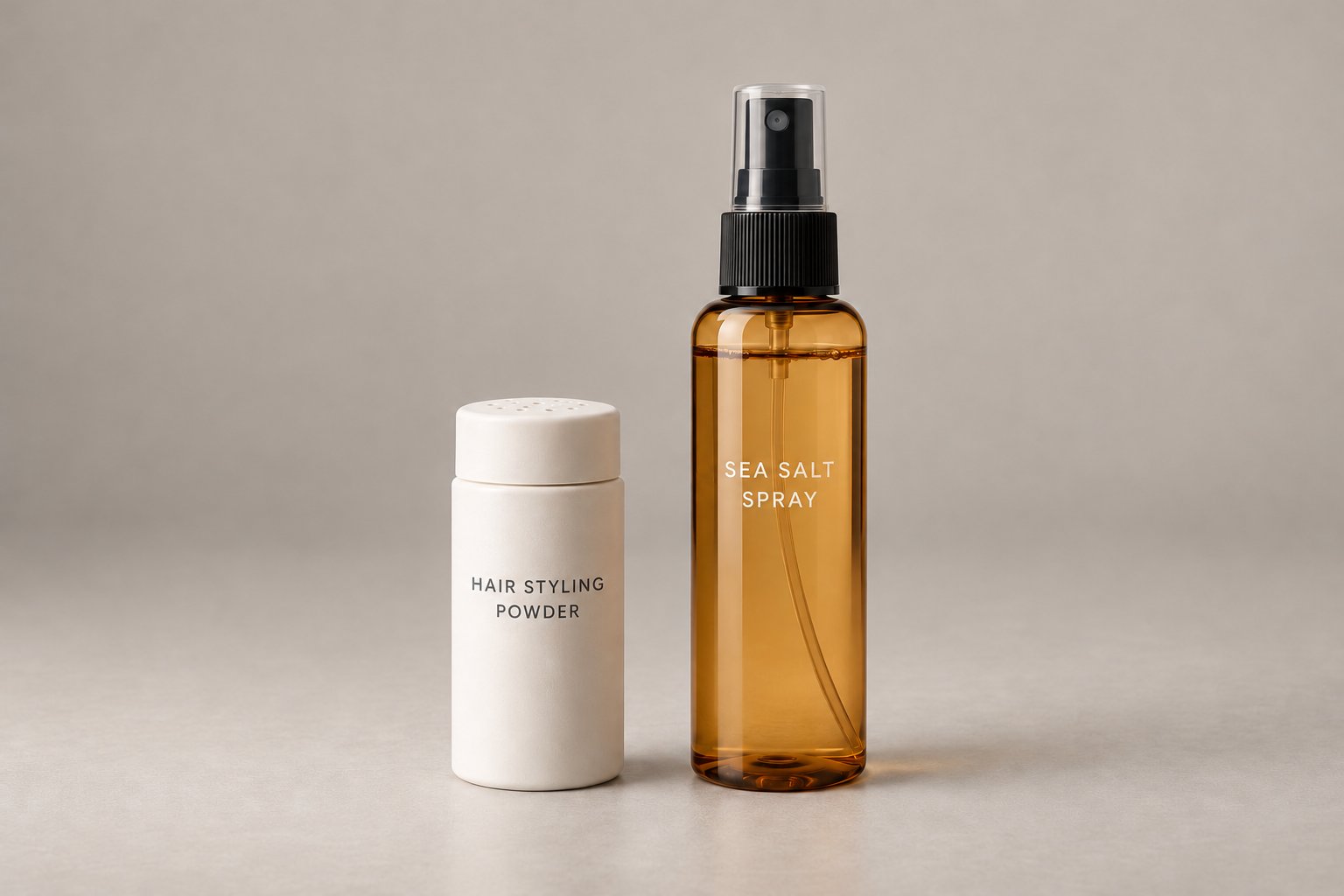
This is a much clearer starting point than simply requesting a strong-hold men’s pomade. Explore our private label hair styling products to review complementary formats such as hair clay, styling powder, sea salt spray and hair wax, and see the men’s hair wax formulation guide for a related development path.
7. From Sample Approval to Private Label Pomade Bulk Production
Once the formula and packaging direction have been agreed upon, the private label pomade project can move toward commercial manufacturing.
| Stage | Main activities |
|---|---|
| 1. Product brief | Confirm product specifications, target market and quantity |
| 2. Formula development | Select an existing formula or develop a customized formulation |
| 3. Sample evaluation | Test hold, shine, texture, fragrance and washability |
| 4. Packaging confirmation | Confirm container specifications, decoration and compatibility |
| 5. Final approval | Approve the final sample, packaging and production specifications |
| 6. Bulk production | Manufacture, fill and package the approved product |
| 7. Quality inspection | Conduct agreed quality checks before shipment |
| 8. Shipment | Arrange delivery according to the agreed trade terms |
How Long Does Bulk Pomade Production Take?
For BunJoin, bulk production generally takes approximately 30–35 days. This is a production lead-time reference, not the total project timeline.
The full private label pomade schedule should also account for formula development, sample approval, packaging procurement, artwork approval and any required testing. Our private label grooming timeline from brief to shipment breaks those stages down. To avoid unnecessary delays, brands should confirm the formula, packaging specifications and production requirements before placing the bulk order.
What Are the Typical Payment Terms?
| Payment stage | Payment |
|---|---|
| Initial deposit | 50% |
| Remaining balance | 50% |
BunJoin’s standard reference arrangement for bulk orders is a 50% deposit and a 50% balance. The balance is paid according to the order and shipment arrangements agreed by both parties. Final payment conditions and shipping terms should be confirmed in the commercial quotation.
For international private label pomade orders, buyers should also clarify the applicable ICC Incoterms rule, destination port or delivery address, freight arrangements and responsibility for import duties and related charges.
8. Why Work with BUNJOIN for Private Label Pomade Development?
Choosing a private label pomade manufacturer is about more than finding a factory that can fill jars. Brands need a partner who understands formulation requirements, packaging coordination, product positioning and the practical challenges of bringing a product to market.
Established in 2013, BunJoin is an ODM/OEM product development and global supply chain partner focused on men’s grooming and personal care brands.
- Product development: Support for pomade, hair wax, hair clay, styling powder, sea salt spray and other men’s grooming products.
- Formulation development: Product direction and formulation customization based on desired texture, hold, shine and application experience.
- Packaging selection: Assistance in selecting suitable containers, closures and packaging materials.
- Compliance support: Coordination of relevant product documentation and market-specific requirements.
- Manufacturing and delivery: Production coordination, quality management and international supply chain support.
Some brands want to launch a private label pomade quickly with an established formula, while others need a more customized formulation to differentiate their product range. For US-bound projects, our breakdown of MoCRA roles and documents for private label brands clarifies who is responsible for what. Our approach is to understand the commercial objective first, then develop a practical product and supply solution around the project requirements.
Learn more about BUNJOIN’s company background and our ODM/OEM product development capabilities.
9. Frequently Asked Questions About Private Label Pomade
What is the difference between water-based and oil-based pomade?
In a private label pomade, water-based systems use water as a major component and are often easier to remove with shampoo. Oil-based pomades rely more heavily on oils and waxes and may provide a richer styling experience. Actual performance depends on the complete formulation.
Can I customize the hold and shine of a private label pomade?
Yes. In a private label pomade, hold and shine can be developed as separate product specifications. You can request combinations such as strong hold with a matte finish or medium hold with natural shine, depending on the formulation requirements.
What information should I provide when requesting a pomade sample?
For a private label pomade sample, provide your preferred base type, hold level, shine, texture, fragrance, packaging, target market and intended quantity. Reference products or photographs can also help communicate your expectations.
Can I customize the fragrance and packaging?
Fragrance direction, container material, jar capacity, lid style and decoration options can be discussed during product development. Packaging selection should also consider formula compatibility.
How long does bulk pomade production take?
A private label pomade bulk run at BUNJOIN generally takes approximately 30–35 days. The actual schedule depends on formula approval, packaging availability, order specifications and production arrangements.
What are the payment terms for private label pomade orders?
For reference, BunJoin’s standard bulk-order payment arrangement is a 50% deposit and a 50% balance. Final terms are confirmed in the quotation.
Can I launch pomade alongside other hair styling products?
Yes. A private label pomade can be developed as part of a broader men’s hair styling range, together with hair clay, styling wax, styling powder, sea salt spray and styling cream. See the private label hair care quote guide for how to brief several SKUs at once.
Ready to Develop Your Private Label Pomade?
A successful private label pomade starts with a clear product brief. Whether you are developing a traditional oil-based pomade, an everyday water-based styling product or a complete men’s hair styling collection, defining hold, shine, texture and washability early can make the development process more efficient.
Tell us what you want to develop. Share your private label pomade formula direction, performance requirements, fragrance, packaging and estimated order quantity. BunJoin can help you evaluate development options and prepare a quotation based on your project requirements.
Explore: Private Label Hair Pomade · Contact BUNJOIN for a private label pomade quotation.
Image note: The visuals are unbranded photorealistic illustrations, not photographs of BUNJOIN’s actual products, laboratory or factory.