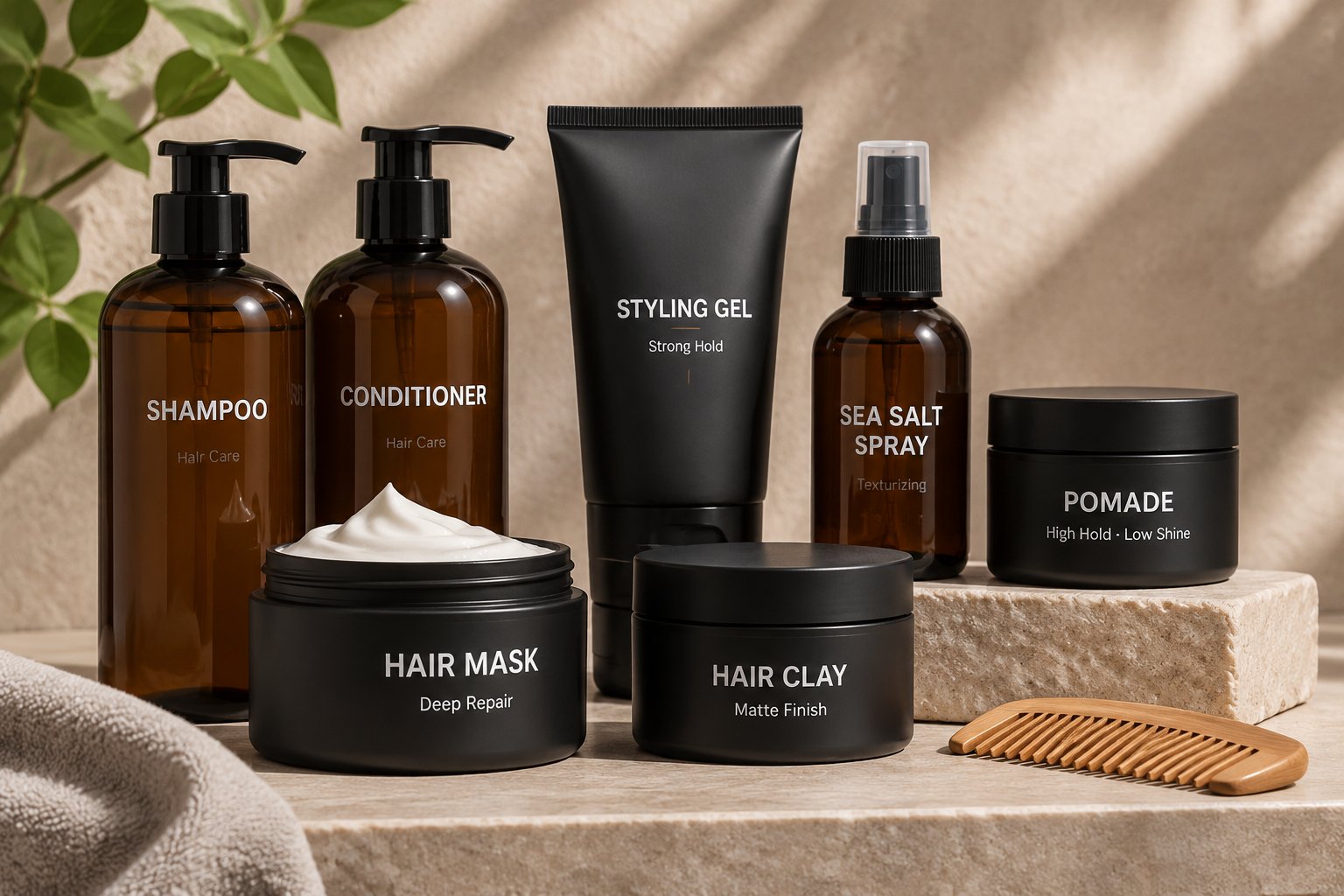
Hair wax holds a style without freezing it. Unlike gel or hairspray, a wax keeps hair movable and reworkable through the day, which is why it has become the default finishing product for short and textured men’s styles.
This guide covers what hair wax actually does, the three main types, how to apply it correctly, how to match wax to a specific style, and what brands should specify when developing a private label version.
TL;DR
- Hair wax provides reworkable hold and shine control; types are water-based, oil-based, and matte.
- Choose wax by style (slick, textured, natural) and learn the 3-step application for even distribution.
- Private label: specify hold, finish, base, and fragrance; understand the material system before sampling.
What Hair Wax Actually Does
Hair wax is a styling product built to shape, define and hold a style while keeping a natural finish. It does not stiffen or flake the way gel does, and it can be restyled hours after application.
- Flexible hold: gives shape without stiffness, so the hair still moves.
- Restyleable: you can reshape the look during the day without reapplying.
- Finish options: matte through high shine, depending on the base.
- Works across lengths: short crops, textured cuts, side parts and longer wavy styles.
Types of Hair Wax: Water-Based, Oil-Based and Matte
The three commercial types differ mainly in hold strength, finish and how easily they wash out. That last point is what most buyers get wrong.
| Type | Hold | Finish | Wash-out | Best for |
|---|---|---|---|---|
| Water-based wax | Medium | Low to medium shine | Easy, one wash | Everyday textured looks |
| Oil-based wax | Strong | High shine | Needs several washes | Pompadours, slick-backs |
| Matte wax | Medium to strong | No shine | Moderate | Short crops, messy texture |
Water-based hair wax is the safest default for a first product because it washes out cleanly and suits daily use. Oil-based versions deliver stronger hold and a polished shine, but they build up on hair and scalp.
How to Use Hair Wax in 3 Steps
- Start clean and dry. Apply to dry or slightly damp hair. Clean hair holds better and the finish looks fresher.
- Warm it up. Scoop a pea-sized amount, then rub it between your palms until it turns translucent — cold wax clumps and applies unevenly.
- Style with intent. Work from root to tip. Fingers give a relaxed finish, a comb gives a sharp one. Add heat with a blow dryer after application for extra lift.
Most people use far too much. Start small and add a second pass only where the style actually collapses.

Choosing Hair Wax by Style
| Style | Best wax type | Finish | Hold |
|---|---|---|---|
| Textured / layered | Matte or water-based | Low–medium | Medium |
| Slicked-back | Oil-based | High shine | Strong |
| Side part / classic | Water-based | Medium shine | Medium–strong |
| Short and natural | Matte | No shine | Medium |
What Hair Wax Is Made Of
Formulation determines hold, finish and wash-out. Four ingredient groups do most of the work.
| Ingredient group | Role | Effect when increased |
|---|---|---|
| Waxes (beeswax, candelilla, carnauba) | Structure and hold | Stronger hold, heavier feel |
| Emulsifiers and surfactants | Wash-out behaviour | Easier rinse, lighter hold |
| Oils and esters | Shine and spreadability | Higher shine, softer texture |
| Matte agents (clay, silica, starch) | Shine reduction and volume | Flatter finish, more grip |
Fragrance matters more than most buyers expect. Scent compounds in styling products must respect IFRA usage limits, and each ingredient should be checked against published cosmetic ingredient safety assessments before a formula is locked.

Private Label Hair Wax: What to Specify
Brands developing hair wax should specify four things before requesting a quote: hold level, finish, wash-out behaviour and packaging. Those four choices fix the formulation route and the packaging component, and they are what determine minimum order quantity and unit cost.
A matte water-based wax in a standard jar is the most common first product because it suits the widest range of styles and uses stock components. Related reading: matte hair clay formulation and private label men’s hair styling.
FAQ
Does hair wax damage hair?
Not when it is washed out properly. Build-up is the real risk: oil-based wax left in the hair for days can dry the scalp and dull the hair. Use a clarifying wash once or twice a week if you use wax daily.
How much hair wax should I use?
Start with a pea-sized amount for short hair and a slightly larger dab for medium length. Warm it fully between your palms first — most clumping comes from applying cold product.
Is water-based or oil-based hair wax better?
Water-based for daily use and easy wash-out; oil-based for strong hold and a polished, high-shine finish. Many people keep one of each.
Does matte hair wax wash out easily?
Most matte waxes wash out with one or two washes, but formulations containing clay can need more rinsing. Check whether the label describes the product as water-soluble.
Conclusion
Hair wax works because it holds without locking. Pick the type by finish and wash-out first, then by hold strength, and apply less than you think you need. For brands, the same three variables — hold, finish, wash-out — are the specification that turns a hair wax idea into a producible formula.
Ready to build this under your own brand?
BunJoin develops and manufactures private label men’s grooming & skincare — formula, packaging, MOQ and compliance (MoCRA/FDA) handled end to end.
Frequently asked questions
What is the typical MOQ for private label hair styling products?
Wax, clay, spray and cream usually start at 1,000–5,000 units per SKU depending on format and packaging.
Can you customize hold, finish and fragrance?
Yes — we tune hold, matte versus shine finish, wash-out and scent to your brief, then verify with samples.
How long does hair product production take?
Samples 1–3 weeks, production 3–6 weeks after approval, plus shipping.